
Recipe Snapshot
Recipe at a Glance
Key timing, yield and style details before you start cooking.
Grain Hydration and Structural Balance
Couscous requires precise hydration to achieve a light, separate grain structure without clumping. The ratio of hot liquid to semolina granules must be tightly controlled—typically one part couscous to one part boiling stock. Olive oil coats the grains before steaming, limiting excessive absorption and preventing gelatinisation that would lead to a sticky mass. Salt and acid from lemon juice or vinegar are introduced after hydration to avoid premature tightening of the starch network. The caramelised onions contribute sweetness and moisture, balancing the savoury base while maintaining textural contrast between soft onions and fluffy couscous.
Heat Management and Moisture Control
Caramelising onions demands low, steady heat to drive Maillard reactions without burning residual sugars. A heavy-bottomed Saute Pan ensures even heat distribution, while controlled deglazing with water or stock prevents scorching. Couscous hydration relies on boiling liquid poured over the grains, followed by covered steaming to trap residual heat. Overheating the liquid or excessive resting leads to sogginess. The workflow alternates between dry heat for browning and moist heat for steaming, requiring accurate timing to preserve both the integrity of the onions and the aerated texture of the couscous.
Transformation Through Cooking
During caramelisation, onion cell walls break down, releasing natural sugars that undergo complex browning reactions, deepening both colour and flavour. The resulting jam-like consistency integrates into the couscous, coating each grain with aromatic sweetness. The couscous itself transitions from raw semolina to a tender, steamed matrix through controlled hydration and gentle fluffing. The final dish achieves layered flavour through contrast—sweet onions, savoury stock, and aromatic spices such as cinnamon and cumin—each contributing to a balanced, multidimensional profile.
Workflow Efficiency and Sequencing Logic
Professional execution prioritises parallelisation: onions begin caramelising first due to their long cook time, while couscous preparation occurs during the final reduction phase. Mise en place includes pre-measured stock, pre-toasted almonds, and chopped herbs to streamline assembly. Avoiding bottlenecks requires staging the hydration step immediately after onions reach optimal colour, ensuring both components align in temperature and readiness for service. Efficient sequencing prevents over-resting of couscous and maintains the onions’ glossy texture without re-reduction.
Cultural and Regional Context
This preparation originates from Moroccan culinary tradition, where couscous functions as a staple grain and vehicle for aromatic stews and vegetable accompaniments. The caramelised onion topping, known as tfaya, represents a sweet-savoury balance typical of North African flavour architecture. Historically, the combination evolved from Berber steaming techniques and Arab spice trade influences, integrating cinnamon, saffron, and dried fruits. Modern adaptations simplify the steaming process while preserving the essential contrast between spiced sweetness and savoury grain structure.
Recipe Education
Learn the Skills Behind This Recipe
Build confidence with cooking skills, techniques, and tools used in this recipe.
Cookware Guide
Learn which pots and pans work best for frying, sautéing, simmering, and roasting.
Helpful when using frying pan during preparation.
How to Sauté Properly
Master fast cooking, pan heat, and ingredient timing for better texture.
Recommended for the saute method used in this recipe.
Cooking Basics
Build safer knife preparation, heat control, timing, and everyday kitchen confidence.
Helpful when using chef knife during preparation.
Cups to Grams
Convert cup measurements more accurately to improve recipe consistency.
Helpful when using measuring cups during preparation.
Teaspoons to Grams
Use small-measure conversions more accurately in cooking and baking.
Helpful when using measuring spoons during preparation.
Baking Tools Guide
Understand essential tools for mixing, measuring, and preparing recipes.
Helpful when using mixing bowl during preparation.


Moroccan Couscous with Caramelized Onions
Description
Couscous requires precise hydration to achieve a light, separate grain structure without clumping. The ratio of hot liquid to semolina granules must be tightly controlled—typically one part couscous to one part boiling stock. Olive oil coats the grains before steaming, limiting excessive absorption and preventing gelatinisation that would lead to a sticky mass. Salt and acid from lemon juice or vinegar are introduced after hydration to avoid premature tightening of the starch network. The caramelised onions contribute sweetness and moisture, balancing the savoury base while maintaining textural contrast between soft onions and fluffy couscous.
Ingredients
Ingredients
Instructions
Instructions
Step 1
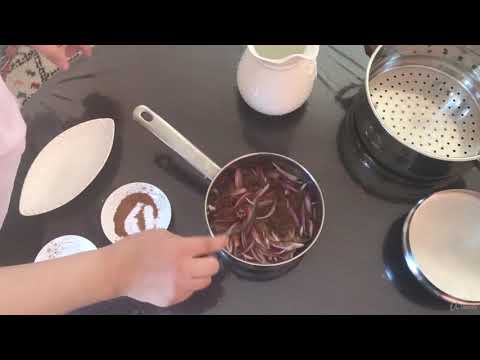
Heat 1 tbsp olive oil in a Saute Pan over low heat. Add sliced onions and cook slowly, stirring occasionally, until they begin to soften and release moisture.Maintain low heat to prevent early browning; moisture must evaporate gradually before sugars caramelise.Step 2
Continue cooking onions for 25–30 minutes until golden brown. Add honey, cinnamon, and cumin, stirring to coat evenly. Deglaze with a small splash of water if the pan begins to dry.Introduce honey only after onions are uniformly golden to avoid premature burning of sugars.Step 3
While onions finish caramelising, bring vegetable stock to a boil in a Saucepan. Place couscous in a Mixing Bowl, drizzle with 1 tbsp olive oil, and stir to coat grains evenly.Coating couscous with oil before adding liquid prevents clumping and ensures even hydration.Step 4
Pour boiling stock over couscous, cover tightly with a lid or Cling Film, and let stand for 5 minutes. Fluff gently with a fork to separate grains.Do not stir during steaming; allow full absorption before fluffing to preserve grain integrity.Step 5
Combine caramelised onions with soaked raisins and lemon juice. Spoon mixture over fluffed couscous and top with toasted almonds and chopped parsley. Season with salt and black pepper.Add lemon juice off heat to preserve brightness and prevent dulling of caramelised flavours.
Recommended Equipment

Nutrition Facts
Servings 4
Serving Size 1 portion
- Amount Per Serving
- Calories 426.85kcal
- % Daily Value *
- Total Fat 12.6g20%
- Saturated Fat 1.48g8%
- Sodium 892.7mg38%
- Potassium 368.32mg11%
- Total Carbohydrate 68.59g23%
- Dietary Fiber 6.62g27%
- Sugars 9.01g
- Protein 11.32g23%
- Vitamin A 377.03 IU
- Vitamin C 11.22 mg
- Calcium 76.09 mg
- Iron 1.81 mg
- Vitamin E 3.63 mg
- Vitamin K 45.96 mcg
- Thiamin 0.17 mg
- Riboflavin 0.2 mg
- Niacin 2.76 mg
- Vitamin B6 0.2 mg
- Folate 37.47 mcg
- Pantothenic Acid 0.95 mg
- Phosphorus 185.85 mg
- Magnesium 67.36 mg
- Zinc 1.05 mg
- Selenium 0.94 mcg
- Copper 0.32 mg
- Manganese 0.98 mg
* Nutrition information is provided as an estimate per serving and may vary depending on the ingredients, brands, substitutions, portion sizes and preparation methods used. Percent Daily Values (%DV) are based on U.S. FDA reference values for a 2,000-calorie diet and are intended as a general guide only. Individual nutritional needs vary. This information is not a substitute for advice from a registered dietitian or other qualified healthcare professional.
Note
Store in an airtight container under refrigeration, ensuring minimal air exposure to preserve flavour integrity and textural balance. The resting phase supports structural stabilisation and moisture redistribution. Cutting or serving too early may compromise internal balance. Spice intensity can deepen over time as volatile compounds settle. Taste and adjust seasoning after resting. Monitor seasoning levels after storage, as salt perception can shift once chilled.


