
Recipe Snapshot
Recipe at a Glance
Key timing, yield and style details before you start cooking.
Ingredient Hydration and Structural Balance
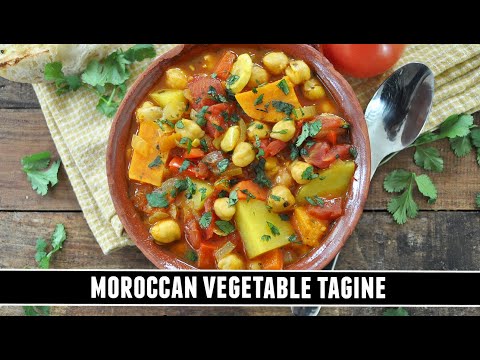
The structural integrity of a vegetable tagine depends on moisture calibration between root vegetables, legumes, and dried fruit. Carrots and sweet potatoes release slow, steady hydration, while courgettes and tomatoes contribute free water early in the cook. Dried apricots absorb liquid initially, then rehydrate to create a natural sweetness that balances the acidity of tomatoes and the salinity of preserved lemon. Olive oil emulsifies the spice base, distributing fat-soluble aromatics evenly. The inclusion of chickpeas adds protein density and starch binding, preventing the sauce from thinning excessively during simmering. Salt must be staged late to avoid premature dehydration of vegetables, ensuring uniform texture retention across components.
Heat Management and Moisture Retention
Tagine cooking relies on controlled low heat to maintain internal steam circulation. The conical lid geometry condenses vapour and returns it to the base, preventing scorching while concentrating flavour. Browning aromatics in olive oil before liquid addition develops foundational depth through Maillard reactions without compromising moisture. Once simmering, the temperature should remain below aggressive boil to avoid disintegration of tender vegetables. The balance between evaporation and condensation defines sauce viscosity; excessive venting leads to dry concentration, while sealed cooking risks dilution. Monitoring the simmer visually and adjusting lid position ensures consistent reduction and even cooking throughout the batch.
Transformation Through Slow Cooking
During the simmering phase, cell walls of root vegetables soften through pectin breakdown, while chickpeas undergo starch gelatinisation, thickening the sauce naturally. The apricots dissolve partially, integrating into the sauce and lending a glossy finish. Spices such as cumin, coriander, and cinnamon release volatile oils gradually, layering aromatic complexity. The sauce transitions from a raw spice profile to a cohesive, rounded flavour matrix as sugars caramelise and acids mellow. The final texture should be cohesive yet distinct, with each vegetable retaining form but yielding easily under light pressure. Proper reduction yields a sauce that coats ingredients without pooling excess liquid.
Workflow Efficiency and Sequencing Logic
Efficient mise en place is critical: aromatics should be chopped and spices pre-measured before heat application to avoid over-browning. Root vegetables are introduced first due to their longer cooking time, followed by moisture-rich components like courgettes and tomatoes. Chickpeas and apricots are added mid-cook to absorb flavour without collapsing. Parallel preparation of garnish elements such as fresh herbs can occur during the final simmer. Avoid overcrowding the vessel; maintaining surface exposure ensures even heat distribution. The workflow benefits from a single-vessel approach, minimising transfer losses and preserving the integrity of the spice oil base.
Cultural and Regional Context
The Moroccan tagine evolved as a practical response to arid conditions and limited fuel availability, using slow, enclosed cooking to maximise flavour extraction from minimal liquid. The combination of sweet dried fruit and savoury vegetables reflects North African trade influences, particularly the introduction of apricots and spices via trans-Saharan routes. Traditional clay tagines provide gentle, diffused heat, though modern kitchens replicate the effect using heavy-based cookware. The dish exemplifies Maghrebi balance between spice warmth, preserved citrus acidity, and natural sweetness, forming a cornerstone of Moroccan communal dining and regional vegetable cookery.
Recipe Education
Learn the Skills Behind This Recipe
Build confidence with cooking skills, techniques, and tools used in this recipe.
How to Sauté Properly
Master fast cooking, pan heat, and ingredient timing for better texture.
Recommended for the saute method used in this recipe.
Simmer vs Boil
Learn when to simmer, when to boil, and how each affects recipe results.
Recommended for the simmer method used in this recipe.
Cookware Guide
Learn which pots and pans work best for frying, sautéing, simmering, and roasting.
Helpful when using dutch oven during preparation.
Cups to Grams
Convert cup measurements more accurately to improve recipe consistency.
Helpful when using measuring cups during preparation.
Teaspoons to Grams
Use small-measure conversions more accurately in cooking and baking.
Helpful when using measuring spoons during preparation.
Cooking Basics
Build safer knife preparation, heat control, timing, and everyday kitchen confidence.
Helpful when using chef knife during preparation.


Moroccan Vegetable Tagine with Apricots
Description
The structural integrity of a vegetable tagine depends on moisture calibration between root vegetables, legumes, and dried fruit. Carrots and sweet potatoes release slow, steady hydration, while courgettes and tomatoes contribute free water early in the cook. Dried apricots absorb liquid initially, then rehydrate to create a natural sweetness that balances the acidity of tomatoes and the salinity of preserved lemon. Olive oil emulsifies the spice base, distributing fat-soluble aromatics evenly. The inclusion of chickpeas adds protein density and starch binding, preventing the sauce from thinning excessively during simmering. Salt must be staged late to avoid premature dehydration of vegetables, ensuring uniform texture retention across components.
Ingredients
Ingredients
Instructions
Instructions
Step 1
Heat olive oil in a Dutch Oven over medium heat. Add onion and sauté for 5 minutes until translucent, then add minced garlic and cook for 1 minute until aromatic.Maintain medium heat to prevent garlic from burning; its bitterness would compromise the spice base.Step 2
Add ground cumin, coriander, cinnamon, and paprika. Stir continuously for 30 seconds to bloom the spices in the oil, releasing essential oils before adding liquid.Blooming spices in fat intensifies aroma; avoid adding stock too early or the flavour will remain flat.Step 3
Add chopped tomatoes and vegetable stock, stirring to deglaze the base. Bring to a gentle simmer, then add carrots and sweet potato. Cover and cook for 15 minutes on low heat.Keep the simmer gentle; excessive bubbling breaks down root vegetables unevenly.Step 4
Add courgette, dried apricots, and chickpeas. Stir to combine, cover again, and simmer for another 20 minutes until vegetables are tender and sauce thickens.If sauce reduces too quickly, add a small amount of stock to maintain a cohesive glaze rather than a dry stew.Step 5
Stir in preserved lemon and honey. Season with salt and black pepper. Simmer uncovered for 5 minutes to integrate flavours and adjust consistency.Adding preserved lemon at the end preserves its volatile citrus oils and prevents bitterness from overcooking.Step 6
Remove from heat and rest for 5 minutes to allow flavours to settle. Garnish with chopped fresh coriander before serving.Resting stabilises the sauce matrix, allowing starches to reabsorb liquid and improve coating texture.
Recommended Equipment

Nutrition Facts
Servings 4
Serving Size 1 portion
- Amount Per Serving
- Calories 411.93kcal
- % Daily Value *
- Total Fat 10.49g17%
- Saturated Fat 1.37g7%
- Sodium 612.79mg26%
- Potassium 1314.78mg38%
- Total Carbohydrate 72.09g25%
- Dietary Fiber 14.84g60%
- Sugars 31.92g
- Protein 13.02g27%
- Vitamin A 15407.6 IU
- Vitamin C 29.91 mg
- Calcium 130.32 mg
- Iron 5.16 mg
- Vitamin E 3.59 mg
- Vitamin K 25.59 mcg
- Thiamin 0.27 mg
- Riboflavin 0.22 mg
- Niacin 2.75 mg
- Vitamin B6 0.56 mg
- Folate 219.14 mcg
- Pantothenic Acid 1.2 mg
- Phosphorus 282.72 mg
- Magnesium 101.64 mg
- Zinc 2.35 mg
- Selenium 5.31 mcg
- Copper 0.66 mg
- Manganese 1.65 mg
* Nutrition information is provided as an estimate per serving and may vary depending on the ingredients, brands, substitutions, portion sizes and preparation methods used. Percent Daily Values (%DV) are based on U.S. FDA reference values for a 2,000-calorie diet and are intended as a general guide only. Individual nutritional needs vary. This information is not a substitute for advice from a registered dietitian or other qualified healthcare professional.
Note
Allow the dish to cool gradually before sealing. Rapid temperature shifts can create condensation, weakening texture and diluting surface flavour concentration. The resting phase supports structural stabilisation and moisture redistribution. Cutting or serving too early may compromise internal balance. Spice intensity can deepen over time as volatile compounds settle. Taste and adjust seasoning after resting. Slow-cooked preparations often improve after several hours or overnight refrigeration as aromatic compounds integrate more fully. Acid balance may soften slightly over time; a final adjustment before serving restores clarity.


