
Recipe Snapshot
Recipe at a Glance
Key timing, yield and style details before you start cooking.
Fat Encapsulation and Moisture Retention
The structural integrity of mozzarella sticks depends on the interaction between protein-bound moisture in the cheese and the fat barrier created by the breading. Low-moisture mozzarella is essential; high-moisture variants release steam rapidly, causing coating rupture. The flour-egg-breadcrumb sequence forms a layered moisture barrier: flour absorbs surface moisture, egg binds particles, and breadcrumbs create a porous crust that crisps under heat. Double coating reinforces adhesion and reduces oil penetration. Salt in the breading enhances surface browning through controlled Maillard reactions, while a small amount of starch in the flour phase stabilises the coating during frying.
Thermal Control and Frying Stability
Oil temperature must remain within 175–180°C to achieve rapid crust formation without internal melt loss. Below this range, the coating absorbs oil and softens; above it, the crust darkens before the cheese softens evenly. Frying in small batches maintains oil temperature stability and prevents moisture accumulation that leads to steaming. The sticks should rest briefly after breading to allow the coating to hydrate slightly, improving adhesion. For the marinara, simmering at controlled medium heat ensures reduction without scorching, allowing tomato acids to balance sweetness while maintaining a smooth texture.
Textural Transformation During Cooking
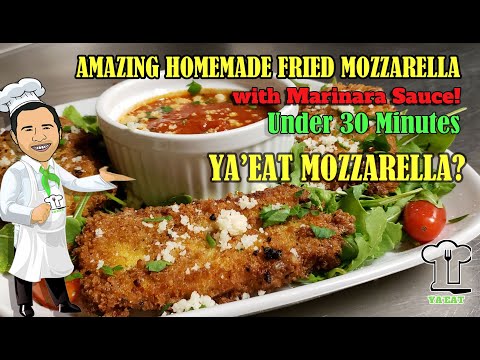
During frying, the breadcrumb coating undergoes dehydration and starch gelatinisation, forming a rigid shell that traps molten cheese. The cheese transitions from firm to elastic as milk proteins denature and fat liquefies, creating a stretchable interior. The marinara sauce thickens through water evaporation and pectin breakdown, concentrating flavour and achieving a spoon-coating consistency. Proper timing ensures the sauce remains bright and balanced, not over-reduced or metallic. The contrast between crisp exterior and molten interior defines the dish’s sensory structure and depends on precise control of both frying duration and resting time.
Workflow Efficiency and Component Coordination
Efficient execution requires staging: bread all sticks before heating oil to avoid idle time and temperature drift. The marinara can be prepared concurrently and held warm. Using a shallow tray for breading minimises waste and maintains even coating distribution. Cooling the breaded sticks briefly before frying improves crust adhesion. In service conditions, pre-breaded sticks can be frozen and fried directly from frozen with a minor time adjustment, maintaining output consistency during peak demand. Parallel preparation of sauce and frying batches optimises throughput without compromising quality.
Regional and Technical Lineage
Mozzarella sticks derive from Italian fried cheese traditions, notably ‘mozzarella in carrozza’, adapted through American casual dining formats. The modern version employs dry breading rather than batter, aligning with industrial fry stability and freezer storage requirements. The marinara component retains Southern Italian tomato reduction principles, simplified for quick-service execution. The combination reflects Italian-American culinary evolution—balancing traditional dairy handling with American deep-frying technique and service efficiency. The dish’s enduring popularity stems from its reproducible texture contrast and compatibility with high-volume frying systems.
Recipe Education
Learn the Skills Behind This Recipe
Build confidence with cooking skills, techniques, and tools used in this recipe.
Cookware Guide
Learn which pots and pans work best for frying, sautéing, simmering, and roasting.
Helpful when using frying pan during preparation.
How to Fry Properly
Understand pan heat, oil temperature, and how to get better frying results.
Recommended for the fry method used in this recipe.
Simmer vs Boil
Learn when to simmer, when to boil, and how each affects recipe results.
Recommended for the simmer method used in this recipe.
Baking Tools Guide
Understand essential tools for mixing, measuring, and preparing recipes.
Helpful when using mixing bowl during preparation.
Cooking Basics
Build safer knife preparation, heat control, timing, and everyday kitchen confidence.
Helpful when using chef knife during preparation.


Mozzarella Sticks with Marinara Sauce
Description
The structural integrity of mozzarella sticks depends on the interaction between protein-bound moisture in the cheese and the fat barrier created by the breading. Low-moisture mozzarella is essential; high-moisture variants release steam rapidly, causing coating rupture. The flour-egg-breadcrumb sequence forms a layered moisture barrier: flour absorbs surface moisture, egg binds particles, and breadcrumbs create a porous crust that crisps under heat. Double coating reinforces adhesion and reduces oil penetration. Salt in the breading enhances surface browning through controlled Maillard reactions, while a small amount of starch in the flour phase stabilises the coating during frying.
Ingredients
Ingredients
Instructions
Instructions
Step 1
Prepare the breading station with three shallow bowls: one with flour mixed with half the salt and pepper, one with beaten eggs, and one with breadcrumbs combined with oregano and remaining salt.Keep the bowls close together to minimise handling time and prevent moisture loss from the cheese.Step 2
Coat each mozzarella stick in flour, then egg, then breadcrumbs. Repeat the egg and breadcrumb coating once more for a double layer. Arrange coated sticks on a tray and refrigerate for 20 minutes.Chilling firms the coating and prevents separation during frying.Step 3
Heat vegetable oil in a Frying Pan to 175–180°C. Fry 4–5 sticks at a time for 1.5–2 minutes until golden brown. Remove with a Spider / Skimmer and drain on a Cooling Rack.Monitor oil temperature with a Thermometer to maintain consistent crust formation and avoid soggy results.Step 4
For the marinara, heat olive oil in a Saucepan over medium heat. Add garlic and chili flakes, sauté for 30 seconds, then add crushed tomatoes, sugar, and a pinch of salt. Simmer for 10–12 minutes until slightly thickened.Stir periodically to prevent scorching; maintain gentle bubbling for even reduction.Step 5
Stir chopped basil into the sauce, adjust seasoning, and hold warm. Serve mozzarella sticks immediately with marinara on the side.Serve within 3 minutes of frying to preserve crust crispness before steam softens the coating.
Recommended Equipment

Nutrition Facts
Servings 4
Serving Size 1 portion
- Amount Per Serving
- Calories 1564.67kcal
- % Daily Value *
- Total Fat 138.82g214%
- Saturated Fat 29.3g147%
- Cholesterol 145.84mg49%
- Sodium 1586.22mg67%
- Potassium 509.82mg15%
- Total Carbohydrate 48.67g17%
- Dietary Fiber 4.13g17%
- Sugars 8.1g
- Protein 34.97g70%
- Vitamin A 944.1 IU
- Vitamin C 9.96 mg
- Calcium 900.83 mg
- Iron 4.62 mg
- Vitamin D 0.74 mcg
- Vitamin E 11.73 mg
- Vitamin K 232.83 mcg
- Thiamin 0.55 mg
- Riboflavin 0.68 mg
- Niacin 4.58 mg
- Vitamin B6 0.33 mg
- Folate 103.3 mcg
- Vitamin B12 1.12 mcg
- Pantothenic Acid 0.97 mg
- Phosphorus 614.27 mg
- Magnesium 66.17 mg
- Zinc 3.94 mg
- Selenium 36.36 mcg
- Copper 0.35 mg
- Manganese 0.71 mg
* Nutrition information is provided as an estimate per serving and may vary depending on the ingredients, brands, substitutions, portion sizes and preparation methods used. Percent Daily Values (%DV) are based on U.S. FDA reference values for a 2,000-calorie diet and are intended as a general guide only. Individual nutritional needs vary. This information is not a substitute for advice from a registered dietitian or other qualified healthcare professional.
Note
Allow the dish to cool gradually before sealing. Rapid temperature shifts can create condensation, weakening texture and diluting surface flavour concentration. The resting phase supports structural stabilisation and moisture redistribution. Cutting or serving too early may compromise internal balance. Spice intensity can deepen over time as volatile compounds settle. Taste and adjust seasoning after resting. Slow-cooked preparations often improve after several hours or overnight refrigeration as aromatic compounds integrate more fully. When reheating crisp components, use dry heat rather than microwave methods to maintain exterior texture. Texture refinement often occurs naturally during resting due to internal moisture redistribution.


