
Recipe Snapshot
Recipe at a Glance
Key timing, yield and style details before you start cooking.
Salinity Balance and Shellfish Hydration Control
Razor clams contain high internal moisture and natural salinity, requiring precise surface drying before cooking to prevent steaming. A brief soak in lightly salted water purges sand without altering texture. Olive oil provides controlled lipid coverage, promoting even heat transfer and preventing protein adhesion to the plancha. Lemon juice introduces acid that tightens surface proteins and enhances brine perception without masking the clam’s sweetness. Garlic and parsley deliver aromatic fat-soluble compounds that integrate into the oil phase, balancing marine intensity with vegetal freshness. Proper sequencing—drying, oiling, seasoning—ensures the clams sear cleanly without water-induced sputtering.
Heat Management and Plancha Temperature Discipline
The plancha must reach high, stable surface heat before contact—approximately 220–240°C—to achieve rapid Maillard browning without overcooking the delicate flesh. Excess moisture on the surface causes localized steaming, dulling flavour concentration. Controlled oil film thickness is critical; too much oil lowers surface temperature, while too little risks sticking. Clams should be placed hinge side down first to allow gradual opening under radiant heat. Timing is short—typically under two minutes per side—requiring constant observation. Carryover heat continues protein denaturation post-removal, so immediate plating prevents residual tightening.
Textural Transition and Aromatic Integration
During searing, razor clam flesh transitions from translucent to opaque, indicating protein coagulation. Overexposure leads to rubbery texture due to excessive moisture loss. The garlic-parsley oil applied post-cook diffuses volatile aromatics while the surface temperature remains above 60°C, ensuring absorption without oxidation. Lemon juice added at plating halts residual cooking and stabilizes flavour brightness. The result is a firm yet supple texture with balanced salinity and aromatic lift. Proper sequencing of heat exposure and finishing oil application defines the dish’s structural integrity.
Workflow Efficiency and Service Coordination
In service conditions, mise en place must prioritize pre-cleaned, purged clams stored over ice and dried immediately before cooking. Garlic-parsley oil should be pre-emulsified and held warm for rapid finishing. The plancha must remain continuously heated between batches to avoid thermal lag. Parallel plating setups allow immediate transfer from heat to service, minimizing texture degradation. Avoid batch overcrowding, which drops surface temperature and induces steaming. Efficient coordination between grill and pass ensures consistent output under time pressure.
Regional Technique Lineage and Culinary Context
Navajas a la Plancha originates from coastal Galicia and the Basque Country, where shellfish cookery emphasizes minimal intervention and direct heat. The plancha technique evolved from fishermen’s iron griddles used on open fires, later refined in professional kitchens for precision temperature control. The method reflects Iberian coastal logic—preserving marine purity through rapid searing and restrained seasoning. Modern adaptations maintain the same structural principle: high heat, short exposure, and immediate acid balance. The dish exemplifies Spain’s broader plancha tradition, applied to seafood with regional olive oil and citrus integration.
Recipe Education
Learn the Skills Behind This Recipe
Build confidence with cooking skills, techniques, and tools used in this recipe.
How to Sauté Properly
Master fast cooking, pan heat, and ingredient timing for better texture.
Recommended for the saute method used in this recipe.
Cooking Basics
Build safer knife preparation, heat control, timing, and everyday kitchen confidence.
Helpful when using chef knife during preparation.
Baking Tools Guide
Understand essential tools for mixing, measuring, and preparing recipes.
Helpful when using mixing bowl during preparation.


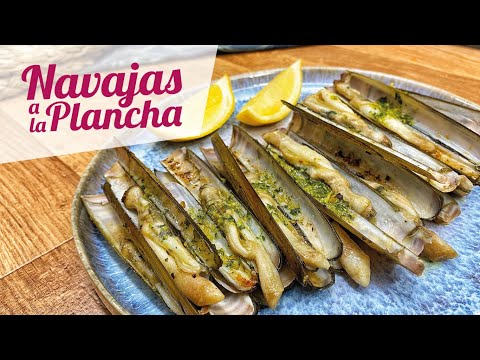
Navajas a la Plancha (Grilled Razor Clams)
Description
Razor clams contain high internal moisture and natural salinity, requiring precise surface drying before cooking to prevent steaming. A brief soak in lightly salted water purges sand without altering texture. Olive oil provides controlled lipid coverage, promoting even heat transfer and preventing protein adhesion to the plancha. Lemon juice introduces acid that tightens surface proteins and enhances brine perception without masking the clam’s sweetness. Garlic and parsley deliver aromatic fat-soluble compounds that integrate into the oil phase, balancing marine intensity with vegetal freshness. Proper sequencing—drying, oiling, seasoning—ensures the clams sear cleanly without water-induced sputtering.
Ingredients
Ingredients
Instructions
Instructions
Step 1
Rinse razor clams under cold water, discarding any with broken shells. Soak in lightly salted water for 30 minutes to purge sand, then drain and pat completely dry on a Cutting Board using paper towels.Ensure clams are fully closed before soaking; open shells indicate spoilage and must be discarded.Step 2
Combine olive oil, minced garlic, and chopped parsley in a Mixing Bowl. Stir to form a uniform aromatic oil and set aside near the cooking station.Keep the oil at room temperature; cold oil will not disperse aromatics evenly when brushed on hot clams.Step 3
Preheat a Grill Pan or plancha over high heat until surface temperature reaches approximately 230°C. Lightly brush with a thin film of olive oil using a Pastry Brush.Test readiness by flicking a drop of water—instant vaporization indicates correct surface heat.Step 4
Place razor clams hinge side down on the hot surface. Cook for 1–2 minutes until shells open and flesh turns opaque. Turn briefly to sear the opposite side for 20–30 seconds.Do not overcrowd the surface; maintain spacing to prevent steam accumulation and temperature drop.Step 5
Transfer clams immediately to a platter. Brush with garlic-parsley oil and season with sea salt and black pepper. Finish with a squeeze of fresh lemon juice just before serving.Apply lemon juice only after removing from heat to prevent acid-induced toughening of the flesh.
Recommended Equipment

Nutrition Facts
Servings 4
Serving Size 1 portion
- Amount Per Serving
- Calories 104.37kcal
- % Daily Value *
- Total Fat 7.32g12%
- Saturated Fat 1.03g6%
- Cholesterol 11.25mg4%
- Sodium 217.17mg10%
- Potassium 77.81mg3%
- Total Carbohydrate 4.67g2%
- Dietary Fiber 0.93g4%
- Sugars 0.71g
- Protein 6.01g13%
- Vitamin A 330.54 IU
- Vitamin C 18.1 mg
- Calcium 29.11 mg
- Iron 1.01 mg
- Vitamin E 1.3 mg
- Vitamin K 45.63 mcg
- Thiamin 0.02 mg
- Riboflavin 0.02 mg
- Niacin 0.2 mg
- Vitamin B6 0.05 mg
- Folate 8.73 mcg
- Vitamin B12 4.24 mcg
- Pantothenic Acid 0.13 mg
- Phosphorus 82.71 mg
- Magnesium 11.34 mg
- Zinc 0.26 mg
- Selenium 11.81 mcg
- Copper 0.04 mg
- Manganese 0.1 mg
* Nutrition information is provided as an estimate per serving and may vary depending on the ingredients, brands, substitutions, portion sizes and preparation methods used. Percent Daily Values (%DV) are based on U.S. FDA reference values for a 2,000-calorie diet and are intended as a general guide only. Individual nutritional needs vary. This information is not a substitute for advice from a registered dietitian or other qualified healthcare professional.
Note
For best structural retention, cool uncovered briefly before storage to prevent trapped steam from softening exterior crust or caramelised surfaces. Adequate chilling or marination enhances aromatic absorption and improves cohesion between fat, acid, and seasoning components. Spice intensity can deepen over time as volatile compounds settle. Taste and adjust seasoning after resting. When reheating crisp components, use dry heat rather than microwave methods to maintain exterior texture. Acid balance may soften slightly over time; a final adjustment before serving restores clarity.


