
Recipe Snapshot
Recipe at a Glance
Key timing, yield and style details before you start cooking.
Pulse Hydration and Starch Integration
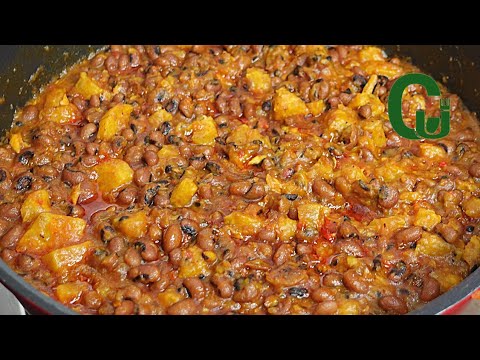
Brown beans form the structural base of this pottage, requiring controlled hydration to achieve a creamy yet intact texture. Soaking reduces cooking time and moderates starch release, preventing excessive thickening during simmering. The natural starch from the beans integrates with the softening plantain to create a cohesive matrix without added thickeners. Palm oil introduces fat that emulsifies with bean starch, producing a glossy, rich body. Salt addition is delayed until the beans are tender to avoid toughening the seed coat. The balance between bean softness and plantain disintegration defines the final mouthfeel, demanding precise sequencing of additions.
Thermal Management and Moisture Retention
Heat control is critical to prevent scorching as the mixture thickens. Initial boiling hydrates the beans, followed by a steady simmer to maintain even internal cooking. Excessive agitation breaks down the beans prematurely, while insufficient heat leaves the core undercooked. Palm oil should be introduced after the beans soften to prevent oil separation. The plantain is added mid-cook to allow partial breakdown without complete dissolution. Evaporation rate determines final viscosity; covered simmering retains moisture, while partial uncovering aids reduction. Monitoring liquid level ensures the pottage remains cohesive rather than soupy.
Textural Development and Flavour Concentration
During simmering, bean starch gelatinises and plantain sugars caramelise slightly, deepening flavour. The palm oil’s carotenoids infuse colour and aroma, while onions and pepper compounds undergo mild Maillard reactions, enhancing savoury depth. The final texture should be thick but spoonable, with visible bean integrity and soft plantain fragments. Overcooking risks a paste-like consistency, while undercooking yields a watery base. The goal is a balanced suspension where each element contributes to a unified, rich mouthfeel. Proper resting after cooking allows residual heat to complete starch setting and flavour integration.
Workflow Sequencing and Efficiency Control
Efficient mise en place reduces downtime: beans should soak ahead, aromatics prepped, and palm oil measured. While beans cook, the cook can prepare plantain and pepper blend to streamline transitions. Using a single Stock Pot minimises cleanup and heat loss. Staggering ingredient additions prevents congestion and ensures even cooking. Professional kitchens often batch-cook beans to shorten service time, reheating portions with fresh plantain for consistency. Home execution benefits from steady monitoring rather than constant stirring, maintaining structure and preventing bottom scorching.
Regional Context and Culinary Lineage
Beans and Plantain Pottage, locally known as ‘Ewa riro with dodo’, originates from southwestern Nigeria, particularly within Yoruba cuisine. The dish evolved from traditional bean stews, integrating ripe plantain for sweetness and caloric balance. Palm oil remains a defining regional fat, historically valued for its stability and nutrient density. Variations exist across Nigeria, with some regions incorporating crayfish or smoked fish for protein depth. The technique reflects West African slow-simmering traditions, where legumes and tubers are combined to create nutrient-dense, one-pot meals suited to communal dining and fuel-efficient cooking.
Recipe Education
Learn the Skills Behind This Recipe
Build confidence with cooking skills, techniques, and tools used in this recipe.
How to Boil Properly
Learn boiling times, temperature control, and how to avoid overcooking.
Recommended for the boil method used in this recipe.
Simmer vs Boil
Learn when to simmer, when to boil, and how each affects recipe results.
Recommended for the simmer method used in this recipe.
Cookware Guide
Learn which pots and pans work best for frying, sautéing, simmering, and roasting.
Helpful when using saucepan during preparation.
Cups to Grams
Convert cup measurements more accurately to improve recipe consistency.
Helpful when using measuring cups during preparation.
Teaspoons to Grams
Use small-measure conversions more accurately in cooking and baking.
Helpful when using measuring spoons during preparation.
Baking Tools Guide
Understand essential tools for mixing, measuring, and preparing recipes.
Helpful when using mixing bowl during preparation.


Nigerian Beans and Plantain Pottage
Description
Brown beans form the structural base of this pottage, requiring controlled hydration to achieve a creamy yet intact texture. Soaking reduces cooking time and moderates starch release, preventing excessive thickening during simmering. The natural starch from the beans integrates with the softening plantain to create a cohesive matrix without added thickeners. Palm oil introduces fat that emulsifies with bean starch, producing a glossy, rich body. Salt addition is delayed until the beans are tender to avoid toughening the seed coat. The balance between bean softness and plantain disintegration defines the final mouthfeel, demanding precise sequencing of additions.
Ingredients
Ingredients
Instructions
Instructions
Step 1
Rinse the brown beans thoroughly and place them in a Stock Pot with 2 litres of water. Bring to a boil over high heat, then reduce to medium and simmer until the beans begin to soften, about 40 minutes.Avoid adding salt at this stage; it delays bean softening by tightening the seed coat.Step 2
While the beans cook, prepare the aromatics by blending the scotch bonnet pepper and chopping the onion. Peel and cut the ripe plantains into medium chunks.Uniform plantain size ensures even softening and prevents premature disintegration during simmering.Step 3
Once the beans are tender, add the chopped onion, blended pepper, and ground crayfish. Stir gently and continue simmering uncovered for 10 minutes to allow flavour integration.Maintain a gentle simmer to encourage reduction without breaking down the beans excessively.Step 4
Add the palm oil and plantain chunks to the pot. Stir lightly to distribute, then cover and cook on low heat for 15–20 minutes until the plantain softens and begins to merge with the beans.Introduce palm oil after beans soften to prevent oil separation and ensure uniform emulsification.Step 5
Season with salt and seasoning powder. Stir carefully to combine and simmer for a final 5 minutes until the mixture thickens to a cohesive pottage. Remove from heat and allow to rest for 10 minutes before serving.Resting stabilises the starch matrix, allowing the pottage to thicken naturally without over-reduction.
Recommended Equipment

Nutrition Facts
Servings 4
Serving Size 1 portion
- Amount Per Serving
- Calories 690.3kcal
- % Daily Value *
- Total Fat 25.94g40%
- Saturated Fat 11.82g60%
- Cholesterol 1.69mg1%
- Sodium 617mg26%
- Potassium 778.69mg23%
- Total Carbohydrate 108.58g37%
- Dietary Fiber 5.99g24%
- Sugars 17.14g
- Protein 9.39g19%
- Vitamin A 1081.08 IU
- Vitamin C 25.72 mg
- Calcium 78.38 mg
- Iron 2.88 mg
- Vitamin E 3.9 mg
- Vitamin K 36.07 mcg
- Thiamin 0.49 mg
- Riboflavin 0.13 mg
- Niacin 5.08 mg
- Vitamin B6 0.8 mg
- Folate 49.12 mcg
- Pantothenic Acid 1.82 mg
- Phosphorus 307.56 mg
- Magnesium 187.87 mg
- Zinc 2.35 mg
- Selenium 1.98 mcg
- Copper 0.46 mg
- Manganese 3.98 mg
* Nutrition information is provided as an estimate per serving and may vary depending on the ingredients, brands, substitutions, portion sizes and preparation methods used. Percent Daily Values (%DV) are based on U.S. FDA reference values for a 2,000-calorie diet and are intended as a general guide only. Individual nutritional needs vary. This information is not a substitute for advice from a registered dietitian or other qualified healthcare professional.
Note
Allow the dish to cool gradually before sealing. Rapid temperature shifts can create condensation, weakening texture and diluting surface flavour concentration. The resting phase supports structural stabilisation and moisture redistribution. Cutting or serving too early may compromise internal balance. Spice intensity can deepen over time as volatile compounds settle. Taste and adjust seasoning after resting. Slow-cooked preparations often improve after several hours or overnight refrigeration as aromatic compounds integrate more fully. Acid balance may soften slightly over time; a final adjustment before serving restores clarity.


