
Recipe Snapshot
Recipe at a Glance
Key timing, yield and style details before you start cooking.
Aromatics and Fat Integration Control
This sauce relies on the controlled emulsification of oil with blended aromatics. Garlic provides volatile sulfur compounds that mellow under heat, while fresh chilies contribute capsaicin intensity balanced by the oil’s fat content. The ratio of oil to solids determines viscosity and flavour carry. Excess oil prevents scorching but can dilute intensity; insufficient oil leads to uneven cooking and bitterness. Salt and acid from vinegar regulate flavour extraction and microbial stability. Proper sequencing—adding aromatics before liquid—ensures even fat absorption and prevents raw garlic harshness.
Heat Management and Reduction Discipline
The sauce requires medium heat to achieve aromatic bloom without burning. Overheating garlic or chilies produces acrid notes and destabilises the oil phase. Controlled simmering allows moisture evaporation, concentrating flavour while maintaining a glossy finish. Carryover heat continues mild reduction after removal from the stove, so timing removal just before target thickness prevents over-reduction. Stirring frequency must be consistent to avoid sediment adhesion and uneven caramelisation at the base of the pan.
Transformation Through Cooking and Texture Development
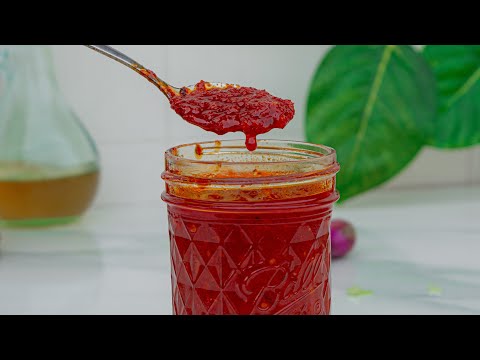
During simmering, the blended mixture transitions from raw sharpness to a cohesive, aromatic paste. The garlic’s enzymatic pungency softens as sugars caramelise, while chili pigments deepen in hue. Oil encapsulates flavour compounds, stabilising the sauce’s shelf life and mouthfeel. The final texture should be smooth but not homogenised to paste; slight particulate retention enhances authenticity and mouth coating. Proper reduction yields a sauce that clings to protein or starch bases without separation.
Workflow Efficiency and Batch Control
Efficient mise en place reduces oxidation of blended aromatics. Blending should occur immediately before cooking to preserve volatile compounds. Scaling the recipe requires proportional oil adjustment to maintain emulsification stability; doubling solids without increasing oil causes sticking and uneven heat transfer. For service environments, batch cooling and storage in sterilised containers under oil film prevent spoilage. Reheating should be gentle to avoid re-frying the solids, which alters flavour balance.
Regional Technique Lineage and Adaptation
This sauce originates from Nigerian pepper-based condiment traditions, particularly those accompanying grilled meats and rice dishes. It aligns with the Yoruba ata dindin technique, where blended peppers and aromatics are fried in oil until reduced. Modern adaptations incorporate garlic more prominently, reflecting cross-regional influence and expanded flavour layering. The method exemplifies West African oil-based reduction sauces that prioritise depth, preservation, and versatility across proteins and starches.
Recipe Education
Learn the Skills Behind This Recipe
Build confidence with cooking skills, techniques, and tools used in this recipe.
How to Sauté Properly
Master fast cooking, pan heat, and ingredient timing for better texture.
Recommended for the saute method used in this recipe.
Cooking Basics
Build safer knife preparation, heat control, timing, and everyday kitchen confidence.
Helpful when using chef knife during preparation.
Cookware Guide
Learn which pots and pans work best for frying, sautéing, simmering, and roasting.
Helpful when using saucepan during preparation.
Cups to Grams
Convert cup measurements more accurately to improve recipe consistency.
Helpful when using measuring cups during preparation.
Teaspoons to Grams
Use small-measure conversions more accurately in cooking and baking.
Helpful when using measuring spoons during preparation.


Nigerian Garlic Pepper Sauce
Description
This sauce relies on the controlled emulsification of oil with blended aromatics. Garlic provides volatile sulfur compounds that mellow under heat, while fresh chilies contribute capsaicin intensity balanced by the oil’s fat content. The ratio of oil to solids determines viscosity and flavour carry. Excess oil prevents scorching but can dilute intensity; insufficient oil leads to uneven cooking and bitterness. Salt and acid from vinegar regulate flavour extraction and microbial stability. Proper sequencing—adding aromatics before liquid—ensures even fat absorption and prevents raw garlic harshness.
Ingredients
Ingredients
Instructions
Instructions
Step 1
Combine fresh red chilies, garlic cloves, onion, water, and vinegar in a Blender. Process until a coarse but uniform paste forms.Blend in short pulses to prevent heat buildup that can volatilise aromatic compounds and dull flavour.Step 2
Heat vegetable oil in a Saucepan over medium heat until shimmering but not smoking. Add the blended mixture carefully to avoid splatter.Introduce the blend gradually to stabilise temperature and prevent sudden steam expansion from residual water.Step 3
Cook the mixture, stirring with a Wooden Spoon, until moisture reduces and oil begins to separate from solids, approximately 15–20 minutes.Monitor the edges of the Saucepan; visible oil pooling indicates correct reduction without over-frying.Step 4
Add salt and ground paprika, stirring to integrate evenly. Continue cooking for 5 minutes to develop colour and depth.Add dry seasonings only after initial reduction to prevent early scorching and maintain spice brightness.Step 5
Remove from heat and allow the sauce to cool to room temperature. Transfer to sterilised Food Storage Containers, ensuring a thin oil layer covers the surface.Cooling under oil film limits oxygen exposure and extends shelf stability without refrigeration for short-term storage.
Recommended Equipment

Nutrition Facts
Servings 8
Serving Size 1 portion
- Amount Per Serving
- Calories 157.44kcal
- % Daily Value *
- Total Fat 14.04g22%
- Saturated Fat 2.14g11%
- Sodium 296.16mg13%
- Potassium 157.35mg5%
- Total Carbohydrate 7.78g3%
- Dietary Fiber 0.97g4%
- Sugars 2.06g
- Protein 1.45g3%
- Vitamin A 381.01 IU
- Vitamin C 40.85 mg
- Calcium 30.43 mg
- Iron 0.56 mg
- Vitamin E 1.4 mg
- Vitamin K 29.42 mcg
- Thiamin 0.05 mg
- Riboflavin 0.04 mg
- Niacin 0.44 mg
- Vitamin B6 0.3 mg
- Folate 8.88 mcg
- Pantothenic Acid 0.15 mg
- Phosphorus 34.84 mg
- Magnesium 10.85 mg
- Zinc 0.25 mg
- Selenium 2 mcg
- Copper 0.08 mg
- Manganese 0.28 mg
* Nutrition information is provided as an estimate per serving and may vary depending on the ingredients, brands, substitutions, portion sizes and preparation methods used. Percent Daily Values (%DV) are based on U.S. FDA reference values for a 2,000-calorie diet and are intended as a general guide only. Individual nutritional needs vary. This information is not a substitute for advice from a registered dietitian or other qualified healthcare professional.
Note
Store in an airtight container under refrigeration, ensuring minimal air exposure to preserve flavour integrity and textural balance. The resting phase supports structural stabilisation and moisture redistribution. Cutting or serving too early may compromise internal balance. In larger batches, maintain even heat distribution and avoid overcrowding during reheating to preserve structural integrity. Monitor seasoning levels after storage, as salt perception can shift once chilled.


