
Recipe Snapshot
Recipe at a Glance
Key timing, yield and style details before you start cooking.
Viscosity and Ingredient Interaction
Okra’s mucilage defines the soup’s viscosity, requiring precise hydration and agitation control. The mucilage thickens through mechanical disruption—cutting and stirring—rather than starch gelatinisation. Palm oil introduces fat that coats the mucilage strands, moderating stickiness while enhancing flavour dispersion. Smoked fish contributes umami and salt, while crayfish powder intensifies savoury depth through glutamate concentration. Acidic elements such as tomatoes or a small quantity of ground pepper must be balanced carefully; excessive acidity can reduce mucilage cohesion and thin the soup. Salt should be introduced after the okra has softened to prevent premature tightening of the vegetable fibres.
Heat Regulation and Moisture Retention
Temperature staging is critical. The base stock must reach a steady simmer before okra introduction to prevent over-thickening. High heat causes rapid evaporation, concentrating salt and destabilising the mucilage. Moderate heat allows controlled bubbling, ensuring even softening of okra and full rehydration of dried fish. Palm oil should be heated only until aromatic; overheating leads to acrid notes and pigment degradation. Carryover heat from the stock continues cooking after the burner is reduced, so final viscosity should be judged slightly looser than the target texture.
Textural Transformation and Flavour Integration
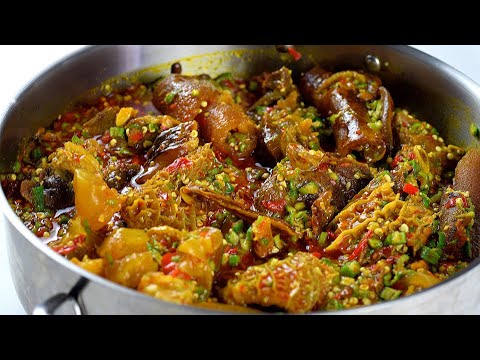
During cooking, okra transitions from crisp to tender while releasing mucilage that binds the liquid phase. Smoked fish softens and releases collagen, enriching mouthfeel and body. The combination of crayfish, pepper, and palm oil forms a layered flavour base that intensifies through reduction. The goal is a cohesive suspension where solids remain distinct but coated. Overcooking breaks down okra seeds and dulls colour, while undercooking leaves fibrous edges. Proper timing yields a glossy, elastic consistency that coats the spoon without clumping.
Workflow Efficiency and Component Sequencing
Efficient mise en place reduces viscosity loss. All chopping, grinding, and rehydration should be completed before heat application. Smoked fish must be deboned and rinsed early to remove excess salt. Stock preparation and seasoning calibration should occur separately to avoid over-reduction once okra is added. Parallel processing—such as heating palm oil while stock simmers—optimises workflow. Avoid prolonged holding after cooking; mucilage thickens further on standing, so service timing should align with final simmer.
Regional Technique and Cultural Context
Okra soup, known as ‘Ila Alasepo’ in Yoruba cuisine, exemplifies West African viscosity-based stews. The integration of smoked fish and palm oil reflects preservation and trade influences along coastal Nigeria. Variants across regions adjust protein type—goat, beef, or seafood—but the structural principle remains the same: mucilage thickened by agitation, not starch. The dish’s evolution aligns with the availability of dried proteins and palm oil, both essential for shelf stability in humid climates. Modern adaptations maintain traditional viscosity control while incorporating measured heat for consistency.
Recipe Education
Learn the Skills Behind This Recipe
Build confidence with cooking skills, techniques, and tools used in this recipe.
How to Sauté Properly
Master fast cooking, pan heat, and ingredient timing for better texture.
Recommended for the saute method used in this recipe.
Simmer vs Boil
Learn when to simmer, when to boil, and how each affects recipe results.
Recommended for the simmer method used in this recipe.
Cookware Guide
Learn which pots and pans work best for frying, sautéing, simmering, and roasting.
Helpful when using saucepan during preparation.
Cups to Grams
Convert cup measurements more accurately to improve recipe consistency.
Helpful when using measuring cups during preparation.
Teaspoons to Grams
Use small-measure conversions more accurately in cooking and baking.
Helpful when using measuring spoons during preparation.
Baking Tools Guide
Understand essential tools for mixing, measuring, and preparing recipes.
Helpful when using mixing bowl during preparation.


Nigerian Okra Soup with Smoked Fish
Description
Okra’s mucilage defines the soup’s viscosity, requiring precise hydration and agitation control. The mucilage thickens through mechanical disruption—cutting and stirring—rather than starch gelatinisation. Palm oil introduces fat that coats the mucilage strands, moderating stickiness while enhancing flavour dispersion. Smoked fish contributes umami and salt, while crayfish powder intensifies savoury depth through glutamate concentration. Acidic elements such as tomatoes or a small quantity of ground pepper must be balanced carefully; excessive acidity can reduce mucilage cohesion and thin the soup. Salt should be introduced after the okra has softened to prevent premature tightening of the vegetable fibres.
Ingredients
Ingredients
Instructions
Instructions
Step 1
Prepare all ingredients: finely chop the okra, onion, and tomato. Debone and rinse the smoked fish to remove excess salt. Measure stock and seasonings for quick assembly.Keep okra dry until use; moisture during chopping increases mucilage loss before cooking.Step 2
Heat palm oil in a Saucepan over medium heat until aromatic but not smoking. Add chopped onion and sauté for 2–3 minutes until translucent.Do not overheat palm oil; once it loses its deep red hue, flavour degradation begins.Step 3
Add tomato and ground pepper to the pan. Cook for 3–4 minutes to reduce moisture slightly and develop a base flavour.Allow gentle bubbling; excessive heat will cause the oil to separate and scorch the aromatics.Step 4
Pour in the stock and bring to a steady simmer. Add smoked fish and ground crayfish. Simmer for 5 minutes to infuse flavour and soften the fish.Maintain a moderate simmer; vigorous boiling can break the fish into fragments prematurely.Step 5
Add chopped okra and stir continuously for 5–7 minutes until the soup thickens and the okra softens. Adjust salt and add ground dried shrimp if using.Continuous stirring activates mucilage evenly; stop once the soup coats the spoon without clumping.Step 6
Reduce heat to low and allow the soup to settle for 2 minutes. Remove from heat and let rest briefly before serving.Resting stabilises viscosity; serving immediately can result in uneven texture as bubbles collapse.
Recommended Equipment

Nutrition Facts
Servings 4
Serving Size 1 portion
- Amount Per Serving
- Calories 168.15kcal
- % Daily Value *
- Total Fat 7.93g13%
- Saturated Fat 3.63g19%
- Cholesterol 65.94mg22%
- Sodium 1240.9mg52%
- Potassium 540.84mg16%
- Total Carbohydrate 13.12g5%
- Dietary Fiber 4.16g17%
- Sugars 4.51g
- Protein 13.54g28%
- Vitamin A 1241.74 IU
- Vitamin C 29.27 mg
- Calcium 114.39 mg
- Iron 1.33 mg
- Vitamin D 1.15 mcg
- Vitamin E 1.68 mg
- Vitamin K 35.72 mcg
- Thiamin 0.24 mg
- Riboflavin 0.1 mg
- Niacin 2.75 mg
- Vitamin B6 0.34 mg
- Folate 79.33 mcg
- Vitamin B12 0.71 mcg
- Pantothenic Acid 0.51 mg
- Phosphorus 149.8 mg
- Magnesium 75.34 mg
- Zinc 0.86 mg
- Selenium 17.8 mcg
- Copper 0.19 mg
- Manganese 0.95 mg
* Nutrition information is provided as an estimate per serving and may vary depending on the ingredients, brands, substitutions, portion sizes and preparation methods used. Percent Daily Values (%DV) are based on U.S. FDA reference values for a 2,000-calorie diet and are intended as a general guide only. Individual nutritional needs vary. This information is not a substitute for advice from a registered dietitian or other qualified healthcare professional.
Note
Allow the dish to cool gradually before sealing. Rapid temperature shifts can create condensation, weakening texture and diluting surface flavour concentration. The resting phase supports structural stabilisation and moisture redistribution. Cutting or serving too early may compromise internal balance. Spice intensity can deepen over time as volatile compounds settle. Taste and adjust seasoning after resting. Slow-cooked preparations often improve after several hours or overnight refrigeration as aromatic compounds integrate more fully. Acid balance may soften slightly over time; a final adjustment before serving restores clarity.


