
Recipe Snapshot
Recipe at a Glance
Key timing, yield and style details before you start cooking.
Fat Integration and Emulsification Control
Palm butter forms the structural base of this sauce, providing both fat and flavour density. Its saturated fat content demands controlled emulsification with the aqueous phase from stock or water to prevent separation. The inclusion of ground crayfish and pepper paste introduces particulate matter that stabilises the emulsion through mechanical dispersion. Acid from tomatoes and salt balance the inherent richness, while the starch from onions subtly thickens the matrix during simmering. Proper sequencing—melting palm butter before introducing aromatics—ensures even fat distribution and prevents scorching, which would impart bitterness and destabilise the final texture.
Heat Management and Moisture Regulation
The sauce requires medium heat to maintain a steady simmer without breaking the emulsion. Excessive heat causes the palm butter to separate, while insufficient heat prevents flavour extraction from the aromatics. Evaporation must be gradual to concentrate flavour without over-reducing. The sautéing phase should achieve light browning of onions and peppers before liquid addition, ensuring Maillard depth without burning. Controlled simmering allows the sauce to thicken naturally as water evaporates and suspended solids integrate. Carryover heat continues mild reduction after removal from the burner, so final viscosity should be judged slightly looser than desired.
Transformation Through Cooking and Flavour Concentration
During simmering, the palm butter emulsifies with the tomato-pepper base, producing a glossy, cohesive sauce. The heat denatures proteins from crayfish and any added stock, contributing to body and umami depth. Capsaicin from the chili peppers disperses evenly through the fat phase, ensuring consistent heat distribution. As the sauce reduces, volatile aromatics mellow and sugars from onions caramelise slightly, rounding the sharpness of the peppers. The final texture should coat the back of a spoon, indicating proper emulsification and reduction balance. Overcooking risks oil separation and loss of integrated flavour layers.
Workflow Efficiency and Sequencing Logic
Efficient mise en place is critical: all ingredients should be pre-measured and aromatics blended before heating the palm butter. This prevents overexposure of the fat to heat while waiting for components. The sauce can be prepared in batches, with the base reduced and cooled for later protein integration. Parallelisation is possible—while the sauce simmers, accompanying starches such as rice or yam can cook concurrently. Avoid crowding the pan; surface area exposure supports even reduction. Stirring intervals should be consistent to prevent sedimentation of solids at the base, which can cause localized scorching.
Regional Technique Lineage and Cultural Context
Palm butter sauce, known in various West African regions, reflects the utilisation of palm fruit extract as a primary fat source. In Nigerian coastal cuisine, it evolved as a derivative of palm nut soup, adapted for sauce consistency to accompany rice or boiled plantain. The technique aligns with regional practices of emulsifying palm oil with pepper-tomato bases, integrating seafood or meat for protein enrichment. Its structure demonstrates the historical reliance on palm derivatives for both caloric and flavour density, with modern adaptations focusing on controlled emulsification and reduced oil separation for refined presentation.
Recipe Education
Learn the Skills Behind This Recipe
Build confidence with cooking skills, techniques, and tools used in this recipe.
How to Sauté Properly
Master fast cooking, pan heat, and ingredient timing for better texture.
Recommended for the saute method used in this recipe.
Simmer vs Boil
Learn when to simmer, when to boil, and how each affects recipe results.
Recommended for the simmer method used in this recipe.
Cookware Guide
Learn which pots and pans work best for frying, sautéing, simmering, and roasting.
Helpful when using saucepan during preparation.
Cups to Grams
Convert cup measurements more accurately to improve recipe consistency.
Helpful when using measuring cups during preparation.
Teaspoons to Grams
Use small-measure conversions more accurately in cooking and baking.
Helpful when using measuring spoons during preparation.
Cooking Basics
Build safer knife preparation, heat control, timing, and everyday kitchen confidence.
Helpful when using chef knife during preparation.


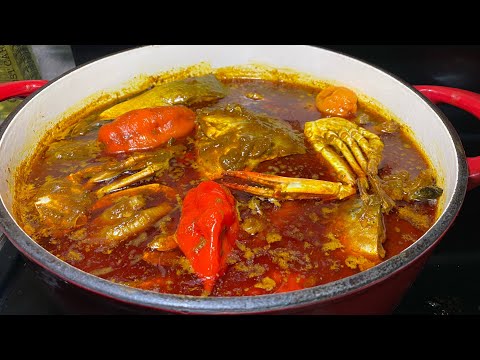
Nigerian Spicy Palm Butter Sauce
Description
Palm butter forms the structural base of this sauce, providing both fat and flavour density. Its saturated fat content demands controlled emulsification with the aqueous phase from stock or water to prevent separation. The inclusion of ground crayfish and pepper paste introduces particulate matter that stabilises the emulsion through mechanical dispersion. Acid from tomatoes and salt balance the inherent richness, while the starch from onions subtly thickens the matrix during simmering. Proper sequencing—melting palm butter before introducing aromatics—ensures even fat distribution and prevents scorching, which would impart bitterness and destabilise the final texture.
Ingredients
Ingredients
Instructions
Instructions
Step 1
Blend tomatoes, red bell pepper, and scotch bonnet chili into a smooth puree using a Blender.Ensure the puree is uniform to prevent uneven cooking and separation during reduction.Step 2
Heat vegetable oil in a Saucepan over medium heat. Add chopped onion and sauté until translucent and lightly golden.Avoid high heat; gentle sautéing develops sweetness without burning the onions, which can impart bitterness.Step 3
Add the blended pepper mixture to the pan and cook for 10–12 minutes, stirring occasionally until the raw aroma dissipates and the mixture thickens slightly.Maintain steady bubbling; this stage drives off excess moisture and builds concentrated flavour.Step 4
Stir in the melted palm butter, allowing it to emulsify with the pepper base. Mix thoroughly until the sauce turns uniformly orange-red.Add palm butter gradually to maintain emulsion stability and prevent oil separation.Step 5
Add ground crayfish, salt, and black pepper. Pour in stock and stir to combine. Reduce heat to low and simmer for 20–25 minutes until thickened and glossy.Simmer uncovered to allow controlled evaporation; stir periodically to prevent solids from settling and scorching.Step 6
Taste and adjust seasoning. Remove from heat and allow the sauce to rest for 5 minutes before serving.Resting allows residual heat to complete emulsification and stabilise the final texture.
Recommended Equipment

Nutrition Facts
Servings 4
Serving Size 1 portion
- Amount Per Serving
- Calories 467.7kcal
- % Daily Value *
- Total Fat 49.34g76%
- Saturated Fat 23.08g116%
- Cholesterol 10.11mg4%
- Sodium 841.04mg36%
- Potassium 204.71mg6%
- Total Carbohydrate 6.39g3%
- Dietary Fiber 1.43g6%
- Sugars 3.68g
- Protein 2.22g5%
- Vitamin A 1123.97 IU
- Vitamin C 39.81 mg
- Calcium 16.84 mg
- Iron 0.41 mg
- Vitamin E 8.11 mg
- Vitamin K 15.06 mcg
- Thiamin 0.04 mg
- Riboflavin 0.04 mg
- Niacin 0.64 mg
- Vitamin B6 0.15 mg
- Folate 21.58 mcg
- Vitamin B12 0.23 mcg
- Pantothenic Acid 0.18 mg
- Phosphorus 41.8 mg
- Magnesium 13.06 mg
- Zinc 0.28 mg
- Selenium 2.71 mcg
- Copper 0.09 mg
- Manganese 0.16 mg
* Nutrition information is provided as an estimate per serving and may vary depending on the ingredients, brands, substitutions, portion sizes and preparation methods used. Percent Daily Values (%DV) are based on U.S. FDA reference values for a 2,000-calorie diet and are intended as a general guide only. Individual nutritional needs vary. This information is not a substitute for advice from a registered dietitian or other qualified healthcare professional.
Note
Allow the dish to cool gradually before sealing. Rapid temperature shifts can create condensation, weakening texture and diluting surface flavour concentration. The resting phase supports structural stabilisation and moisture redistribution. Cutting or serving too early may compromise internal balance. Spice intensity can deepen over time as volatile compounds settle. Taste and adjust seasoning after resting. Slow-cooked preparations often improve after several hours or overnight refrigeration as aromatic compounds integrate more fully. Acid balance may soften slightly over time; a final adjustment before serving restores clarity.


