
Recipe Snapshot
Recipe at a Glance
Key timing, yield and style details before you start cooking.
Acid-Sugar Equilibrium and Fruit Integration
Pineapple introduces both acidity and enzymatic activity that influence the viscosity and brightness of the final barbecue sauce. The natural bromelain in pineapple breaks down proteins and softens fibrous textures during simmering, while its fructose content caramelises under heat to deepen colour and sweetness. Balancing this with tomato paste and brown sugar stabilises the pH and ensures a cohesive mouthfeel. Vinegar provides structural acidity that prevents the sauce from becoming cloying, while salt and soy sauce enhance umami depth. The ratio of fruit purée to tomato base determines the sauce’s final body and cling behaviour on grilled proteins.
Thermal Reduction and Moisture Management
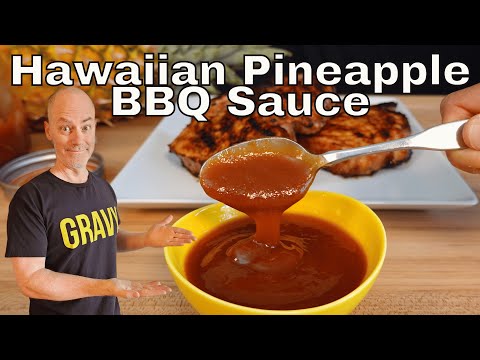
Controlled simmering is critical to achieve proper reduction without scorching. The sauce must maintain a gentle bubble to allow water evaporation while preserving volatile aromatics from garlic and spices. Excessive heat causes sugar crystallisation and uneven thickening, while insufficient heat leaves the sauce watery. Using a heavy-bottomed Saucepan ensures even conduction and prevents hot spots. Stirring frequency should increase as viscosity develops to avoid sticking. The reduction endpoint is reached when the sauce coats the back of a spoon and leaves a clean line when drawn through.
Flavour Development Through Cooking Transformation
During simmering, Maillard reactions occur between sugars and amino acids from soy sauce and tomato paste, generating complex savoury notes. Pineapple sugars darken slightly, contributing a subtle molasses-like undertone. The garlic and smoked paprika release oil-soluble compounds that integrate into the sauce’s fat phase, enhancing aroma persistence. As the mixture thickens, flavour concentration intensifies, and acidity softens. The final texture should be glossy and pourable, with suspended fruit fibres providing natural body without the need for starch thickeners.
Workflow Efficiency and Scaling Considerations
For consistent results in batch production, mise en place should prioritise pre-measured wet and dry phases. Combining all liquids before heating reduces the risk of uneven caramelisation. Scaling up requires proportional surface area adjustment to maintain reduction rate; wider pans accelerate evaporation, while deeper vessels slow it. Cooling must occur uncovered to prevent condensation dilution. The sauce can be portioned into sterilised Mason Jars while warm for extended storage stability. Maintaining uniform stirring intervals across batches ensures identical viscosity and flavour concentration.
Regional Technique Lineage and Adaptation
This sauce reflects a fusion of American barbecue reduction methods with tropical fruit integration common in Pacific and Caribbean cooking. Pineapple’s inclusion aligns with island-style glazes historically used for pork and poultry, where fruit acidity balanced smoke and fat. The base technique follows Southern-style tomato-vinegar barbecue logic, adapted to incorporate fruit sugars instead of molasses. Modern versions often reduce sodium and increase natural sweetness, maintaining the same reduction mechanics while aligning with contemporary flavour preferences.
Recipe Education
Learn the Skills Behind This Recipe
Build confidence with cooking skills, techniques, and tools used in this recipe.
How to Sauté Properly
Master fast cooking, pan heat, and ingredient timing for better texture.
Recommended for the saute method used in this recipe.
Simmer vs Boil
Learn when to simmer, when to boil, and how each affects recipe results.
Recommended for the simmer method used in this recipe.
Cookware Guide
Learn which pots and pans work best for frying, sautéing, simmering, and roasting.
Helpful when using saucepan during preparation.
Cups to Grams
Convert cup measurements more accurately to improve recipe consistency.
Helpful when using measuring cups during preparation.
Teaspoons to Grams
Use small-measure conversions more accurately in cooking and baking.
Helpful when using measuring spoons during preparation.
Batch Cooking
Cook once and prepare multiple meals more efficiently.
Selected for this type of recipe.


Pineapple BBQ Sauce
Description
Pineapple introduces both acidity and enzymatic activity that influence the viscosity and brightness of the final barbecue sauce. The natural bromelain in pineapple breaks down proteins and softens fibrous textures during simmering, while its fructose content caramelises under heat to deepen colour and sweetness. Balancing this with tomato paste and brown sugar stabilises the pH and ensures a cohesive mouthfeel. Vinegar provides structural acidity that prevents the sauce from becoming cloying, while salt and soy sauce enhance umami depth. The ratio of fruit purée to tomato base determines the sauce’s final body and cling behaviour on grilled proteins.
Ingredients
Ingredients
Instructions
Instructions
Step 1
Heat the vegetable oil in a Saucepan over medium heat. Add minced garlic and sauté until aromatic but not browned, about 30 seconds.Avoid high heat at this stage; burnt garlic introduces bitterness that persists through reduction.Step 2
Add tomato paste and cook for 2 minutes, stirring with a Silicone Spatula to develop a deeper colour and remove raw acidity.Allow the tomato paste to darken slightly; this initiates Maillard reactions that enhance savoury depth.Step 3
Stir in crushed pineapple with juice, brown sugar, apple cider vinegar, soy sauce, smoked paprika, salt, and ground black pepper. Mix until homogeneous.Combine all liquids before adding to the pan to ensure even sugar dissolution and prevent localised caramelisation.Step 4
Bring the mixture to a gentle simmer, then reduce heat to low. Cook uncovered for 20–25 minutes, stirring occasionally, until thickened and glossy.Monitor viscosity by coating the back of a spoon; the sauce should form a clean line when drawn through.Step 5
Remove from heat and allow to cool for 10 minutes. Blend with a Stick Blender until smooth or leave slightly textured if preferred.Blend while warm for smoother integration; cold blending can cause separation due to oil solidification.Step 6
Transfer to sterilised Mason Jars and seal. Store refrigerated for up to two weeks or freeze for longer preservation.Fill jars while the sauce is still hot to create a partial vacuum seal, improving shelf stability.
Recommended Equipment

Nutrition Facts
Servings 8
Serving Size 1 portion
- Amount Per Serving
- Calories 95.41kcal
- % Daily Value *
- Total Fat 1.98g4%
- Saturated Fat 0.31g2%
- Sodium 648.49mg28%
- Potassium 281.83mg9%
- Total Carbohydrate 19.37g7%
- Dietary Fiber 1.59g7%
- Sugars 16.63g
- Protein 1.57g4%
- Vitamin A 733.97 IU
- Vitamin C 7.29 mg
- Calcium 25.96 mg
- Iron 1.04 mg
- Vitamin E 1.21 mg
- Vitamin K 6.66 mcg
- Thiamin 0.05 mg
- Riboflavin 0.05 mg
- Niacin 0.92 mg
- Vitamin B6 0.1 mg
- Folate 5.07 mcg
- Phosphorus 27.83 mg
- Magnesium 17.48 mg
- Zinc 0.22 mg
- Selenium 1.45 mcg
- Copper 0.12 mg
- Manganese 0.16 mg
* Nutrition information is provided as an estimate per serving and may vary depending on the ingredients, brands, substitutions, portion sizes and preparation methods used. Percent Daily Values (%DV) are based on U.S. FDA reference values for a 2,000-calorie diet and are intended as a general guide only. Individual nutritional needs vary. This information is not a substitute for advice from a registered dietitian or other qualified healthcare professional.
Note
Allow the dish to cool gradually before sealing. Rapid temperature shifts can create condensation, weakening texture and diluting surface flavour concentration. The resting phase supports structural stabilisation and moisture redistribution. Cutting or serving too early may compromise internal balance. Spice intensity can deepen over time as volatile compounds settle. Taste and adjust seasoning after resting. In larger batches, maintain even heat distribution and avoid overcrowding during reheating to preserve structural integrity. Slow-cooked preparations often improve after several hours or overnight refrigeration as aromatic compounds integrate more fully. Texture refinement often occurs naturally during resting due to internal moisture redistribution.


