
Recipe Snapshot
Recipe at a Glance
Key timing, yield and style details before you start cooking.
Fat Distribution and Aromatic Integration
The balance between the pork’s intramuscular fat and the aromatic compounds from garlic and oregano defines the dish’s structural flavour. Fat acts as a carrier for volatile oils released from crushed garlic and dried oregano, ensuring even aromatic diffusion during cooking. Salt initiates protein denaturation, improving moisture retention and seasoning penetration. A brief marination period allows ionic exchange between salt and muscle fibres, stabilising juiciness under high heat. Olive oil emulsifies the seasoning matrix, coating the meat uniformly to prevent surface dehydration. The acid from lemon juice, if used optionally, moderates pH and enhances aromatic lift without compromising protein firmness.
Heat Management and Browning Control
Effective searing of pork chops depends on precise temperature staging. The pan must reach medium-high heat before contact to trigger Maillard reactions without excessive moisture loss. Overcrowding the pan induces steaming rather than browning, reducing crust formation. Once colour develops, lowering the heat ensures internal cooking without burning the exterior. Carryover heat continues to raise internal temperature post-sear, so resting is essential to stabilise juices. Oil film thickness must be minimal to avoid shallow frying; the goal is surface caramelisation, not immersion. Monitoring pan temperature visually through oil shimmer prevents scorching of garlic residues.
Textural Transformation During Cooking
As the pork cooks, myofibrillar proteins contract and expel moisture, while connective tissue softens slightly under moderate heat. Proper timing ensures tenderness without dryness. The surface crust forms through polymerisation of amino acids and sugars, creating a savoury layer that contrasts with the moist interior. Garlic particles toast, releasing nutty undertones, while oregano’s phenolic compounds intensify in oil. Resting allows redistributed juices to reabsorb into muscle fibres, equalising texture. Overcooking past 70°C internal temperature leads to irreversible toughness, so thermal monitoring is critical for maintaining structural integrity and succulence.
Workflow Efficiency and Timing Coordination
Mise en place discipline reduces downtime between searing and resting phases. Pre-measure seasoning, mince garlic, and preheat the pan before handling raw protein to avoid temperature lag. Parallel tasks, such as preparing a simple side or deglazing sauce, can occur during the resting period. Avoid late seasoning adjustments once the meat is in the pan, as salt applied mid-cook draws surface moisture and inhibits browning. Efficient sequencing—marinate, sear, rest—ensures consistent output across multiple portions, critical in both service and home execution. Maintaining clean transitions between raw and cooked zones prevents cross-contamination.
Regional Technique Lineage and Adaptation
This preparation aligns with Mediterranean cooking logic, particularly Greek and southern Italian traditions where oregano and garlic dominate pork seasoning. The method reflects a heritage of pan-seared meats finished simply with herbs and olive oil rather than complex sauces. Historically, oregano’s antimicrobial properties supported preservation in warm climates, while garlic provided aromatic depth to lean cuts. Modern adaptations favour thicker chops and controlled searing for improved texture consistency. The dish’s simplicity highlights ingredient quality and precise heat control, maintaining fidelity to its regional roots while adapting to contemporary kitchen standards.
Recipe Education
Learn the Skills Behind This Recipe
Build confidence with cooking skills, techniques, and tools used in this recipe.
How to Fry Properly
Understand pan heat, oil temperature, and how to get better frying results.
Recommended for the fry method used in this recipe.
Baking Tools Guide
Understand essential tools for mixing, measuring, and preparing recipes.
Helpful when using mixing bowl during preparation.
Cooking Basics
Build confidence with core skills and beginner-friendly cooking techniques.
Helpful cooking knowledge for recipes like this.


Pork Chops with Garlic and Oregano
Description
The balance between the pork’s intramuscular fat and the aromatic compounds from garlic and oregano defines the dish’s structural flavour. Fat acts as a carrier for volatile oils released from crushed garlic and dried oregano, ensuring even aromatic diffusion during cooking. Salt initiates protein denaturation, improving moisture retention and seasoning penetration. A brief marination period allows ionic exchange between salt and muscle fibres, stabilising juiciness under high heat. Olive oil emulsifies the seasoning matrix, coating the meat uniformly to prevent surface dehydration. The acid from lemon juice, if used optionally, moderates pH and enhances aromatic lift without compromising protein firmness.
Ingredients
Ingredients
Instructions
Instructions
Step 1
Pat pork chops dry with paper towels on a Cutting Board. Combine olive oil, minced garlic, dried oregano, salt, and black pepper in a Mixing Bowl to form a paste. Rub evenly over both sides of the chops and let stand for 15 minutes at room temperature.Ensure the chops are completely dry before seasoning to promote even browning and prevent surface steaming.Step 2
Preheat a Cast-Iron Skillet over medium-high heat until the oil begins to shimmer. Add the pork chops and sear undisturbed for 3–4 minutes per side until a golden crust forms.Do not move the chops during initial searing; uninterrupted contact maximises Maillard reaction efficiency.Step 3
Reduce heat to medium and continue cooking for another 3–5 minutes per side, depending on thickness, until internal temperature reaches 65°C. Avoid burning garlic particles by adjusting heat as needed.Use a Thermometer(Meat) to verify internal temperature rather than relying solely on colour cues.Step 4
Transfer the pork chops to a plate and cover loosely with Tin Foil. Rest for 5–7 minutes to allow juices to redistribute evenly through the meat.Resting under loose foil prevents condensation from softening the crust while stabilising internal moisture.Step 5
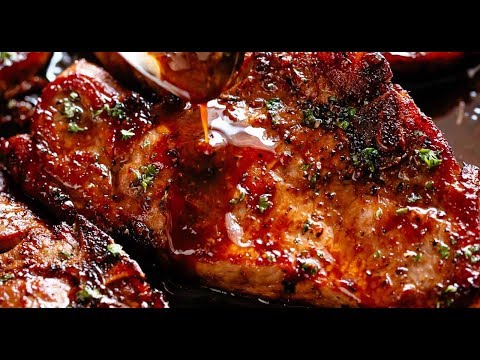
Deglaze the skillet with a splash of water or lemon juice, scraping browned bits with a Wooden Spoon. Drizzle the pan juices over the rested chops before serving.Deglazing while the pan is still warm captures concentrated flavour compounds without burning residual garlic.


Recommended Equipment

Nutrition Facts
Servings 4
Serving Size 1 portion
- Amount Per Serving
- Calories 69.43kcal
- % Daily Value *
- Total Fat 7.12g11%
- Saturated Fat 1g5%
- Cholesterol 0.67mg1%
- Sodium 582.57mg25%
- Total Carbohydrate 1.47g1%
- Dietary Fiber 0.31g2%
- Sugars 0.14g
- Protein 0.44g1%
- Vitamin C 2.16 mg
- Calcium 13.09 mg
- Iron 0.28 mg
- Vitamin E 1.1 mg
- Vitamin K 7.46 mcg
- Vitamin B6 0.04 mg
- Manganese 0.09 mg
* Nutrition information is provided as an estimate per serving and may vary depending on the ingredients, brands, substitutions, portion sizes and preparation methods used. Percent Daily Values (%DV) are based on U.S. FDA reference values for a 2,000-calorie diet and are intended as a general guide only. Individual nutritional needs vary. This information is not a substitute for advice from a registered dietitian or other qualified healthcare professional.
Note
For best structural retention, cool uncovered briefly before storage to prevent trapped steam from softening exterior crust or caramelised surfaces. The resting phase supports structural stabilisation and moisture redistribution. Cutting or serving too early may compromise internal balance. Spice intensity can deepen over time as volatile compounds settle. Taste and adjust seasoning after resting. When reheating crisp components, use dry heat rather than microwave methods to maintain exterior texture. Acid balance may soften slightly over time; a final adjustment before serving restores clarity.


