
Recipe Snapshot
Recipe at a Glance
Key timing, yield and style details before you start cooking.
Fat and Starch Interaction for Stable Emulsion
The structural integrity of red wine gravy depends on the controlled balance between rendered fat and starch-based thickening. Flour must be cooked sufficiently in the fat to eliminate raw taste and to form a stable roux capable of suspending liquid without separation. The wine introduces acidity, which can destabilize starch if added prematurely, so it is incorporated after the roux has developed colour. Stock provides gelatin and protein that reinforce viscosity through reduction. Salt and acid levels must be calibrated late in the process to avoid premature tightening or dulling of flavour.
Heat Management and Reduction Control
Temperature staging is critical to achieve both flavour concentration and textural smoothness. The initial roux requires medium heat to brown evenly without scorching. Once wine is added, the mixture must simmer gently to evaporate alcohol without excessive reduction that could cause bitterness. When stock enters, the heat should be reduced to maintain a steady simmer, allowing gradual thickening through evaporation. Over-reduction risks salt concentration and loss of gloss, while under-reduction yields a thin, unstable sauce. Controlled simmering ensures balanced viscosity and sheen.
Transformation Through Deglazing and Reduction
Deglazing with red wine extracts caramelised fond from the pan, integrating Maillard compounds into the liquid base. As the sauce reduces, these compounds dissolve and emulsify with the fat phase, deepening colour and complexity. The reduction phase also drives off volatile alcohols, leaving behind tannins and fruit acids that balance savoury depth. Flour gelatinises during simmering, binding the liquid into a cohesive texture. The final strain removes particulates, producing a glossy, uniform gravy suitable for service alongside roasted meats.
Workflow Efficiency and Timing Precision
Efficient mise en place prevents over-reduction or separation. The roux and wine reduction can be prepared while the roast rests, utilising residual pan heat. Stock should be preheated to avoid temperature shock that can cause lumping. Continuous whisking during liquid incorporation ensures even dispersion of starch. The final seasoning adjustment occurs only after reduction stabilises, preventing over-salting. Straining through a fine sieve before service ensures a smooth finish without aeration or graininess, maintaining professional presentation standards.
Culinary Lineage and Regional Context
Red wine gravy originates from classical French pan sauce technique, specifically the derivative sauces of the espagnole and jus reduction families. The use of wine reflects regional viticulture, particularly Burgundy and Bordeaux, where local reds were historically used to deglaze roasting pans. Modern adaptations simplify the base by omitting demi-glace while preserving reduction and emulsification principles. The method remains foundational in European kitchens, bridging traditional roasting practices with contemporary sauce consistency control.
Recipe Education
Learn the Skills Behind This Recipe
Build confidence with cooking skills, techniques, and tools used in this recipe.
Cookware Guide
Learn which pots and pans work best for frying, sautéing, simmering, and roasting.
Helpful when using frying pan during preparation.
How to Sauté Properly
Master fast cooking, pan heat, and ingredient timing for better texture.
Recommended for the saute method used in this recipe.
Simmer vs Boil
Learn when to simmer, when to boil, and how each affects recipe results.
Recommended for the simmer method used in this recipe.


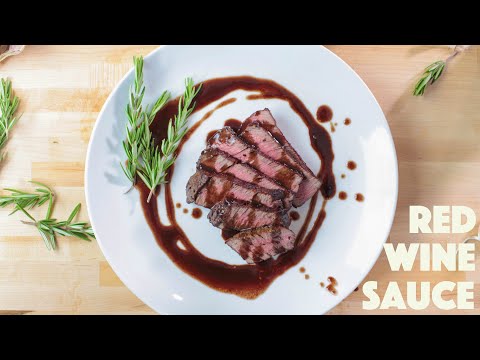
Red Wine Gravy
Description
The structural integrity of red wine gravy depends on the controlled balance between rendered fat and starch-based thickening. Flour must be cooked sufficiently in the fat to eliminate raw taste and to form a stable roux capable of suspending liquid without separation. The wine introduces acidity, which can destabilize starch if added prematurely, so it is incorporated after the roux has developed colour. Stock provides gelatin and protein that reinforce viscosity through reduction. Salt and acid levels must be calibrated late in the process to avoid premature tightening or dulling of flavour.
Ingredients
Ingredients
Instructions
Instructions
Step 1
Place the Frying Pan over medium heat and melt the unsalted butter until foaming. Add the plain flour and whisk continuously to form a roux. Cook for 3–4 minutes until light brown and nutty in aroma.Maintain constant whisking to prevent uneven browning; a uniform roux colour ensures consistent thickening.Step 2
Pour in the red wine gradually while whisking to deglaze the pan, scraping up any browned bits. Simmer for 5 minutes to reduce by half and cook off alcohol.Keep the simmer gentle; excessive heat can drive off desirable wine aromatics and introduce bitterness.Step 3
Add the hot beef stock in stages, whisking to integrate smoothly. Bring to a simmer and cook for 10–12 minutes until the sauce thickens and coats the back of a spoon.Introduce stock gradually to prevent roux separation and ensure even gelatinisation of starch.Step 4
Whisk in Dijon mustard, salt, and black pepper. Adjust seasoning as needed. If the gravy is too thin, mix cornstarch with cold water and whisk in small amounts until desired consistency is reached.Add slurry incrementally; over-thickening can dull flavour and reduce gloss.Step 5
Strain the gravy through a Sieve into a clean Saucepan to remove solids. Hold warm over low heat until service, stirring occasionally to maintain emulsion.Avoid boiling after straining; gentle holding prevents fat separation and maintains sheen.
Recommended Equipment

Nutrition Facts
Servings 6
Serving Size 1 portion
- Amount Per Serving
- Calories 94.9kcal
- % Daily Value *
- Total Fat 4.18g7%
- Saturated Fat 2.6g13%
- Cholesterol 10.75mg4%
- Sodium 533.15mg23%
- Potassium 187.11mg6%
- Total Carbohydrate 4.92g2%
- Sugars 0.65g
- Protein 1.8g4%
- Vitamin A 127.3 IU
- Calcium 12.08 mg
- Iron 0.56 mg
- Thiamin 0.05 mg
- Riboflavin 0.09 mg
- Niacin 0.89 mg
- Vitamin B6 0.06 mg
- Folate 8.11 mcg
- Phosphorus 36.69 mg
- Magnesium 11.37 mg
- Zinc 0.21 mg
- Selenium 2.38 mcg
- Copper 0.05 mg
- Manganese 0.1 mg
* Nutrition information is provided as an estimate per serving and may vary depending on the ingredients, brands, substitutions, portion sizes and preparation methods used. Percent Daily Values (%DV) are based on U.S. FDA reference values for a 2,000-calorie diet and are intended as a general guide only. Individual nutritional needs vary. This information is not a substitute for advice from a registered dietitian or other qualified healthcare professional.
Note
Allow the dish to cool gradually before sealing. Rapid temperature shifts can create condensation, weakening texture and diluting surface flavour concentration. Spice intensity can deepen over time as volatile compounds settle. Taste and adjust seasoning after resting. In larger batches, maintain even heat distribution and avoid overcrowding during reheating to preserve structural integrity. Slow-cooked preparations often improve after several hours or overnight refrigeration as aromatic compounds integrate more fully. When reheating crisp components, use dry heat rather than microwave methods to maintain exterior texture. Texture refinement often occurs naturally during resting due to internal moisture redistribution.


User Reviews
Can not beat the classics. I highly recommend any chef starting out to get a good understanding of the mother sauces. Here is a good link to help: https://en.wikipedia.org/wiki/French_mother_sauces