
Recipe Snapshot
Recipe at a Glance
Key timing, yield and style details before you start cooking.
Fat Distribution and Moisture Retention in Whole Roasting
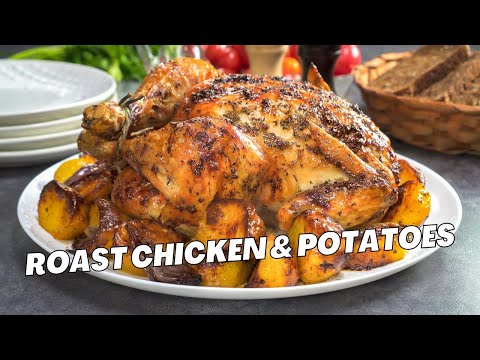
A whole chicken relies on balanced fat rendering and moisture retention to achieve uniform tenderness. The skin’s lipid layer bastes the meat as it roasts, while the subcutaneous fat melts gradually, preventing dryness in the breast. Salt initiates osmosis, drawing moisture to the surface before reabsorption, enhancing juiciness. Garlic and herbs introduce volatile oils that permeate the fat, creating aromatic depth. The potatoes beneath absorb rendered chicken fat, forming a self-basting system that stabilises hydration and flavour transfer. Proper seasoning contact and cavity aromatics ensure internal steam generation, supporting even cooking without external basting dependency.
Thermal Management and Heat Staging
Roasting requires controlled temperature staging to balance browning and internal doneness. Starting at high heat promotes Maillard reaction on the skin, sealing surface moisture and developing colour. Reducing to moderate heat allows gradual protein denaturation and collagen breakdown without overcooking lean areas. The potatoes, positioned under the bird, benefit from direct fat drip and radiant heat, roasting rather than steaming. Monitoring oven temperature stability with an Oven Thermometer prevents uneven zones. Resting post-roast allows carryover heat to equalise internal temperature gradients, stabilising juices before carving.
Textural Transformation and Aromatic Integration
During roasting, the chicken’s connective tissues soften as collagen converts to gelatin, enriching mouthfeel. The skin transitions from elastic to crisp through dehydration and fat rendering. Garlic undergoes caramelisation, shifting from sharp to sweet, while potatoes develop a crust through starch gelatinisation and surface dehydration. The interaction between rendered fat and starch creates a cohesive flavour matrix. The final texture contrast—crisp exterior, tender interior—depends on correct airflow and spacing on the Roasting Rack, ensuring convection circulation without moisture entrapment.
Workflow Efficiency and Service Coordination
Efficient mise en place reduces downtime during roasting. Preparing the garlic butter, seasoning, and potato base before preheating the oven ensures seamless transitions. Using a single Roasting Pan with integrated rack allows simultaneous cooking of protein and starch, minimising equipment turnover. While the chicken rests, the pan drippings can be deglazed into a quick reduction sauce, optimising flavour yield. This workflow aligns with professional service logic—maintaining temperature control, minimising reheat cycles, and synchronising plating timing for consistent service output.
Regional Technique Lineage and Adaptation
Roast chicken with potatoes reflects European roasting traditions, particularly French and Mediterranean influences where whole-bird roasting evolved from hearth cooking. The integration of garlic and herbs mirrors Provençal technique, emphasising aromatic fat infusion. The method’s efficiency—using rendered fat to cook accompanying vegetables—originated from resource-conscious rural kitchens. Modern adaptations maintain the same structural logic but employ precise oven control and calibrated seasoning ratios. The dish remains a benchmark for balanced roasting technique across European culinary training.
Recipe Education
Learn the Skills Behind This Recipe
Build confidence with cooking skills, techniques, and tools used in this recipe.
Oven Temperature Conversions
Understand oven temperatures and how they affect baking and roasting.
Recommended for the bake method used in this recipe.
Baking Tools Guide
Understand essential tools for mixing, measuring, and preparing recipes.
Recommended for the bake method used in this recipe.
How to Roast Properly
Improve roasting with better tray setup, timing, and oven heat balance.
Recommended for the roast method used in this recipe.
Cooking Basics
Build safer knife preparation, heat control, timing, and everyday kitchen confidence.
Helpful when using chef knife during preparation.
Cookware Guide
Learn which pots and pans work best for frying, sautéing, simmering, and roasting.
Helpful when using roasting pan during preparation.


Roast Chicken with Garlic Potatoes
Description
A whole chicken relies on balanced fat rendering and moisture retention to achieve uniform tenderness. The skin’s lipid layer bastes the meat as it roasts, while the subcutaneous fat melts gradually, preventing dryness in the breast. Salt initiates osmosis, drawing moisture to the surface before reabsorption, enhancing juiciness. Garlic and herbs introduce volatile oils that permeate the fat, creating aromatic depth. The potatoes beneath absorb rendered chicken fat, forming a self-basting system that stabilises hydration and flavour transfer. Proper seasoning contact and cavity aromatics ensure internal steam generation, supporting even cooking without external basting dependency.
Ingredients
Ingredients
Instructions
Instructions
Step 1
Preheat the oven to 220°C. Pat the whole chicken dry with paper towels on a Cutting Board. Mix softened butter, crushed garlic, rosemary, salt, and black pepper in a Mixing Bowl to form a compound butter.Ensure the butter is fully softened to allow even spreading under the skin without tearing it.Step 2
Loosen the chicken skin over the breast and thighs using fingers, then spread half of the garlic butter underneath. Rub the remaining butter over the exterior and place the lemon halves inside the cavity.Work gently to avoid puncturing the skin; intact skin ensures optimal fat rendering and crispness.Step 3
Toss the potato chunks with olive oil, a pinch of salt, and remaining rosemary in a Mixing Bowl. Arrange them evenly in a Roasting Pan fitted with a Roasting Rack.Keep potatoes in a single layer to promote roasting rather than steaming from trapped moisture.Step 4
Place the chicken breast-side up on the Roasting Rack above the potatoes. Roast at 220°C for 20 minutes, then reduce temperature to 180°C and continue roasting for 55–60 minutes until internal temperature reaches 75°C.Use a Thermometer(Meat) inserted into the thickest part of the thigh to verify doneness without touching bone.Step 5
Remove the chicken from the oven and rest for 15 minutes on a Cooling Rack before carving. Toss the potatoes in the rendered fat and return to the oven for 10 minutes to crisp further if desired.Resting allows juices to redistribute; carving too early causes moisture loss and uneven texture.
Recommended Equipment

Nutrition Facts
Servings 4
Serving Size 1 portion
- Amount Per Serving
- Calories 714.75kcal
- % Daily Value *
- Total Fat 44.19g68%
- Saturated Fat 14.44g73%
- Cholesterol 165.5mg56%
- Sodium 730.47mg31%
- Potassium 1268.94mg37%
- Total Carbohydrate 39.2g14%
- Dietary Fiber 5.37g22%
- Sugars 2.29g
- Protein 40.46g81%
- Vitamin A 542.84 IU
- Vitamin C 58.28 mg
- Calcium 65.56 mg
- Iron 3.62 mg
- Vitamin D 0.53 mcg
- Vitamin E 1.86 mg
- Vitamin K 11.99 mcg
- Thiamin 0.3 mg
- Riboflavin 0.31 mg
- Niacin 15.24 mg
- Vitamin B6 1.34 mg
- Folate 47.43 mcg
- Vitamin B12 0.61 mcg
- Pantothenic Acid 2.44 mg
- Phosphorus 410.52 mg
- Magnesium 88.71 mg
- Zinc 3.18 mg
- Selenium 29.11 mcg
- Copper 0.34 mg
- Manganese 0.46 mg
* Nutrition information is provided as an estimate per serving and may vary depending on the ingredients, brands, substitutions, portion sizes and preparation methods used. Percent Daily Values (%DV) are based on U.S. FDA reference values for a 2,000-calorie diet and are intended as a general guide only. Individual nutritional needs vary. This information is not a substitute for advice from a registered dietitian or other qualified healthcare professional.
Note
Allow the dish to cool gradually before sealing. Rapid temperature shifts can create condensation, weakening texture and diluting surface flavour concentration. The resting phase supports structural stabilisation and moisture redistribution. Cutting or serving too early may compromise internal balance. Spice intensity can deepen over time as volatile compounds settle. Taste and adjust seasoning after resting. Monitor seasoning levels after storage, as salt perception can shift once chilled.


