
Recipe Snapshot
Recipe at a Glance
Key timing, yield and style details before you start cooking.
Fat Rendering and Aromatic Integration
The structural success of this roast depends on controlled fat rendering and aromatic penetration. Pork shoulder or loin with a balanced fat cap allows gradual melting, which bastes the meat and carries rosemary’s volatile oils into the muscle fibers. Honey contributes both sweetness and surface caramelisation, but its high sugar content requires precise timing to avoid burning. Salt initiates protein denaturation, improving moisture retention, while a small acid component from lemon juice or vinegar balances the fat’s richness. The marinade’s hydration ratio must remain low to prevent steaming during roasting, ensuring a crisp crust and concentrated flavour development.
Thermal Management and Moisture Retention
Temperature staging is critical: initial high heat establishes Maillard browning, followed by moderate roasting to achieve internal tenderness without overcooking. Carryover heat continues protein denaturation after removal from the oven, so resting is non-negotiable. Excessive oven humidity or insufficient air circulation can inhibit crust formation, while too low a temperature risks extended exposure that toughens muscle fibers. Monitoring internal temperature with a probe ensures the pork reaches 68–70°C before resting, stabilising juices and preventing structural collapse. Controlled basting intervals maintain surface gloss without compromising dry heat conditions.
Transformation Through Roasting
During roasting, collagen in the pork gradually converts to gelatin, yielding a tender mouthfeel. Honey’s sugars undergo caramelisation and partial Maillard reactions with amino acids, deepening colour and flavour complexity. Rosemary’s essential oils volatilise under heat, infusing the rendered fat and creating aromatic depth. The surface transitions from moist to lacquered as water evaporates and sugars concentrate. Proper resting allows redistribution of rendered fat and gelatinised juices, preventing surface weeping when sliced. The result is a balanced contrast between crisp exterior and succulent interior, with integrated herb and honey notes.
Workflow Efficiency and Timing Control
Professional execution relies on disciplined sequencing: trimming, marinating, and preheating must occur before service window. The marinade can be prepared while the oven stabilises, and vegetables for the roasting base can be cut concurrently. Basting should be scheduled at fixed intervals to avoid unnecessary oven door openings that drop chamber temperature. Resting time can be used to deglaze the roasting pan for a quick reduction sauce. Efficient mise en place ensures minimal downtime and consistent output across multiple portions without compromising texture or temperature control.
Cultural and Regional Context
Honey-roasted pork with herbs reflects Mediterranean and European roasting traditions where aromatic herbs and natural sweeteners enhance preserved meats. Rosemary’s prevalence in southern European cookery aligns with its availability in dry climates and its compatibility with pork fat. The honey glaze technique evolved from medieval preservation methods that combined sugar and acid to stabilise cooked meats. Modern adaptations maintain the same structural logic—balancing sweetness, salt, and aromatic fat—to produce a roast that bridges rustic and refined culinary practice within Mediterranean lineage.
Recipe Education
Learn the Skills Behind This Recipe
Build confidence with cooking skills, techniques, and tools used in this recipe.
How to Roast Properly
Improve roasting with better tray setup, timing, and oven heat balance.
Recommended for the roast method used in this recipe.
Cookware Guide
Learn which pots and pans work best for frying, sautéing, simmering, and roasting.
Helpful when using roasting pan during preparation.
Oven Temperature Conversions
Understand oven temperatures and how they affect baking and roasting.
Recommended for the roast method used in this recipe.
Baking Tools Guide
Understand essential tools for mixing, measuring, and preparing recipes.
Helpful when using mixing bowl during preparation.


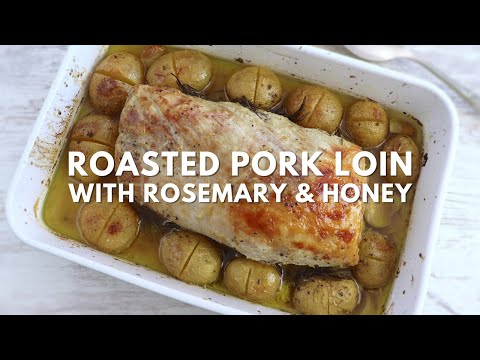
Roast Pork with Honey and Rosemary
Description
The structural success of this roast depends on controlled fat rendering and aromatic penetration. Pork shoulder or loin with a balanced fat cap allows gradual melting, which bastes the meat and carries rosemary’s volatile oils into the muscle fibers. Honey contributes both sweetness and surface caramelisation, but its high sugar content requires precise timing to avoid burning. Salt initiates protein denaturation, improving moisture retention, while a small acid component from lemon juice or vinegar balances the fat’s richness. The marinade’s hydration ratio must remain low to prevent steaming during roasting, ensuring a crisp crust and concentrated flavour development.
Ingredients
Ingredients
Instructions
Instructions
Step 1
Combine honey, olive oil, garlic, rosemary, salt, black pepper, and lemon juice in a Mixing Bowl to form a thick marinade.Whisk the honey and oil first to create a stable emulsion before adding solids; this ensures even coating on the pork surface.Step 2
Place the pork shoulder on a Cutting Board and trim any excess surface sinew, leaving the fat cap intact. Rub the marinade evenly over all sides.Massage the marinade under any loose fat edges to promote deeper flavour penetration during roasting.Step 3
Cover and refrigerate the marinated pork for at least 2 hours to allow salt diffusion and aromatic absorption.Longer marination up to 12 hours enhances internal seasoning but avoid overexposure to acid to prevent surface mushiness.Step 4
Preheat the oven to 220°C. Place the pork on a Roasting Rack set in a Roasting Pan. Roast for 20 minutes to initiate browning.Ensure the fat cap faces upward so rendered fat self-bastes the meat during the initial high-heat phase.Step 5
Reduce oven temperature to 170°C and continue roasting for 70–80 minutes, basting every 25 minutes with pan juices.Use a Thermometer(Meat) to verify internal temperature; remove the roast at 68–70°C to allow for carryover cooking.Step 6
Transfer the pork to a Cutting Board, tent loosely with Tin Foil, and rest for 15 minutes.Resting stabilises internal juices and prevents loss during slicing; do not skip or shorten this phase.Step 7
Place the Roasting Pan over medium heat on the stove, add chicken stock, and scrape browned bits with a Wooden Spoon. Simmer until reduced by half, then whisk in butter to finish.Deglaze while the pan is still warm to dissolve caramelised residues efficiently without scorching.Step 8
Slice the rested pork and serve with the reduced honey-rosemary pan sauce spooned over.Slice across the grain to maintain tenderness and even texture across portions.
Recommended Equipment

Nutrition Facts
Servings 6
Serving Size 1 portion
- Amount Per Serving
- Calories 325.87kcal
- % Daily Value *
- Total Fat 17.73g28%
- Saturated Fat 5.7g29%
- Cholesterol 107.77mg36%
- Sodium 543.85mg23%
- Potassium 558.52mg16%
- Total Carbohydrate 10.14g4%
- Sugars 8.97g
- Protein 30.43g61%
- Vitamin A 86.57 IU
- Vitamin C 2.87 mg
- Calcium 28.74 mg
- Iron 2.04 mg
- Vitamin E 0.74 mg
- Vitamin K 3.31 mcg
- Thiamin 1.36 mg
- Riboflavin 0.5 mg
- Niacin 6.82 mg
- Vitamin B6 0.67 mg
- Folate 9.94 mcg
- Vitamin B12 1.28 mcg
- Pantothenic Acid 1.28 mg
- Phosphorus 316.74 mg
- Magnesium 34.29 mg
- Zinc 4.86 mg
- Selenium 45.69 mcg
- Copper 0.17 mg
- Manganese 0.08 mg
* Nutrition information is provided as an estimate per serving and may vary depending on the ingredients, brands, substitutions, portion sizes and preparation methods used. Percent Daily Values (%DV) are based on U.S. FDA reference values for a 2,000-calorie diet and are intended as a general guide only. Individual nutritional needs vary. This information is not a substitute for advice from a registered dietitian or other qualified healthcare professional.
Note
Allow the dish to cool gradually before sealing. Rapid temperature shifts can create condensation, weakening texture and diluting surface flavour concentration. The resting phase supports structural stabilisation and moisture redistribution. Cutting or serving too early may compromise internal balance. Spice intensity can deepen over time as volatile compounds settle. Taste and adjust seasoning after resting. In larger batches, maintain even heat distribution and avoid overcrowding during reheating to preserve structural integrity. Slow-cooked preparations often improve after several hours or overnight refrigeration as aromatic compounds integrate more fully. Texture refinement often occurs naturally during resting due to internal moisture redistribution.


