
Recipe Snapshot
Recipe at a Glance
Key timing, yield and style details before you start cooking.
Ingredient Interaction and Structural Balance
Asparagus contains a high water content and fibrous cellulose structure that softens under dry heat. Olive oil coats the spears, moderating dehydration while promoting even surface browning through lipid-mediated heat transfer. Salt draws limited moisture to the surface, accelerating blistering and concentrating vegetal sweetness. The balance between oil quantity and oven temperature determines whether the stalks caramelise or desiccate. Acidic finishing elements such as lemon juice or vinegar, if used, should be applied post-roast to preserve chlorophyll brightness and prevent dulling of the green pigment caused by prolonged acid exposure.
Heat Management and Moisture Control
Roasting requires a controlled high-heat environment to achieve surface dehydration without internal collapse. A preheated oven ensures immediate radiant energy contact, initiating Maillard reactions on the asparagus tips. Excess crowding on the Baking Sheet traps steam, converting the process into partial steaming rather than roasting. Uniform spear thickness ensures consistent doneness across the batch. Turning the asparagus midway through cooking equalises exposure and prevents uneven caramelisation. The oil film must remain thin to avoid pooling, which would inhibit browning and cause localized sogginess.
Transformation Through Roasting
During roasting, the asparagus undergoes both moisture loss and sugar concentration. The fibrous outer layer softens as internal water migrates outward, while natural sugars caramelise at the surface. The chlorophyll stabilises briefly before degrading slightly, yielding a deeper green tone. The texture transitions from crisp-raw to tender with slight resistance at the core. The olive oil’s volatile compounds partially evaporate, leaving behind a nutty aroma. Proper timing ensures the stalks retain structural integrity without collapsing into limp strands, maintaining a clean snap when bent.
Workflow Efficiency and Common Errors
Efficient mise en place involves trimming woody ends uniformly before seasoning. Over-oiling or under-seasoning are frequent errors that compromise texture and flavour balance. Insufficient oven preheat delays browning, while excessive roasting time leads to fiber breakdown and bitterness. For service environments, asparagus can be pre-blanched and shocked, then finished in the oven to reduce ticket-time variability. Home cooks should avoid foil lining unless necessary for cleanup, as it reflects heat and reduces direct contact browning efficiency.
Regional and Culinary Context
Roasted asparagus aligns with Mediterranean cooking principles that emphasise olive oil as both flavour medium and heat conductor. The technique evolved from traditional open-fire vegetable roasting found in Southern European kitchens, particularly Italian and Spanish regions where seasonal produce drives menu rotation. Modern adaptations maintain the same structural logic—high heat, minimal seasoning, and oil-based conduction—while utilising controlled oven environments instead of charcoal embers. The dish exemplifies the Mediterranean approach to ingredient purity and textural precision through minimal intervention.
Recipe Education
Learn the Skills Behind This Recipe
Build confidence with cooking skills, techniques, and tools used in this recipe.
Cooking Basics
Build safer knife preparation, heat control, timing, and everyday kitchen confidence.
Helpful when using chef knife during preparation.
Oven Temperature Conversions
Understand oven temperatures and how they affect baking and roasting.
Recommended for the roast method used in this recipe.
Baking Tools Guide
Understand essential tools for mixing, measuring, and preparing recipes.
Helpful when using mixing bowl during preparation.
How to Roast Properly
Improve roasting with better tray setup, timing, and oven heat balance.
Recommended for the roast method used in this recipe.


Roasted Asparagus with Olive Oil
Description
Asparagus contains a high water content and fibrous cellulose structure that softens under dry heat. Olive oil coats the spears, moderating dehydration while promoting even surface browning through lipid-mediated heat transfer. Salt draws limited moisture to the surface, accelerating blistering and concentrating vegetal sweetness. The balance between oil quantity and oven temperature determines whether the stalks caramelise or desiccate. Acidic finishing elements such as lemon juice or vinegar, if used, should be applied post-roast to preserve chlorophyll brightness and prevent dulling of the green pigment caused by prolonged acid exposure.
Ingredients
Ingredients
Instructions
Instructions
Step 1
Preheat the oven to 220°C. Line a Baking Sheet with Parchment Paper to prevent sticking and ensure even heat reflection.Allow the oven to reach full temperature before loading to prevent moisture accumulation and uneven browning.Step 2
Rinse the asparagus under cold water, pat completely dry using Tea Towels, and trim the woody ends with a Chef Knife on a Cutting Board.Drying thoroughly is critical; surface moisture inhibits caramelisation and promotes steaming instead of roasting.Step 3
Place the asparagus in Mixing Bowls, drizzle with olive oil, and toss evenly to coat. Season with salt and black pepper.Use minimal oil—just enough to create a thin, uniform film that enhances browning without pooling.Step 4
Arrange the asparagus in a single layer on the prepared Baking Sheet, ensuring no overlap between spears.Spacing allows hot air circulation, maintaining a dry environment essential for proper roasting texture.Step 5
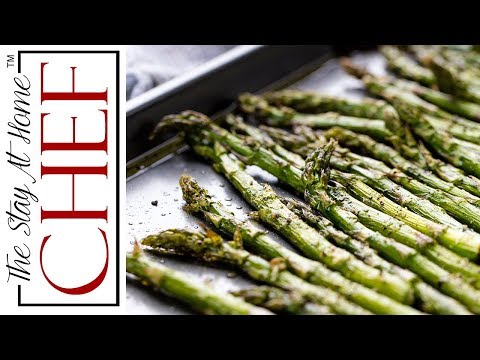
Roast for 10–12 minutes, turning once halfway through, until the tips are lightly browned and the stalks are tender yet firm.Monitor visually—tips should darken slightly while stalks remain vibrant green; over-roasting dulls colour and flavour.Step 6
Remove from the oven and immediately drizzle with lemon juice if using. Serve while hot.Adding acid post-roast preserves chlorophyll brightness and balances the oil’s richness without softening the texture.
Recommended Equipment

Nutrition Facts
Servings 4
Serving Size 1 portion
- Amount Per Serving
- Calories 56.18kcal
- % Daily Value *
- Total Fat 3.58g6%
- Saturated Fat 0.53g3%
- Sodium 196.42mg9%
- Potassium 257.22mg8%
- Total Carbohydrate 5.09g2%
- Dietary Fiber 2.69g11%
- Sugars 2.38g
- Protein 2.78g6%
- Vitamin A 946.44 IU
- Vitamin C 7.5 mg
- Calcium 31.34 mg
- Iron 2.72 mg
- Vitamin E 1.91 mg
- Vitamin K 54.47 mcg
- Thiamin 0.18 mg
- Riboflavin 0.18 mg
- Niacin 1.23 mg
- Vitamin B6 0.12 mg
- Folate 65.3 mcg
- Pantothenic Acid 0.35 mg
- Phosphorus 65.5 mg
- Magnesium 18.01 mg
- Zinc 0.68 mg
- Selenium 2.89 mcg
- Copper 0.24 mg
- Manganese 0.23 mg
* Nutrition information is provided as an estimate per serving and may vary depending on the ingredients, brands, substitutions, portion sizes and preparation methods used. Percent Daily Values (%DV) are based on U.S. FDA reference values for a 2,000-calorie diet and are intended as a general guide only. Individual nutritional needs vary. This information is not a substitute for advice from a registered dietitian or other qualified healthcare professional.
Note
Allow the dish to cool gradually before sealing. Rapid temperature shifts can create condensation, weakening texture and diluting surface flavour concentration. The resting phase supports structural stabilisation and moisture redistribution. Cutting or serving too early may compromise internal balance. Spice intensity can deepen over time as volatile compounds settle. Taste and adjust seasoning after resting. Monitor seasoning levels after storage, as salt perception can shift once chilled.


