
Recipe Snapshot
Recipe at a Glance
Key timing, yield and style details before you start cooking.
Aromatics and Fat Integration Control
Garlic undergoes a major structural transformation during roasting, shifting from sharp sulfuric intensity to a mellow, caramelised sweetness. The fat medium—typically olive oil—facilitates even Maillard browning while preventing surface scorching. The starch contribution from potatoes stabilises the emulsion once blended, providing viscosity without requiring flour. Parmesan introduces both umami and salt, but its protein and fat content demand careful balance to avoid separation under heat. The sequencing of roasted garlic addition after simmering ensures the volatile aromatics remain intact while the base liquid absorbs depth without bitterness.
Thermal Management and Reduction Discipline
Temperature staging defines the soup’s clarity and mouthfeel. Roasting garlic at moderate heat (around 180°C) allows sugars to caramelise without acrid notes. During simmering, maintaining a gentle convection prevents emulsified fats from breaking and keeps the starch matrix stable. Over-reduction risks concentrating salt and destabilising the dairy phase when Parmesan is incorporated. Controlled heat during blending and reheating avoids curdling. The final simmer should be brief, just enough to integrate flavours and achieve a cohesive, velvety texture without excessive evaporation.
Texture Development and Emulsion Stability
Once blended, the soup relies on the emulsification of oil, dairy, and starch to achieve a uniform, glossy consistency. The roasted garlic’s pectin and the potato’s gelatinised starch act as natural stabilisers, preventing fat separation. Parmesan contributes fine particulate density that thickens slightly upon cooling, enhancing body. The final texture should coat the spoon lightly without graininess. Straining through a fine sieve ensures a refined finish suitable for service. Proper resting allows micro-bubbles to dissipate, yielding a smoother mouthfeel and more stable presentation temperature.
Workflow Efficiency and Mise en Place Logic
Efficiency depends on parallel processing: garlic can roast while the stock base heats and potatoes soften. Pre-grating Parmesan and warming cream prevent temperature shocks during integration. Using a Stick Blender directly in the pot reduces transfer loss and maintains heat continuity. Mise en place should include pre-measured liquids and garnishes to streamline plating. Avoiding last-minute seasoning adjustments before blending ensures even distribution. The workflow should progress linearly—roast, simmer, blend, strain, finish—minimising downtime and maintaining consistent service temperature across multiple portions.
Regional Technique Lineage and Adaptation
Roasted garlic soup aligns with southern French and northern Italian traditions where allium-based soups evolved from peasant broths into refined emulsified veloutés. The use of Parmesan reflects Italian influence, while the roasting technique mirrors Provençal garlic confit methods. Historically, such soups utilised aged cheese for umami reinforcement when meat stock was scarce. Modern adaptations employ vegetable stock and controlled blending to achieve a lighter, more stable texture. The dish exemplifies Mediterranean efficiency in flavour extraction through minimal ingredients and precise heat application.
Recipe Education
Learn the Skills Behind This Recipe
Build confidence with cooking skills, techniques, and tools used in this recipe.
How to Roast Properly
Improve roasting with better tray setup, timing, and oven heat balance.
Recommended for the roast method used in this recipe.
How to Sauté Properly
Master fast cooking, pan heat, and ingredient timing for better texture.
Recommended for the saute method used in this recipe.
Cookware Guide
Learn which pots and pans work best for frying, sautéing, simmering, and roasting.
Helpful when using saucepan during preparation.
Oven Temperature Conversions
Understand oven temperatures and how they affect baking and roasting.
Recommended for the roast method used in this recipe.
Baking Tools Guide
Understand essential tools for mixing, measuring, and preparing recipes.
Helpful when using mixing bowl during preparation.
Simmer vs Boil
Learn when to simmer, when to boil, and how each affects recipe results.
Recommended for the simmer method used in this recipe.


Roasted Garlic Soup with Parmesan
Description
Garlic undergoes a major structural transformation during roasting, shifting from sharp sulfuric intensity to a mellow, caramelised sweetness. The fat medium—typically olive oil—facilitates even Maillard browning while preventing surface scorching. The starch contribution from potatoes stabilises the emulsion once blended, providing viscosity without requiring flour. Parmesan introduces both umami and salt, but its protein and fat content demand careful balance to avoid separation under heat. The sequencing of roasted garlic addition after simmering ensures the volatile aromatics remain intact while the base liquid absorbs depth without bitterness.
Ingredients
Ingredients
Instructions
Instructions
Step 1
Preheat oven to 180°C. Slice the tops off the garlic heads, drizzle with 30 ml olive oil, wrap in foil, and roast for 40 minutes until soft and golden.Ensure garlic heads are evenly sized to promote uniform caramelisation and prevent undercooked cloves.Step 2
In a Saucepan, heat 15 ml olive oil over medium heat. Add chopped onion and sauté for 5 minutes until translucent without browning.Keep heat moderate to avoid Maillard browning, which would alter the soup’s pale colour and flavour profile.Step 3
Add diced potatoes and vegetable stock to the pan. Simmer gently for 20 minutes until potatoes are tender and easily pierced with a knife.Maintain a low simmer to prevent starch breakdown that can cause a gluey texture during blending.Step 4
Squeeze roasted garlic cloves from their skins into the pot. Stir to combine, then blend the mixture using a Stick Blender until smooth.Blend while the soup is hot but not boiling to stabilise the emulsion and preserve roasted garlic aroma.Step 5
Stir in warm double cream and grated Parmesan. Return to low heat and cook for 3–4 minutes, stirring until fully integrated. Season with salt and black pepper.Add Parmesan off high heat to prevent curdling and maintain a smooth, glossy finish.Step 6
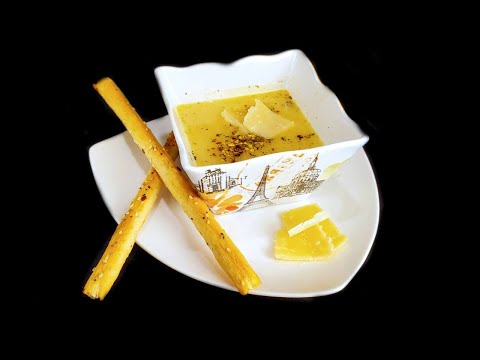
Pass the soup through a Sieve for a refined texture. Serve hot, garnished with chopped parsley.Straining removes fibrous residue, ensuring a professional-grade velvety consistency.
Recommended Equipment

Nutrition Facts
Servings 4
Serving Size 1 portion
- Amount Per Serving
- Calories 410.64kcal
- % Daily Value *
- Total Fat 28g44%
- Saturated Fat 12.62g64%
- Cholesterol 52.83mg18%
- Sodium 1449.19mg61%
- Potassium 605.39mg18%
- Total Carbohydrate 31.96g11%
- Dietary Fiber 3.21g13%
- Sugars 5.5g
- Protein 10.16g21%
- Vitamin A 1311.72 IU
- Vitamin C 30.18 mg
- Calcium 261.89 mg
- Iron 1.52 mg
- Vitamin D 0.68 mcg
- Vitamin E 1.9 mg
- Vitamin K 30.92 mcg
- Thiamin 0.15 mg
- Riboflavin 0.18 mg
- Niacin 1.32 mg
- Vitamin B6 0.62 mg
- Folate 26.36 mcg
- Vitamin B12 0.24 mcg
- Pantothenic Acid 0.63 mg
- Phosphorus 224.2 mg
- Magnesium 41.3 mg
- Zinc 1.1 mg
- Selenium 7.94 mcg
- Copper 0.2 mg
- Manganese 0.57 mg
* Nutrition information is provided as an estimate per serving and may vary depending on the ingredients, brands, substitutions, portion sizes and preparation methods used. Percent Daily Values (%DV) are based on U.S. FDA reference values for a 2,000-calorie diet and are intended as a general guide only. Individual nutritional needs vary. This information is not a substitute for advice from a registered dietitian or other qualified healthcare professional.
Note
Allow the dish to cool gradually before sealing. Rapid temperature shifts can create condensation, weakening texture and diluting surface flavour concentration. The resting phase supports structural stabilisation and moisture redistribution. Cutting or serving too early may compromise internal balance. Dairy-based elements may thicken further upon cooling. Reheat gently to prevent separation or grainy texture. Slow-cooked preparations often improve after several hours or overnight refrigeration as aromatic compounds integrate more fully. Acid balance may soften slightly over time; a final adjustment before serving restores clarity.


