
Recipe Snapshot
Recipe at a Glance
Key timing, yield and style details before you start cooking.
Protein and Starch Integration for Structural Balance
The wrap’s structural integrity depends on the balance between the sausage’s rendered fat and the egg’s protein matrix. The sausage provides both flavour and lubrication, while the egg binds and stabilises the filling. Excess fat can cause the wrap to soften prematurely, so draining the sausage before combining is essential. The tortilla’s starch network absorbs residual moisture, preventing sogginess. Salt and pepper seasoning should be calibrated after cooking the sausage to avoid compounding salt from processed meat. The inclusion of cheese introduces controlled fat and emulsifying proteins, ensuring a cohesive filling that remains pliable without leaking during folding or reheating.
Heat Management and Moisture Control During Cooking
Temperature staging is critical: sausage must be cooked thoroughly before eggs are introduced to prevent overcooking the latter. Using medium heat in a Non-stick Skillet allows even browning without excessive fat release. Eggs should be scrambled gently to retain moisture and avoid rubbery texture. Residual heat from the pan completes egg coagulation after removal from direct flame. The tortilla should be briefly warmed to increase flexibility and prevent cracking during assembly. Controlled heat exposure ensures each component retains its intended texture—crisp sausage edges, soft eggs, and a pliant wrap surface.
Textural Transformation and Flavour Layering
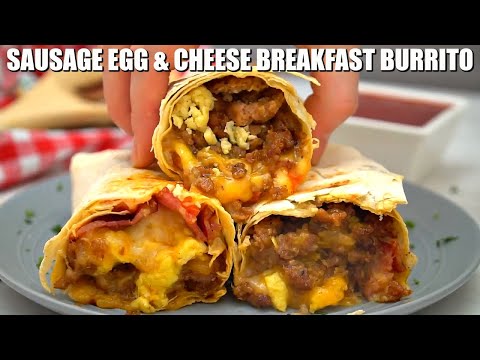
Cooking transforms the sausage’s protein and fat structure, developing Maillard browning that deepens savoury notes. The eggs undergo denaturation and coagulation, forming a tender curd structure that traps moisture. Cheese melts into the matrix, creating a uniform layer that binds the filling. When wrapped, the residual heat slightly steams the tortilla interior, softening starches and sealing the roll. This layering of textures—browned meat, creamy egg, melted cheese, and warm tortilla—creates a balanced mouthfeel. Each element contributes to the final sensory structure without overpowering the others.
Workflow Efficiency and Assembly Logic
Efficient mise en place reduces downtime: pre-cook sausage, whisk eggs, and prepare cheese and tortillas before heat application. The sequence—cook sausage, scramble eggs, assemble—minimises pan transitions and temperature loss. Using a single Non-stick Skillet for both protein and egg phases streamlines cleanup and maintains consistent heat. Assembly should occur while fillings remain warm but not steaming to prevent condensation inside the wrap. Rolling tightly from one end ensures even distribution and prevents filling displacement during handling or slicing.
Regional and Culinary Context
Breakfast wraps evolved from North American diner culture, merging handheld convenience with traditional breakfast components. The technique borrows from Mexican tortilla handling but adapts to Western breakfast ingredients. The use of sausage and scrambled eggs reflects Anglo-American breakfast preferences, while the wrap format aligns with modern portability demands. This hybridisation demonstrates how regional staples—tortillas, cured meats, and eggs—combine through cross-cultural adaptation to create a structurally efficient, high-protein meal suitable for both commercial and home preparation.
Recipe Education
Learn the Skills Behind This Recipe
Build confidence with cooking skills, techniques, and tools used in this recipe.
How to Fry Properly
Understand pan heat, oil temperature, and how to get better frying results.
Recommended for the fry method used in this recipe.
Teaspoons to Grams
Use small-measure conversions more accurately in cooking and baking.
Helpful when using measuring spoons during preparation.
Baking Tools Guide
Understand essential tools for mixing, measuring, and preparing recipes.
Helpful when using mixing bowl during preparation.
Cooking Basics
Build confidence with core skills and beginner-friendly cooking techniques.
Supports the beginner skill level of this recipe.


Sausage and Egg Breakfast Wrap
Description
The wrap’s structural integrity depends on the balance between the sausage’s rendered fat and the egg’s protein matrix. The sausage provides both flavour and lubrication, while the egg binds and stabilises the filling. Excess fat can cause the wrap to soften prematurely, so draining the sausage before combining is essential. The tortilla’s starch network absorbs residual moisture, preventing sogginess. Salt and pepper seasoning should be calibrated after cooking the sausage to avoid compounding salt from processed meat. The inclusion of cheese introduces controlled fat and emulsifying proteins, ensuring a cohesive filling that remains pliable without leaking during folding or reheating.
Ingredients
Ingredients
Instructions
Instructions
Step 1
Heat the Non-stick Skillet over medium heat and add vegetable oil. Add the sausage and cook, breaking it apart with a Spatula until browned and fully cooked, about 6–8 minutes. Remove and drain on paper towel.Avoid overcrowding the pan; consistent contact with the surface ensures even browning and prevents steaming.Step 2
Wipe the skillet lightly to remove excess fat, leaving a thin film. Whisk eggs with milk, salt, and black pepper, then pour into the skillet over low-medium heat. Stir gently with a Silicone Spatula until softly set, about 2–3 minutes.Remove eggs from heat just before fully set; residual heat will complete coagulation without drying.Step 3
Return the cooked sausage to the skillet with the eggs and fold gently to combine. Sprinkle grated cheddar cheese over the mixture and allow it to melt slightly before removing from heat.Add cheese off direct heat to prevent oil separation and maintain a smooth melt.Step 4
Warm the flour tortillas briefly in a clean Frying Pan or Microwave for 10–15 seconds until pliable. Place half the filling in the centre of each tortilla.Warming the tortilla activates surface starches, improving flexibility and preventing cracking during rolling.Step 5
Fold the sides inward, then roll tightly from the bottom to enclose the filling. Serve immediately or wrap in foil for transport.Keep the seam side down for 30 seconds before serving to allow the wrap to self-seal from residual heat.
Recommended Equipment

Nutrition Facts
Servings 2
Serving Size 1 portion
- Amount Per Serving
- Calories 728.05kcal
- % Daily Value *
- Total Fat 55.8g86%
- Saturated Fat 19.76g99%
- Cholesterol 474.9mg159%
- Sodium 2360.69mg99%
- Potassium 464.73mg14%
- Total Carbohydrate 16.94g6%
- Dietary Fiber 1.18g5%
- Sugars 1.95g
- Protein 37.44g75%
- Vitamin A 930.48 IU
- Calcium 333.06 mg
- Iron 4.05 mg
- Vitamin D 3.56 mcg
- Vitamin E 2.04 mg
- Vitamin K 17.13 mcg
- Thiamin 0.48 mg
- Riboflavin 0.81 mg
- Niacin 6.13 mg
- Vitamin B6 0.52 mg
- Folate 82.58 mcg
- Vitamin B12 2.1 mcg
- Pantothenic Acid 2.41 mg
- Phosphorus 540.57 mg
- Magnesium 42.49 mg
- Zinc 4.76 mg
- Selenium 46.05 mcg
- Copper 0.19 mg
- Manganese 0.25 mg
* Nutrition information is provided as an estimate per serving and may vary depending on the ingredients, brands, substitutions, portion sizes and preparation methods used. Percent Daily Values (%DV) are based on U.S. FDA reference values for a 2,000-calorie diet and are intended as a general guide only. Individual nutritional needs vary. This information is not a substitute for advice from a registered dietitian or other qualified healthcare professional.
Note
For best structural retention, cool uncovered briefly before storage to prevent trapped steam from softening exterior crust or caramelised surfaces. The resting phase supports structural stabilisation and moisture redistribution. Cutting or serving too early may compromise internal balance. Dairy-based elements may thicken further upon cooling. Reheat gently to prevent separation or grainy texture. When reheating crisp components, use dry heat rather than microwave methods to maintain exterior texture. Acid balance may soften slightly over time; a final adjustment before serving restores clarity.


