
Recipe Snapshot
Recipe at a Glance
Key timing, yield and style details before you start cooking.
Dough Hydration and Fat Layering Control
The dough for scallion pancakes relies on a controlled hydration ratio that balances elasticity and extensibility. Boiling water partially denatures gluten-forming proteins, producing a pliable yet tender structure. This hot-water dough allows for thin rolling without tearing. The subsequent oil brushing introduces a laminated effect, where fat layers inhibit gluten bonding, creating distinct flaky strata during pan-frying. Salt in the dough not only seasons but also strengthens gluten strands, improving dough handling. The scallions contribute moisture and mild sulfur compounds that integrate into the dough layers, enhancing aroma without compromising lamination integrity. Proper kneading and resting ensure uniform hydration and manageable elasticity before rolling.
Heat Management and Moisture Retention During Pan-Frying
Pan temperature dictates the final texture balance between crisp exterior and supple interior. Medium heat allows gradual moisture evaporation while promoting even browning through Maillard reactions. Excessive heat scorches the surface before internal layers set, while low heat leads to oil absorption and soggy texture. Controlled oil film thickness in the Frying Pan ensures consistent conduction without deep-frying. Turning frequency must be limited to preserve lamination and prevent steam escape. Resting the dough before cooking stabilizes internal moisture distribution, reducing blistering and uneven puffing. Maintaining uniform thickness across the pancake ensures predictable heat transfer and even coloration.
Textural Transformation Through Rolling and Coiling
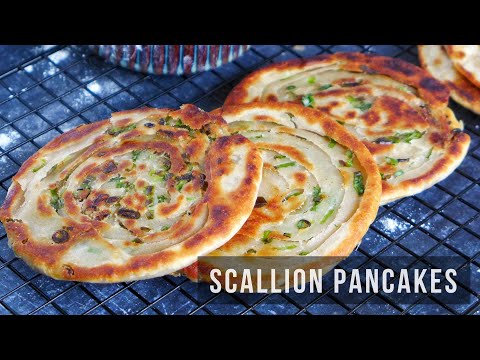
The rolling and coiling sequence transforms a simple dough into a laminated structure. Rolling thinly after oiling and sprinkling scallions creates micro-layers separated by fat. Coiling compresses these layers, trapping air and oil pockets that expand during cooking. This mechanical lamination mimics puff pastry behaviour on a smaller scale. The final rolling after coiling determines flake density: thinner yields crispier texture, thicker retains more chew. During frying, steam pressure between layers lifts the dough, creating a stratified crumb. The scallions soften slightly, releasing aromatic oils that permeate the layers without leaking moisture into the frying medium.
Workflow Efficiency and Dough Handling Optimization
Efficient production depends on staging dough resting and rolling cycles. While one portion rests, another can be rolled and coiled, maintaining continuous output. Using a lightly oiled surface prevents sticking without introducing excess fat that would disrupt lamination. Portioning the dough evenly ensures consistent cooking times and uniform diameter. In professional settings, pre-rolled pancakes can be stacked with parchment separators and refrigerated for short holding periods. Temperature control during holding is critical; cold dough resists rolling, while over-warmed dough becomes sticky and loses definition. Proper mise en place of scallions, oil, and rolling tools minimizes downtime between batches.
Regional Technique Lineage and Modern Adaptation
Cong You Bing originates from northern Chinese wheat-based cookery, where hot-water doughs evolved to maximize tenderness in pan-cooked breads. The lamination technique parallels other regional flatbreads such as Shaobing and Paratha, reflecting cross-cultural adaptation of fat layering. Traditional street vendors use heavy cast-iron griddles for even heat retention, while modern kitchens often employ Non-stick Skillets for control and reduced oil use. Variations exist in scallion distribution, oil type, and thickness, but the structural principle—layered dough fried to crispness—remains consistent. Contemporary adaptations may adjust salt or oil ratios for dietary preferences without altering the essential mechanical process.
Recipe Education
Learn the Skills Behind This Recipe
Build confidence with cooking skills, techniques, and tools used in this recipe.
How to Fry Properly
Understand pan heat, oil temperature, and how to get better frying results.
Recommended for the fry method used in this recipe.
Cooking Basics
Build safer knife preparation, heat control, timing, and everyday kitchen confidence.
Helpful when using chef knife during preparation.
Cookware Guide
Learn which pots and pans work best for frying, sautéing, simmering, and roasting.
Helpful when using frying pan during preparation.
Baking Tools Guide
Understand essential tools for mixing, measuring, and preparing recipes.
Helpful when using mixing bowl during preparation.


Scallion Pancakes (Cong You Bing)
Description
The dough for scallion pancakes relies on a controlled hydration ratio that balances elasticity and extensibility. Boiling water partially denatures gluten-forming proteins, producing a pliable yet tender structure. This hot-water dough allows for thin rolling without tearing. The subsequent oil brushing introduces a laminated effect, where fat layers inhibit gluten bonding, creating distinct flaky strata during pan-frying. Salt in the dough not only seasons but also strengthens gluten strands, improving dough handling. The scallions contribute moisture and mild sulfur compounds that integrate into the dough layers, enhancing aroma without compromising lamination integrity. Proper kneading and resting ensure uniform hydration and manageable elasticity before rolling.
Ingredients
Ingredients
Instructions
Instructions
Step 1
Combine all-purpose flour and salt in Mixing Bowls. Gradually pour in boiling water while stirring with a Wooden Spoon until a rough dough forms. Knead until smooth, cover with Cling Film, and rest for 30 minutes.Use boiling water above 90°C to partially gelatinize starch, improving dough pliability and reducing toughness.Step 2
Mix 2 tbsp neutral oil with 1 tbsp flour to form a smooth paste. This will act as the lamination fat layer. Set aside while preparing scallions.Ensure the oil-flour paste is lump-free; uneven texture causes inconsistent layering during rolling.Step 3
Divide rested dough into four equal portions using a Chef Knife. Roll one portion thinly on a lightly oiled Cutting Board with a Rolling Pin. Brush evenly with the oil-flour paste and sprinkle chopped scallions over the surface.Maintain even pressure when rolling to prevent thin spots that can rupture during coiling.Step 4
Roll the dough sheet into a tight log, coil it into a spiral, and flatten gently with the Rolling Pin to form a round pancake about 0.5 cm thick. Repeat with remaining portions.Allow coiled rounds to rest 10 minutes before final rolling to relax gluten and prevent shrink-back.Step 5
Heat 30 ml neutral oil in a Frying Pan over medium heat. Fry each pancake 2–3 minutes per side until golden brown and crisp. Drain briefly on a Cooling Rack before cutting into wedges.Monitor oil temperature; consistent medium heat ensures even browning without excessive oil absorption.
Recommended Equipment

Nutrition Facts
Servings 4
Serving Size 1 portion
- Amount Per Serving
- Calories 410.88kcal
- % Daily Value *
- Total Fat 14.89g23%
- Saturated Fat 1.15g6%
- Sodium 588.36mg25%
- Potassium 137.58mg4%
- Total Carbohydrate 60.13g21%
- Dietary Fiber 2.6g11%
- Sugars 0.67g
- Protein 8.31g17%
- Vitamin A 199.4 IU
- Vitamin C 3.76 mg
- Calcium 27.64 mg
- Iron 3.87 mg
- Vitamin E 2.62 mg
- Vitamin K 51.68 mcg
- Thiamin 0.61 mg
- Riboflavin 0.4 mg
- Niacin 4.63 mg
- Vitamin B6 0.05 mg
- Folate 153.47 mcg
- Pantothenic Acid 0.35 mg
- Phosphorus 90.43 mg
- Magnesium 21.38 mg
- Zinc 0.62 mg
- Selenium 26.18 mcg
- Copper 0.14 mg
- Manganese 0.56 mg
* Nutrition information is provided as an estimate per serving and may vary depending on the ingredients, brands, substitutions, portion sizes and preparation methods used. Percent Daily Values (%DV) are based on U.S. FDA reference values for a 2,000-calorie diet and are intended as a general guide only. Individual nutritional needs vary. This information is not a substitute for advice from a registered dietitian or other qualified healthcare professional.
Note
For best structural retention, cool uncovered briefly before storage to prevent trapped steam from softening exterior crust or caramelised surfaces. The resting phase supports structural stabilisation and moisture redistribution. Cutting or serving too early may compromise internal balance. When reheating crisp components, use dry heat rather than microwave methods to maintain exterior texture. Monitor seasoning levels after storage, as salt perception can shift once chilled.


