
Recipe Snapshot
Recipe at a Glance
Key timing, yield and style details before you start cooking.
Dough Hydration and Fat Layering Control
The dough for Shaobing relies on moderate hydration to achieve extensibility without stickiness. A ratio near 55–58% water to flour allows for proper gluten development while maintaining handling stability during lamination. The inclusion of oil within the dough and as a brushing medium between folds creates distinct flaky layers through controlled fat separation. Salt not only seasons but also strengthens gluten strands, preventing tearing during rolling. Proper rest intervals between folds are essential to relax the gluten network, ensuring even expansion during baking and avoiding uneven blistering on the surface.
Heat Management and Surface Browning
Shaobing requires high initial oven heat to set the outer crust rapidly and promote sesame adhesion. The baking sheet must be preheated to stabilise bottom heat transfer, preventing soggy bases. The top heat should encourage Maillard browning without over-drying the interior. If baked too cool, the layers steam internally, leading to dense texture. Conversely, excessive heat causes premature crust hardening and limited lift. Monitoring colour development and rotating trays mid-bake ensures uniform exposure. The sesame seeds toast simultaneously, releasing oils that enhance aroma and surface gloss.
Structural Transformation During Baking
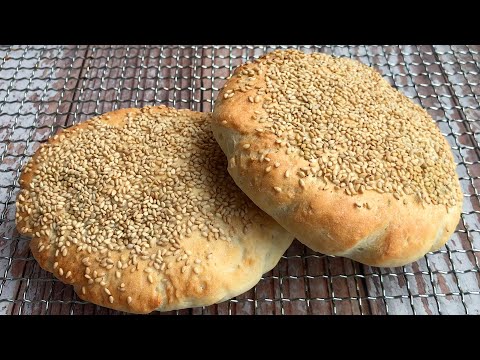
When baked, the laminated dough undergoes rapid steam expansion between oil layers, separating sheets into crisp strata. The outer crust transitions from pliable to brittle as surface moisture evaporates. Internal layers remain slightly tender due to trapped steam, creating a dual texture profile. The sesame coating caramelises lightly, contributing nutty depth and visual contrast. Proper cooling on a rack is critical; residual steam must escape to preserve flakiness. Cutting or stacking while hot compresses layers and compromises structure, so resting is part of the controlled transformation phase.
Workflow Efficiency and Lamination Discipline
Efficient Shaobing production depends on disciplined mise en place and timing. Dough mixing, resting, and folding must be sequenced to avoid gluten fatigue. Rolling multiple portions in parallel allows consistent proofing intervals. Oil application should be thin and even to prevent pooling, which can cause uneven blistering. Excess flour dusting interferes with lamination adhesion, so minimal use is advised. During service, pre-baked Shaobing can be reheated briefly to restore crispness, but over-reheating drives off residual moisture and hardens the crumb.
Regional and Historical Context
Shaobing originates from Northern China, where wheat-based flatbreads evolved under dry climate conditions favouring baked rather than steamed doughs. The technique reflects Persian and Central Asian influences introduced via Silk Road trade, particularly in the use of layered dough and sesame topping. Regional variants differ in filling and thickness—Beijing-style versions are plain and crisp, while Henan and Shandong adaptations may include sweet or savoury fillings. Modern bakeries often use electric ovens instead of traditional clay tandoor-style walls, adjusting hydration and oil ratios to suit controlled heat environments.
Recipe Education
Learn the Skills Behind This Recipe
Build confidence with cooking skills, techniques, and tools used in this recipe.
Baking Tools Guide
Understand essential tools for mixing, measuring, and preparing recipes.
Recommended for the bake method used in this recipe.
Oven Temperature Conversions
Understand oven temperatures and how they affect baking and roasting.
Recommended for the bake method used in this recipe.
Batch Cooking
Cook once and prepare multiple meals more efficiently.
Selected for this type of recipe.


Sesame Pancakes (Shaobing)
Description
The dough for Shaobing relies on moderate hydration to achieve extensibility without stickiness. A ratio near 55–58% water to flour allows for proper gluten development while maintaining handling stability during lamination. The inclusion of oil within the dough and as a brushing medium between folds creates distinct flaky layers through controlled fat separation. Salt not only seasons but also strengthens gluten strands, preventing tearing during rolling. Proper rest intervals between folds are essential to relax the gluten network, ensuring even expansion during baking and avoiding uneven blistering on the surface.
Ingredients
Ingredients
Instructions
Instructions
Step 1
Combine all-purpose flour and salt in a Mixing Bowl. Gradually add warm water while mixing with a Wooden Spoon until a rough dough forms. Add 1 tbsp vegetable oil and knead until smooth, about 8 minutes.Maintain dough temperature near 25°C to ensure optimal gluten elasticity without stickiness.Step 2
Cover the dough with Cling Film and rest for 30 minutes to relax gluten. Meanwhile, prepare a small bowl with 2 tbsp vegetable oil mixed with scallion oil if using.Resting allows the dough to roll evenly later; skipping this step causes tearing during lamination.Step 3
On a lightly floured Cutting Board, roll the dough into a rectangle using a Rolling Pin. Brush a thin layer of the oil mixture over the surface, then fold into thirds like a letter. Rotate 90 degrees and repeat rolling and folding once more.Apply oil uniformly; uneven coating leads to irregular blistering and inconsistent flake separation.Step 4
Divide the laminated dough into 6 equal pieces. Flatten each piece gently, brush the top with a little water, and press into sesame seeds to coat evenly.Press seeds lightly to embed them without compressing layers; excessive pressure reduces lift.Step 5
Preheat the Oven to 220°C. Place the pancakes sesame-side up on a preheated Baking Sheet lined with Parchment Paper. Bake for 12–15 minutes until golden brown and crisp.Rotate the Baking Sheet halfway through to ensure uniform browning and even heat exposure.Step 6
Transfer baked Shaobing to a Cooling Rack and rest for 10 minutes before serving to allow internal steam to dissipate.Cooling stabilises the flaky structure; cutting or stacking while hot traps steam and softens layers.
Recommended Equipment

Nutrition Facts
Servings 6
Serving Size 1 portion
- Amount Per Serving
- Calories 271.06kcal
- % Daily Value *
- Total Fat 10.3g16%
- Saturated Fat 1.56g8%
- Sodium 390.36mg17%
- Potassium 63.36mg2%
- Total Carbohydrate 38.58g13%
- Dietary Fiber 1.55g7%
- Sugars 0.16g
- Protein 5.45g11%
- Calcium 23.96 mg
- Iron 2.56 mg
- Vitamin E 0.78 mg
- Vitamin K 18.89 mcg
- Thiamin 0.4 mg
- Riboflavin 0.25 mg
- Niacin 3.03 mg
- Vitamin B6 0.03 mg
- Folate 93.6 mcg
- Pantothenic Acid 0.22 mg
- Phosphorus 63.81 mg
- Magnesium 16.77 mg
- Zinc 0.47 mg
- Selenium 17.47 mcg
- Copper 0.14 mg
- Manganese 0.38 mg
* Nutrition information is provided as an estimate per serving and may vary depending on the ingredients, brands, substitutions, portion sizes and preparation methods used. Percent Daily Values (%DV) are based on U.S. FDA reference values for a 2,000-calorie diet and are intended as a general guide only. Individual nutritional needs vary. This information is not a substitute for advice from a registered dietitian or other qualified healthcare professional.
Note
Allow the dish to cool gradually before sealing. Rapid temperature shifts can create condensation, weakening texture and diluting surface flavour concentration. The resting phase supports structural stabilisation and moisture redistribution. Cutting or serving too early may compromise internal balance. In larger batches, maintain even heat distribution and avoid overcrowding during reheating to preserve structural integrity. Monitor seasoning levels after storage, as salt perception can shift once chilled.


