
Recipe Snapshot
Recipe at a Glance
Key timing, yield and style details before you start cooking.
Rice Hydration and Protein Integration
The structural base of shrimp juk depends on controlled hydration of short-grain rice. The starch granules must swell gradually under moderate heat to achieve a viscous, cohesive texture without grain fragmentation. Introducing shrimp protein late in the process prevents over-denaturation and maintains a tender bite. The natural sweetness of shrimp balances the mild rice starch, while a small amount of sesame oil and salt enhances umami depth. Excessive agitation during early hydration can cause premature starch release, resulting in uneven thickening. Maintaining a consistent rice-to-liquid ratio ensures uniform gelatinisation and prevents separation during simmering.
Thermal Regulation and Moisture Retention
Heat management is critical to prevent scorching and maintain a smooth porridge consistency. The mixture should be brought to a gentle simmer, not a rolling boil, to allow even starch expansion. Carryover heat continues gelatinisation after removal from direct flame, so final viscosity should be judged slightly looser than desired. Evaporation control through partial lid coverage helps retain moisture while allowing minimal reduction for flavour concentration. Shrimp must be added only once the rice base reaches full viscosity, ensuring even cooking through residual heat without rubbery texture. Temperature staging between 85–95°C yields optimal results.
Texture Development and Flavour Concentration
As the rice breaks down, amylose and amylopectin release thickening agents that create the characteristic creamy body of juk. Stirring frequency determines mouthfeel: intermittent agitation promotes smoothness without excessive shear. The shrimp’s natural glutamates integrate into the starch matrix, deepening savoury notes. A brief simmer after shrimp addition allows flavour diffusion without overcooking. Aromatic garnishes such as scallion and sesame oil are added off heat to preserve volatile compounds. The final texture should be cohesive yet fluid, with visible shrimp pieces suspended evenly throughout the porridge.
Workflow Efficiency and Preparation Sequencing
Efficient mise en place reduces downtime during the long simmer phase. Pre-soaking rice shortens hydration time and ensures predictable thickening. Stock should be kept hot in a separate saucepan to maintain consistent temperature when replenishing liquid. Shrimp should be cleaned, deveined, and portioned before cooking begins to avoid delays during the critical finishing stage. Parallel preparation of garnishes during simmering optimises workflow. Avoid batch overcrowding; excessive volume in the pot slows heat transfer and leads to uneven texture. Controlled sequencing ensures a stable, repeatable result under service conditions.
Cultural and Regional Context
Shrimp juk originates from Korean culinary tradition, where rice porridge serves both as comfort food and convalescent nourishment. The technique evolved from broader East Asian congee methods, adapted to local seafood availability along coastal regions. Korean juk distinguishes itself through finer rice breakdown and balanced seasoning rather than heavy salinity. Shrimp variants are common in coastal households, reflecting the integration of marine protein into staple grain preparations. Modern adaptations maintain traditional slow simmering while utilising precise temperature control for consistent texture and flavour clarity.
Recipe Education
Learn the Skills Behind This Recipe
Build confidence with cooking skills, techniques, and tools used in this recipe.
How to Sauté Properly
Master fast cooking, pan heat, and ingredient timing for better texture.
Recommended for the saute method used in this recipe.
Simmer vs Boil
Learn when to simmer, when to boil, and how each affects recipe results.
Recommended for the simmer method used in this recipe.
Cookware Guide
Learn which pots and pans work best for frying, sautéing, simmering, and roasting.
Helpful when using saucepan during preparation.
Cups to Grams
Convert cup measurements more accurately to improve recipe consistency.
Helpful when using measuring cups during preparation.
Teaspoons to Grams
Use small-measure conversions more accurately in cooking and baking.
Helpful when using measuring spoons during preparation.
Baking Tools Guide
Understand essential tools for mixing, measuring, and preparing recipes.
Helpful when using mixing bowl during preparation.


Shrimp Juk (Shrimp Porridge)
Description
The structural base of shrimp juk depends on controlled hydration of short-grain rice. The starch granules must swell gradually under moderate heat to achieve a viscous, cohesive texture without grain fragmentation. Introducing shrimp protein late in the process prevents over-denaturation and maintains a tender bite. The natural sweetness of shrimp balances the mild rice starch, while a small amount of sesame oil and salt enhances umami depth. Excessive agitation during early hydration can cause premature starch release, resulting in uneven thickening. Maintaining a consistent rice-to-liquid ratio ensures uniform gelatinisation and prevents separation during simmering.
Ingredients
Ingredients
Instructions
Instructions
Step 1
Heat sesame oil in a Saucepan over medium heat. Add minced garlic and sauté for 30 seconds until aromatic without browning.Maintain medium heat to prevent garlic from turning bitter; colour change indicates excessive heat exposure.Step 2
Add soaked rice to the pan and stir for 2–3 minutes to coat grains evenly with oil, allowing surface starch to activate.Light toasting enhances flavour and improves starch control by sealing grain surfaces before full hydration.Step 3
Gradually add hot chicken stock, one ladle at a time, stirring intermittently. Maintain a gentle simmer and continue adding stock as absorbed.Keep stock hot to avoid temperature drops that interrupt gelatinisation and extend cooking time.Step 4
Simmer for 25–30 minutes until rice grains break down and porridge reaches a creamy consistency. Stir occasionally to prevent sticking.Use a Silicone Spatula to scrape the bottom regularly; this prevents scorching and ensures even thickening.Step 5
Add chopped shrimp and cook for 3–4 minutes until opaque and tender. Season with salt and soy sauce, then remove from heat.Add shrimp only at the end; residual heat completes cooking without toughening the protein.Step 6
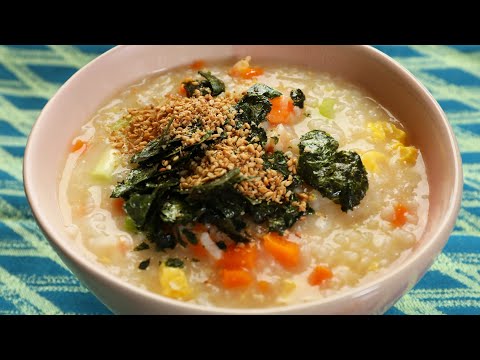
Ladle into bowls and garnish with sliced scallion and toasted sesame seeds before serving.Add garnishes immediately before service to preserve aroma and colour contrast.
Recommended Equipment

Nutrition Facts
Servings 2
Serving Size 1 portion
- Amount Per Serving
- Calories 612.51kcal
- % Daily Value *
- Total Fat 16.12g25%
- Saturated Fat 3.2g16%
- Cholesterol 176.22mg59%
- Sodium 2178.94mg91%
- Potassium 1031.03mg30%
- Total Carbohydrate 76.34g26%
- Dietary Fiber 2.88g12%
- Sugars 8.22g
- Protein 39.2g79%
- Vitamin A 75.25 IU
- Vitamin C 2.58 mg
- Calcium 121.89 mg
- Iron 3.27 mg
- Vitamin E 0.28 mg
- Vitamin K 14.41 mcg
- Thiamin 0.5 mg
- Riboflavin 0.48 mg
- Niacin 11.45 mg
- Vitamin B6 0.73 mg
- Folate 45.75 mcg
- Pantothenic Acid 1.13 mg
- Phosphorus 563.5 mg
- Magnesium 168.83 mg
- Zinc 3.7 mg
- Selenium 11.76 mcg
- Copper 0.93 mg
- Manganese 2.92 mg
* Nutrition information is provided as an estimate per serving and may vary depending on the ingredients, brands, substitutions, portion sizes and preparation methods used. Percent Daily Values (%DV) are based on U.S. FDA reference values for a 2,000-calorie diet and are intended as a general guide only. Individual nutritional needs vary. This information is not a substitute for advice from a registered dietitian or other qualified healthcare professional.
Note
Allow the dish to cool gradually before sealing. Rapid temperature shifts can create condensation, weakening texture and diluting surface flavour concentration. The resting phase supports structural stabilisation and moisture redistribution. Cutting or serving too early may compromise internal balance. Grains and starches continue absorbing moisture after cooking. Adjust liquid slightly when reheating to restore optimal consistency. Slow-cooked preparations often improve after several hours or overnight refrigeration as aromatic compounds integrate more fully. Acid balance may soften slightly over time; a final adjustment before serving restores clarity.


