
Recipe Snapshot
Recipe at a Glance
Key timing, yield and style details before you start cooking.
Ingredient Interaction and Structural Balance
The dish relies on a controlled ratio between protein density in the meatballs and starch hydration in the pasta. Ground beef and pork provide complementary fat profiles—beef for structure, pork for succulence. Breadcrumbs absorb moisture and stabilize the emulsion formed by egg proteins, preventing separation during searing. The marinara’s acidity from tomatoes balances the fat content, while salt and aromatics integrate flavour through osmotic diffusion. Parmesan introduces umami and salt synergy, enhancing savoury depth without oversalting. Proper sequencing—hydrating breadcrumbs before mixing—ensures even moisture distribution and prevents dense, rubbery texture in the meatballs.
Heat Management and Technique Control
Searing the meatballs in a Frying Pan over medium-high heat initiates Maillard reactions, developing surface complexity before simmering. Temperature staging is critical: initial browning locks in juices, while subsequent simmering in the marinara completes protein coagulation without overcooking. The sauce reduction must be managed to maintain viscosity—too rapid evaporation leads to excessive concentration and salt imbalance. Pasta boiling requires consistent rolling heat to prevent sticking and uneven hydration. Timing alignment between sauce reduction and pasta cooking ensures cohesive plating without over-resting either component.
Transformation Through Cooking
During simmering, collagen in the meatballs converts to gelatin, yielding tenderness. Tomato acids in the marinara break down pectin, thickening the sauce naturally as water evaporates. Aromatics release volatile compounds that integrate into the fat phase, amplifying aroma retention. The starch surface of drained spaghetti binds with the sauce’s emulsified fat, creating a cohesive coating rather than separation. The final texture contrast—al dente pasta, tender meatballs, and reduced sauce—depends on precise control of reduction and resting intervals to stabilize emulsification before plating.
Workflow Coordination and Efficiency
Professional execution requires parallel sequencing: while the sauce simmers, meatballs can be browned and held briefly before integration. Pasta water should be salted and brought to boil during sauce reduction to synchronize completion. Mise en place—pre-chopped aromatics, pre-measured liquids, and portioned proteins—prevents timing bottlenecks. Avoid overcrowding the pan during searing to maintain surface temperature and prevent steaming. Efficient workflow ensures each component reaches optimal doneness simultaneously, minimizing holding time that could compromise texture or temperature integrity.
Cultural and Regional Context
Spaghetti and meatballs evolved from Italian-American adaptation rather than direct Italian lineage. Traditional Italian cuisine serves smaller meat portions separately, while immigrant adaptation in the United States merged pasta and meat into a single plate for efficiency and satiety. The marinara base retains Neapolitan tomato-sauce technique, but the portion scale and protein integration reflect early 20th-century American abundance. The dish remains a structural hybrid—Italian in technique, American in composition—demonstrating how ingredient availability and cultural adaptation shape enduring culinary forms.
Recipe Education
Learn the Skills Behind This Recipe
Build confidence with cooking skills, techniques, and tools used in this recipe.
Cookware Guide
Learn which pots and pans work best for frying, sautéing, simmering, and roasting.
Helpful when using frying pan during preparation.
How to Boil Properly
Learn boiling times, temperature control, and how to avoid overcooking.
Recommended for the boil method used in this recipe.
How to Fry Properly
Understand pan heat, oil temperature, and how to get better frying results.
Recommended for the fry method used in this recipe.
Cups to Grams
Convert cup measurements more accurately to improve recipe consistency.
Helpful when using measuring cups during preparation.
Baking Tools Guide
Understand essential tools for mixing, measuring, and preparing recipes.
Helpful when using mixing bowl during preparation.
Simmer vs Boil
Learn when to simmer, when to boil, and how each affects recipe results.
Recommended for the simmer method used in this recipe.


Spaghetti and Meatballs with Marinara Sauce
Description
The dish relies on a controlled ratio between protein density in the meatballs and starch hydration in the pasta. Ground beef and pork provide complementary fat profiles—beef for structure, pork for succulence. Breadcrumbs absorb moisture and stabilize the emulsion formed by egg proteins, preventing separation during searing. The marinara’s acidity from tomatoes balances the fat content, while salt and aromatics integrate flavour through osmotic diffusion. Parmesan introduces umami and salt synergy, enhancing savoury depth without oversalting. Proper sequencing—hydrating breadcrumbs before mixing—ensures even moisture distribution and prevents dense, rubbery texture in the meatballs.
Ingredients
Ingredients
Instructions
Instructions
Step 1
Combine breadcrumbs and milk in a Mixing Bowl and allow to hydrate for 5 minutes until fully absorbed.Ensure breadcrumbs are fully saturated to prevent dry pockets in the meatball mixture.Step 2
Add ground beef, ground pork, egg, half of the Parmesan cheese, salt, and black pepper to the hydrated breadcrumbs. Mix gently until just combined.Avoid overmixing to maintain tender texture; mix only until ingredients are uniformly distributed.Step 3
Shape the mixture into uniform 30 g meatballs. Heat olive oil in a Frying Pan over medium-high heat and sear meatballs on all sides until browned.Do not overcrowd the pan; maintain consistent surface temperature for even browning.Step 4
In a separate Saucepan, sauté onion and garlic in a small amount of olive oil over medium heat until translucent. Add crushed tomatoes and oregano, then simmer for 20 minutes to reduce slightly.Control simmer intensity; gentle bubbling prevents sauce from scorching and preserves acidity balance.Step 5
Transfer seared meatballs into the simmering sauce. Cover and cook on low heat for 25 minutes until meatballs are fully cooked and tender.Maintain low simmer to allow gradual protein denaturation without toughening the meatballs.Step 6
Boil spaghetti in salted water in a Stock Pot until al dente, then drain and reserve 50 ml of cooking water.Use abundant water and stir early to prevent pasta adhesion during initial gelatinisation.Step 7
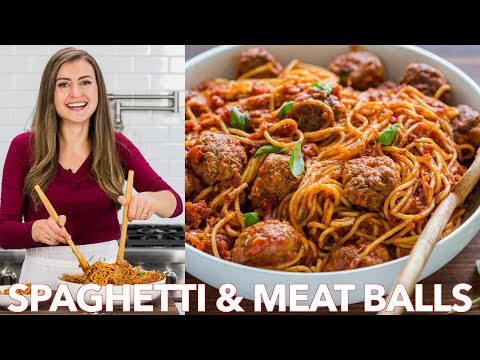
Combine drained spaghetti with the marinara and meatballs. Add reserved pasta water if needed to adjust sauce consistency. Finish with torn basil and remaining Parmesan.Incorporate pasta water gradually to emulsify sauce starches and achieve cohesive coating.
Recommended Equipment

Nutrition Facts
Servings 4
Serving Size 1 portion
- Amount Per Serving
- Calories 971.7kcal
- % Daily Value *
- Total Fat 40.47g63%
- Saturated Fat 14g70%
- Cholesterol 141.15mg48%
- Sodium 1264.96mg53%
- Potassium 1304.06mg38%
- Total Carbohydrate 105.31g36%
- Dietary Fiber 8.46g34%
- Sugars 14.75g
- Protein 46.72g94%
- Vitamin A 699.65 IU
- Vitamin C 21.72 mg
- Calcium 337.81 mg
- Iron 7.18 mg
- Vitamin D 0.57 mcg
- Vitamin E 4.19 mg
- Vitamin K 26.1 mcg
- Thiamin 0.82 mg
- Riboflavin 0.59 mg
- Niacin 10.62 mg
- Vitamin B6 1 mg
- Folate 81.09 mcg
- Vitamin B12 2.37 mcg
- Pantothenic Acid 2.14 mg
- Phosphorus 626.29 mg
- Magnesium 136.77 mg
- Zinc 7.07 mg
- Selenium 98.81 mcg
- Copper 0.8 mg
- Manganese 1.58 mg
* Nutrition information is provided as an estimate per serving and may vary depending on the ingredients, brands, substitutions, portion sizes and preparation methods used. Percent Daily Values (%DV) are based on U.S. FDA reference values for a 2,000-calorie diet and are intended as a general guide only. Individual nutritional needs vary. This information is not a substitute for advice from a registered dietitian or other qualified healthcare professional.
Note
Allow the dish to cool gradually before sealing. Rapid temperature shifts can create condensation, weakening texture and diluting surface flavour concentration. The resting phase supports structural stabilisation and moisture redistribution. Cutting or serving too early may compromise internal balance. Dairy-based elements may thicken further upon cooling. Reheat gently to prevent separation or grainy texture. Slow-cooked preparations often improve after several hours or overnight refrigeration as aromatic compounds integrate more fully. When reheating crisp components, use dry heat rather than microwave methods to maintain exterior texture. Texture refinement often occurs naturally during resting due to internal moisture redistribution.


