
Recipe Snapshot
Recipe at a Glance
Key timing, yield and style details before you start cooking.
Hydration and Grain Structure Control
Glutinous rice requires precise hydration to achieve cohesive yet distinct grains. Soaking for several hours allows starch granules to absorb water evenly, ensuring uniform gelatinisation during steaming. Excess water leads to mushiness, while insufficient soaking causes hard centres. The inclusion of light soy sauce and sesame oil introduces controlled fat and salt interaction, which slightly tightens the surface starch and enhances savoury depth. The lotus leaf acts as a semi-permeable barrier, trapping steam while allowing aromatic exchange, preventing direct water contact that would otherwise compromise the rice’s structural integrity.
Steam Environment and Heat Regulation
Steaming relies on consistent saturated heat rather than direct conduction. Maintaining steady steam output ensures even cooking without condensation pooling. The lotus leaf’s fibrous surface diffuses moisture, preventing localized overhydration. Temperature stability is critical; fluctuating steam pressure can cause uneven gelatinisation or undercooked cores. Using a Steamer Basket or Bamboo Steamer lined with parchment prevents sticking while maintaining airflow. Timing must be calibrated to the rice mass and filling density, as oversteaming can toughen proteins and dull aromatic oils.
Transformation and Aromatic Integration
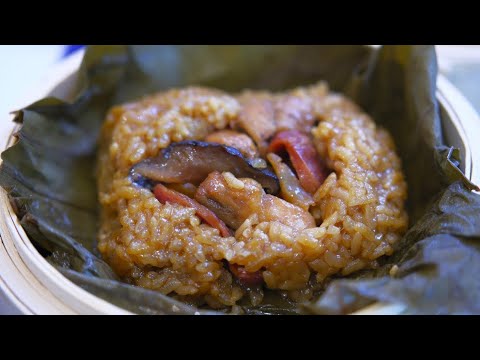
During steaming, starch gelatinises fully, binding the filling and rice into a cohesive parcel. The lotus leaf releases subtle tannins and floral compounds that infuse the rice, creating layered aroma without overpowering the savoury base. Protein components such as chicken or sausage undergo gentle denaturation, retaining moisture under the sealed environment. The final texture should be cohesive but not pasty, with each grain holding shape. The controlled steaming environment allows flavour migration between filling and rice, achieving balanced integration without surface greasiness.
Workflow Efficiency and Assembly Logic
Efficient mise en place is essential. Pre-cook and cool the filling before assembly to prevent excess moisture release into the rice. Portioning the soaked rice and filling before wrapping avoids prolonged exposure to air, which can dry the grains. Wrapping must be tight enough to seal steam but not compress the rice excessively. Parallel steaming batches can be managed by staggering start times to maintain consistent output. Proper sequencing—soak, pre-cook filling, assemble, steam—minimises downtime and ensures uniform results across multiple parcels.
Regional Technique Lineage
This preparation originates from Cantonese dim sum traditions, where lotus leaf–wrapped sticky rice, known as lo mai gai, exemplifies controlled steaming and aromatic layering. Historically, lotus leaves were used for portability and preservation, allowing cooked rice to retain moisture during transport. Modern adaptations maintain the same wrapping logic but may substitute fillings based on regional availability. The method reflects southern Chinese emphasis on texture harmony and subtle aromatic infusion, distinct from northern steamed grain preparations that prioritise dryness and separation.
Recipe Education
Learn the Skills Behind This Recipe
Build confidence with cooking skills, techniques, and tools used in this recipe.
How to Sauté Properly
Master fast cooking, pan heat, and ingredient timing for better texture.
Recommended for the saute method used in this recipe.
Cookware Guide
Learn which pots and pans work best for frying, sautéing, simmering, and roasting.
Helpful when using frying pan during preparation.
Baking Tools Guide
Understand essential tools for mixing, measuring, and preparing recipes.
Helpful when using mixing bowl during preparation.


Steamed Sticky Rice in Lotus Leaf
Description
Glutinous rice requires precise hydration to achieve cohesive yet distinct grains. Soaking for several hours allows starch granules to absorb water evenly, ensuring uniform gelatinisation during steaming. Excess water leads to mushiness, while insufficient soaking causes hard centres. The inclusion of light soy sauce and sesame oil introduces controlled fat and salt interaction, which slightly tightens the surface starch and enhances savoury depth. The lotus leaf acts as a semi-permeable barrier, trapping steam while allowing aromatic exchange, preventing direct water contact that would otherwise compromise the rice’s structural integrity.
Ingredients
Ingredients
Instructions
Instructions
Step 1
Soak glutinous rice in water for 4 hours, then drain thoroughly using a Colander / Strainer. Soak lotus leaves in hot water until soft and pliable, then pat dry.Ensure rice is fully hydrated before steaming; under-soaked grains will remain hard even after extended cooking.Step 2
Heat vegetable oil in a Frying Pan over medium heat. Add chicken, Chinese sausage, and chopped shiitake mushrooms. Sauté until chicken is opaque and sausage releases fat.Avoid high heat; gentle sautéing prevents protein tightening and maintains moisture for better integration with rice.Step 3
Add light soy sauce, oyster sauce, sugar, half the salt, and cornstarch slurry (cornstarch mixed with a small amount of water). Stir until sauce thickens and coats filling evenly. Remove from heat and cool slightly.Cooling the filling before assembly prevents steam condensation inside the wrap, maintaining rice texture.Step 4
Mix drained glutinous rice with sesame oil and remaining salt in a Mixing Bowl. Divide rice and filling into two equal portions.Lightly oiling the rice ensures separation and prevents sticking during steaming.Step 5
Lay a lotus leaf flat on a Cutting Board. Place half the rice in the centre, top with filling, then cover with remaining rice. Fold tightly into a square parcel and secure edges by tucking under.Do not overcompress; allow slight internal space for steam expansion to achieve even cooking.Step 6
Arrange parcels in a Steamer Basket over boiling water. Steam on medium-high heat for 30–35 minutes until rice is fully translucent and aromatic.Maintain consistent steam output; fluctuating pressure leads to uneven gelatinisation and patchy texture.Step 7
Remove parcels and rest for 5 minutes before unwrapping to allow internal steam to settle and moisture to redistribute evenly.Resting stabilises starch structure, preventing surface stickiness when unwrapped.
Recommended Equipment

Nutrition Facts
Servings 2
Serving Size 1 portion
- Amount Per Serving
- Calories 1001.91kcal
- % Daily Value *
- Total Fat 35.96g56%
- Saturated Fat 8.16g41%
- Cholesterol 91.5mg31%
- Sodium 1979.24mg83%
- Potassium 596.04mg18%
- Total Carbohydrate 138.49g47%
- Dietary Fiber 6.01g25%
- Sugars 2.58g
- Protein 28.75g58%
- Vitamin A 77.75 IU
- Calcium 33.04 mg
- Iron 3.71 mg
- Vitamin D 0.99 mcg
- Vitamin E 1.35 mg
- Vitamin K 26.99 mcg
- Thiamin 0.45 mg
- Riboflavin 0.42 mg
- Niacin 10.41 mg
- Vitamin B6 0.66 mg
- Folate 40.56 mcg
- Vitamin B12 0.7 mcg
- Pantothenic Acid 5.49 mg
- Phosphorus 321.6 mg
- Magnesium 78.43 mg
- Zinc 4.49 mg
- Selenium 43.84 mcg
- Copper 1.12 mg
- Manganese 1.72 mg
* Nutrition information is provided as an estimate per serving and may vary depending on the ingredients, brands, substitutions, portion sizes and preparation methods used. Percent Daily Values (%DV) are based on U.S. FDA reference values for a 2,000-calorie diet and are intended as a general guide only. Individual nutritional needs vary. This information is not a substitute for advice from a registered dietitian or other qualified healthcare professional.
Note
For best structural retention, cool uncovered briefly before storage to prevent trapped steam from softening exterior crust or caramelised surfaces. The resting phase supports structural stabilisation and moisture redistribution. Cutting or serving too early may compromise internal balance. Grains and starches continue absorbing moisture after cooking. Adjust liquid slightly when reheating to restore optimal consistency. When reheating crisp components, use dry heat rather than microwave methods to maintain exterior texture. Acid balance may soften slightly over time; a final adjustment before serving restores clarity.


