
Recipe Snapshot
Recipe at a Glance
Key timing, yield and style details before you start cooking.
Starch Gelatinisation and Fat Integration Control
Sweet potato purée introduces both starch and natural sugars that influence batter viscosity and caramelisation. The starch gelatinises at moderate heat, thickening the matrix while retaining moisture. The inclusion of melted butter and milk provides emulsified fat that coats starch granules, preventing excessive gluten formation from the flour. This balance yields a tender crumb rather than a chewy structure. The egg proteins contribute binding and light aeration, stabilising the pancake during flipping. Salt and a small amount of baking powder regulate flavour and lift, ensuring the batter remains cohesive without overexpansion or collapse during cooking.
Thermal Regulation and Moisture Retention During Pan-Frying
Pan temperature must remain consistent to achieve even browning without surface scorching. Medium heat allows Maillard reactions to develop while the interior cooks through before the exterior overcolours. Excessive heat causes sugar in the sweet potato to burn prematurely, while insufficient heat leads to steam entrapment and soggy texture. Controlled fat film thickness in the Non-stick Skillet ensures uniform contact and prevents sticking. Each pancake should be portioned evenly to maintain predictable cooking time and internal temperature balance. Carryover heat completes gelatinisation after removal from the pan, so overcooking must be avoided.
Textural Transformation and Flavour Layering
As the batter cooks, the sweet potato’s natural sugars caramelise, deepening flavour complexity. The protein network from egg and flour sets progressively, creating a soft yet resilient crumb. The maple butter component adds a secondary fat phase that melts over the warm pancakes, reinforcing sweetness and mouthfeel. The butter’s milk solids brown slightly when warmed, contributing nutty notes that contrast the earthy sweetness of the base. The final texture should be moist, with a delicate crust and uniform cell structure, indicating proper hydration and controlled heat application.
Workflow Efficiency and Component Coordination
Efficient execution requires staging the maple butter before cooking the pancakes. The butter must be softened and combined with maple syrup to a homogenous emulsion, then held at room temperature for easy spreading. The sweet potato purée should be prepared and cooled in advance to prevent curdling the batter. Mixing bowls and measuring tools should be prearranged to minimise downtime between batches. Pancakes can be held briefly on a Cooling Rack over a Baking Sheet in a low oven to maintain temperature without moisture loss, allowing continuous service flow during breakfast or brunch service.
Cultural and Regional Contextualisation
Sweet potato pancakes derive from North American breakfast traditions where root vegetables were incorporated into batters for seasonal economy and flavour depth. The maple butter pairing reflects regional maple syrup production in the northeastern United States and Canada, integrating local sweeteners into dairy-based condiments. This combination evolved from colonial-era griddle cakes, adapting indigenous ingredients like sweet potatoes into European-style batter cookery. Modern versions maintain the same structural logic—root starch for body, maple for sweetness, and butter for richness—while employing refined temperature control and consistent portioning for professional service environments.
Recipe Education
Learn the Skills Behind This Recipe
Build confidence with cooking skills, techniques, and tools used in this recipe.
Baking Tools Guide
Understand essential tools for mixing, measuring, and preparing recipes.
Helpful when using mixing bowl during preparation.
How to Fry Properly
Understand pan heat, oil temperature, and how to get better frying results.
Recommended for the fry method used in this recipe.
Cups to Grams
Convert cup measurements more accurately to improve recipe consistency.
Helpful when using measuring cups during preparation.
Oven Temperature Conversions
Understand oven temperatures and how they affect baking and roasting.
Helpful when using sheet pan during preparation.


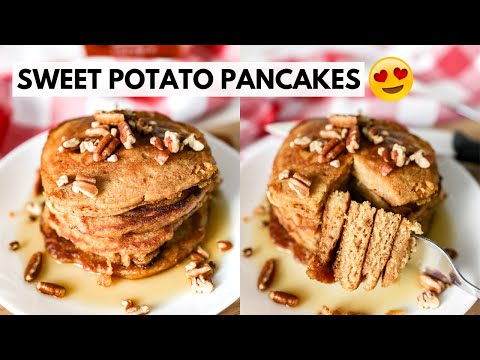
Sweet Potato Pancakes with Maple Butter
Description
Sweet potato purée introduces both starch and natural sugars that influence batter viscosity and caramelisation. The starch gelatinises at moderate heat, thickening the matrix while retaining moisture. The inclusion of melted butter and milk provides emulsified fat that coats starch granules, preventing excessive gluten formation from the flour. This balance yields a tender crumb rather than a chewy structure. The egg proteins contribute binding and light aeration, stabilising the pancake during flipping. Salt and a small amount of baking powder regulate flavour and lift, ensuring the batter remains cohesive without overexpansion or collapse during cooking.
Ingredients
Ingredients
Instructions
Instructions
Step 1
Combine softened unsalted butter (for maple butter) and maple syrup in a Mixing Bowl. Beat with a Silicone Spatula until smooth and emulsified. Set aside at room temperature.Ensure the butter is fully softened to prevent separation when incorporating maple syrup.Step 2
In a separate Mixing Bowl, whisk together plain flour, baking powder, caster sugar, and salt until evenly distributed.Dry blending ensures uniform leavening distribution, preventing uneven rise in the pancakes.Step 3
In another bowl, mix sweet potato purée, eggs, melted butter, and milk until smooth. Gradually fold the dry mixture into the wet mixture using a Silicone Spatula until just combined.Avoid overmixing; minimal gluten development maintains tenderness and prevents rubbery texture.Step 4
Heat a Non-stick Skillet over medium heat and lightly coat with vegetable oil. Pour approximately 60 ml of batter per pancake and cook for 2–3 minutes until bubbles form on the surface and edges appear set.Maintain consistent pan temperature; adjust heat slightly between batches to prevent sugar scorching.Step 5
Flip each pancake with a Turner Spatula and cook for another 1–2 minutes until golden brown and cooked through. Transfer to a Cooling Rack over a Baking Sheet to rest briefly.Allow brief resting to stabilise internal steam pressure, preventing soggy surfaces.Step 6
Serve warm pancakes topped with prepared maple butter, allowing it to melt slightly over the surface before serving.Apply maple butter while pancakes are hot enough to melt it but not so hot that it separates.
Recommended Equipment

Nutrition Facts
Servings 4
Serving Size 1 portion
- Amount Per Serving
- Calories 523.16kcal
- % Daily Value *
- Total Fat 31.18g48%
- Saturated Fat 17.72g89%
- Cholesterol 154.07mg52%
- Sodium 547.29mg23%
- Potassium 374.03mg11%
- Total Carbohydrate 54.98g19%
- Dietary Fiber 2.52g11%
- Sugars 13.55g
- Protein 9.8g20%
- Vitamin A 8066.42 IU
- Vitamin C 1.2 mg
- Calcium 281.27 mg
- Iron 2.73 mg
- Vitamin D 1.6 mcg
- Vitamin E 1.3 mg
- Vitamin K 7.61 mcg
- Thiamin 0.39 mg
- Riboflavin 0.59 mg
- Niacin 2.6 mg
- Vitamin B6 0.2 mg
- Folate 85.36 mcg
- Vitamin B12 0.59 mcg
- Pantothenic Acid 1.17 mg
- Phosphorus 234.64 mg
- Magnesium 35.26 mg
- Zinc 1.08 mg
- Selenium 21.3 mcg
- Copper 0.15 mg
- Manganese 0.71 mg
* Nutrition information is provided as an estimate per serving and may vary depending on the ingredients, brands, substitutions, portion sizes and preparation methods used. Percent Daily Values (%DV) are based on U.S. FDA reference values for a 2,000-calorie diet and are intended as a general guide only. Individual nutritional needs vary. This information is not a substitute for advice from a registered dietitian or other qualified healthcare professional.
Note
Store in an airtight container under refrigeration, ensuring minimal air exposure to preserve flavour integrity and textural balance. The resting phase supports structural stabilisation and moisture redistribution. Cutting or serving too early may compromise internal balance. Dairy-based elements may thicken further upon cooling. Reheat gently to prevent separation or grainy texture. Monitor seasoning levels after storage, as salt perception can shift once chilled.


