
Recipe Snapshot
Recipe at a Glance
Key timing, yield and style details before you start cooking.
Ingredient Interaction and Marinade Balance
The teriyaki base relies on a controlled balance between soy sauce salinity, sugar caramelisation potential, and acid moderation from mirin. The sugar and mirin create a reducing glaze that adheres effectively to the protein once moisture is partially removed during marination. Chicken thigh meat is preferred for its higher intramuscular fat, which resists drying during high-heat grilling. The starch in the sauce, introduced through a small slurry or natural reduction, stabilises the glaze without splitting. Salt diffusion during marination must be timed to avoid over-curing; 30–60 minutes achieves flavour penetration without textural tightening.
Heat Management and Glaze Control
Grilling requires alternating direct and indirect heat zones to prevent sugar burn while achieving surface caramelisation. The skewers should be turned frequently to maintain even browning and to allow the glaze to set in thin layers rather than pooling. Carryover heat continues to thicken the glaze post-removal, so final basting must occur just before the last minute of cooking. Excessive flame contact will carbonise sugars prematurely, producing bitterness. Maintaining medium-high heat ensures Maillard development without destabilising the sauce’s viscosity.
Transformation Through Cooking and Texture Development
During grilling, the chicken’s surface proteins denature and bond with the reducing sugars, forming a lacquered crust. The glaze transitions from fluid to semi-set as water evaporates and sugars concentrate. Internal moisture retention is maintained through the fat content of the thighs and controlled turning intervals. The final texture should present a glossy exterior with a tender, juicy interior. Overcooking leads to glaze crystallisation and fibrous meat, while under-reduction results in a watery coating lacking adhesion.
Workflow Efficiency and Preparation Sequencing
Efficient mise en place involves preparing the marinade first to allow cooling before contact with raw protein. Skewering should occur after marination to minimise handling of wet surfaces, ensuring even spacing for consistent heat exposure. Parallel tasks include reducing the reserved marinade for glazing while the chicken absorbs flavour. This sequencing avoids downtime and ensures the glaze is ready for finishing. Uniform skewer loading prevents uneven cooking and simplifies rotation during service.
Cultural and Regional Context of Teriyaki Technique
Teriyaki originated in Japan as a method combining tare-style sauces with grilling, traditionally applied to fish before adaptation to poultry and beef. The technique evolved through the use of soy, mirin, and sugar to create a glossy coating that symbolises balance between umami and sweetness. Modern adaptations, particularly in Western kitchens, often thicken the sauce further for cling and presentation. Despite variations, the core principle remains the same: controlled reduction and glazing over direct heat to achieve a lacquered finish.
Recipe Education
Learn the Skills Behind This Recipe
Build confidence with cooking skills, techniques, and tools used in this recipe.
Cooking Basics
Build safer knife preparation, heat control, timing, and everyday kitchen confidence.
Helpful when using chef knife during preparation.
Cookware Guide
Learn which pots and pans work best for frying, sautéing, simmering, and roasting.
Helpful when using saucepan during preparation.
Baking Tools Guide
Understand essential tools for mixing, measuring, and preparing recipes.
Helpful when using mixing bowl during preparation.


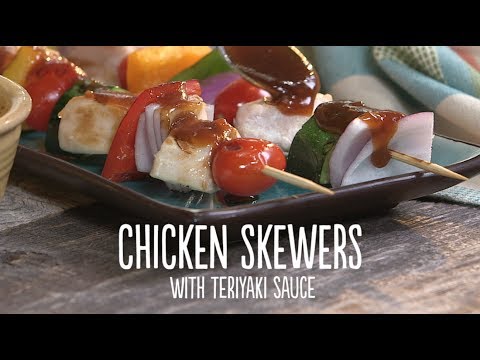
Teriyaki Chicken Skewers
Description
The teriyaki base relies on a controlled balance between soy sauce salinity, sugar caramelisation potential, and acid moderation from mirin. The sugar and mirin create a reducing glaze that adheres effectively to the protein once moisture is partially removed during marination. Chicken thigh meat is preferred for its higher intramuscular fat, which resists drying during high-heat grilling. The starch in the sauce, introduced through a small slurry or natural reduction, stabilises the glaze without splitting. Salt diffusion during marination must be timed to avoid over-curing; 30–60 minutes achieves flavour penetration without textural tightening.
Ingredients
Ingredients
Instructions
Instructions
Step 1
Combine soy sauce, mirin, sake, brown sugar, sesame oil, garlic, and ginger in a Saucepan. Bring to a gentle simmer over medium heat until sugar dissolves, then remove from heat and cool completely.Cooling the marinade before adding chicken prevents premature protein coagulation and uneven salt absorption.Step 2
Place chicken thighs in a Mixing Bowl and pour half of the cooled marinade over them. Mix thoroughly, cover with Cling Film, and refrigerate for 45 minutes to marinate.Rotate the chicken halfway through marination to ensure uniform flavour penetration and surface coverage.Step 3
Thread marinated chicken pieces onto soaked wooden skewers, leaving small gaps between pieces for even heat exposure.Avoid compressing the meat tightly on skewers; airflow between pieces promotes consistent caramelisation.Step 4
Heat a Grill Pan over medium-high heat. Cook skewers for 8–10 minutes, turning every 2 minutes, until evenly browned and internal temperature reaches 75°C.Maintain moderate heat to balance surface browning with internal cooking; excessive heat will burn the glaze before the chicken is cooked through.Step 5
Meanwhile, return the reserved marinade to the Saucepan. Mix cornstarch with water to form a slurry and whisk into the sauce. Simmer until thickened into a glaze.Add the slurry gradually while whisking to prevent localized gelatinisation and ensure smooth sauce consistency.Step 6
Brush the thickened glaze over the skewers during the final minute of grilling. Remove from heat and rest for 3 minutes before garnishing with spring onions and sesame seeds.Apply glaze only at the end to prevent sugar burn and to achieve a glossy, tack-free finish after resting.
Recommended Equipment

Nutrition Facts
Servings 4
Serving Size 1 portion
- Amount Per Serving
- Calories 452.61kcal
- % Daily Value *
- Total Fat 28.37g44%
- Saturated Fat 7.21g37%
- Cholesterol 147mg49%
- Sodium 1329.78mg56%
- Potassium 391.83mg12%
- Total Carbohydrate 19.73g7%
- Dietary Fiber 0.55g3%
- Sugars 13.65g
- Protein 27.04g55%
- Vitamin A 147.25 IU
- Vitamin C 1.06 mg
- Calcium 51.74 mg
- Iron 1.96 mg
- Vitamin E 0.37 mg
- Vitamin K 9.69 mcg
- Thiamin 0.15 mg
- Riboflavin 0.24 mg
- Niacin 7.88 mg
- Vitamin B6 0.6 mg
- Folate 12.33 mcg
- Vitamin B12 0.96 mcg
- Pantothenic Acid 1.62 mg
- Phosphorus 281.3 mg
- Magnesium 46.99 mg
- Zinc 2.17 mg
- Selenium 29.49 mcg
- Copper 0.21 mg
- Manganese 0.21 mg
* Nutrition information is provided as an estimate per serving and may vary depending on the ingredients, brands, substitutions, portion sizes and preparation methods used. Percent Daily Values (%DV) are based on U.S. FDA reference values for a 2,000-calorie diet and are intended as a general guide only. Individual nutritional needs vary. This information is not a substitute for advice from a registered dietitian or other qualified healthcare professional.
Note
Allow the dish to cool gradually before sealing. Rapid temperature shifts can create condensation, weakening texture and diluting surface flavour concentration. The resting phase supports structural stabilisation and moisture redistribution. Cutting or serving too early may compromise internal balance. Slow-cooked preparations often improve after several hours or overnight refrigeration as aromatic compounds integrate more fully. When reheating crisp components, use dry heat rather than microwave methods to maintain exterior texture. Acid balance may soften slightly over time; a final adjustment before serving restores clarity.


