
Recipe Snapshot
Recipe at a Glance
Key timing, yield and style details before you start cooking.
Protein Matrix and Emulsification Control
Firm tofu provides a stable protein matrix that mimics the curd structure of scrambled eggs when properly dehydrated and seasoned. Pressing removes excess moisture, allowing oil and aromatics to coat the surface evenly. Gochujang introduces fermented depth and controlled acidity, while soy sauce and sesame oil reinforce umami and fat dispersion. The inclusion of turmeric and nutritional yeast enhances colour and savoury perception without destabilising the emulsion. Salt must be balanced late in cooking to prevent premature water release from tofu. The resulting matrix depends on even fat distribution and moderate heat to maintain curd integrity without over-drying.
Heat Management and Moisture Regulation
The scramble requires medium heat to achieve Maillard browning on tofu surfaces while retaining internal moisture. Excessive heat causes protein contraction and crumbly texture, while insufficient heat prevents flavour development from gochujang caramelisation. Aromatics such as onion and garlic must be sautéed first to drive off moisture and build base flavour before tofu introduction. Gochujang is tempered in oil to activate its sugars and fermented compounds, ensuring even dispersion. Controlled evaporation during reduction prevents sauce pooling and maintains cohesive texture. The final moisture level should allow spoonable consistency without visible liquid separation.
Textural and Flavour Transformation
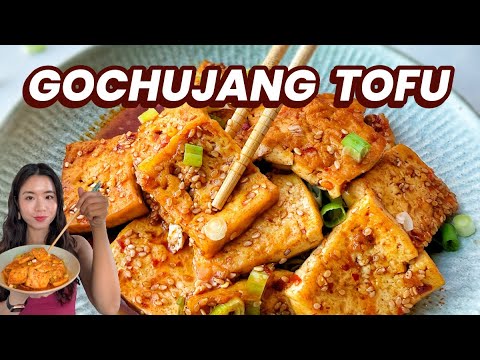
During cooking, tofu transitions from spongy to lightly crisped curds through surface dehydration and oil absorption. Gochujang’s sugars caramelise, deepening colour and producing mild smokiness. Nutritional yeast contributes glutamate-driven savouriness, while sesame oil adds aromatic fat that rounds the spice profile. The interaction between soy sauce and gochujang balances salt and acid, preventing flatness. Proper stirring intervals—every 30–45 seconds—allow partial crust formation, creating layered texture. The final scramble should exhibit cohesive curds with visible red-orange coating and uniform seasoning distribution, maintaining a moist but structured finish.
Workflow Efficiency and Preparation Sequencing
Mise en place is critical: tofu pressing, sauce blending, and vegetable chopping must be completed before heat application. The aromatics and sauce base can be prepared in parallel to reduce idle time. Using a non-stick skillet minimises sticking and allows lower oil volume without compromising browning. The dish benefits from immediate assembly once tofu reaches optimal texture, as residual heat continues mild cooking. Efficient sequencing ensures consistent results across batches and prevents over-reduction of the gochujang mixture. Proper staging also supports scalability for service environments where multiple portions are cooked consecutively.
Cultural and Regional Context
This dish merges Korean fermentation tradition with Western-style tofu scrambles. Gochujang, a fermented chili paste central to Korean cuisine, introduces depth and controlled heat, transforming a neutral tofu base into a layered savoury preparation. The adaptation reflects modern plant-based cooking trends that integrate Korean condiments into global breakfast formats. While traditional Korean tofu dishes often involve stews or braises, this scramble applies sautéing techniques more typical of Western breakfast service. The result is a cross-culinary hybrid maintaining Korean flavour integrity while adopting a textural and service profile suited to contemporary fusion menus.
Recipe Education
Learn the Skills Behind This Recipe
Build confidence with cooking skills, techniques, and tools used in this recipe.
How to Fry Properly
Understand pan heat, oil temperature, and how to get better frying results.
Recommended for the fry method used in this recipe.
How to Sauté Properly
Master fast cooking, pan heat, and ingredient timing for better texture.
Recommended for the saute method used in this recipe.
Teaspoons to Grams
Use small-measure conversions more accurately in cooking and baking.
Helpful when using measuring spoons during preparation.
Baking Tools Guide
Understand essential tools for mixing, measuring, and preparing recipes.
Helpful when using mixing bowl during preparation.
Cooking Basics
Build safer knife preparation, heat control, timing, and everyday kitchen confidence.
Helpful when using chef knife during preparation.


Tofu Scramble with Gochujang
Description
Firm tofu provides a stable protein matrix that mimics the curd structure of scrambled eggs when properly dehydrated and seasoned. Pressing removes excess moisture, allowing oil and aromatics to coat the surface evenly. Gochujang introduces fermented depth and controlled acidity, while soy sauce and sesame oil reinforce umami and fat dispersion. The inclusion of turmeric and nutritional yeast enhances colour and savoury perception without destabilising the emulsion. Salt must be balanced late in cooking to prevent premature water release from tofu. The resulting matrix depends on even fat distribution and moderate heat to maintain curd integrity without over-drying.
Ingredients
Ingredients
Instructions
Instructions
Step 1
Press the firm tofu between paper towels for 15 minutes to remove excess moisture. Crumble it into small curds using hands or a fork and set aside.Uniform curd size ensures even browning and prevents uneven moisture release during sautéing.Step 2
In a small bowl, whisk together gochujang, soy sauce, sesame oil, and turmeric powder until smooth. Reserve this mixture for later incorporation.Pre-emulsifying gochujang with oil and soy sauce prevents clumping and ensures even coating on tofu.Step 3
Heat vegetable oil in a Non-stick Skillet over medium heat. Add chopped onion and minced garlic, sautéing for 2–3 minutes until translucent and aromatic.Allow onions to sweat before colouring; this builds sweetness without introducing bitterness from over-browning.Step 4
Add the crumbled tofu to the skillet and cook for 5–6 minutes, stirring occasionally to develop light golden edges.Avoid constant stirring; intermittent movement promotes surface dehydration and light crust formation.Step 5
Pour in the gochujang mixture and stir to coat evenly. Continue cooking for 3–4 minutes until the sauce thickens and clings to the tofu.Monitor viscosity—sauce should reduce slightly but remain glossy; over-reduction leads to stickiness.Step 6
Stir in nutritional yeast, salt, and black pepper. Mix briefly to integrate, then remove from heat.Add nutritional yeast off direct heat to preserve its umami compounds and prevent bitterness.Step 7
Garnish with sliced spring onions before serving. Allow the scramble to rest for 2 minutes to stabilise moisture before plating.Short resting allows residual steam to equalise, preventing watery separation on the plate.
Recommended Equipment

Nutrition Facts
Servings 2
Serving Size 1 portion
- Amount Per Serving
- Calories 357.9kcal
- % Daily Value *
- Total Fat 23.14g36%
- Saturated Fat 3.1g16%
- Sodium 1678.57mg70%
- Potassium 314.88mg9%
- Total Carbohydrate 16.39g6%
- Dietary Fiber 4.76g20%
- Sugars 3.21g
- Protein 23.53g48%
- Vitamin A 80.44 IU
- Vitamin C 6.3 mg
- Calcium 276.25 mg
- Iron 3.86 mg
- Vitamin E 0.76 mg
- Vitamin K 27.14 mcg
- Thiamin 0.04 mg
- Riboflavin 0.04 mg
- Niacin 0.65 mg
- Vitamin B6 0.14 mg
- Folate 13.56 mcg
- Pantothenic Acid 0.11 mg
- Phosphorus 36.82 mg
- Magnesium 13.08 mg
- Zinc 0.23 mg
- Selenium 0.88 mcg
- Copper 0.06 mg
- Manganese 0.3 mg
* Nutrition information is provided as an estimate per serving and may vary depending on the ingredients, brands, substitutions, portion sizes and preparation methods used. Percent Daily Values (%DV) are based on U.S. FDA reference values for a 2,000-calorie diet and are intended as a general guide only. Individual nutritional needs vary. This information is not a substitute for advice from a registered dietitian or other qualified healthcare professional.
Note
Store in an airtight container under refrigeration, ensuring minimal air exposure to preserve flavour integrity and textural balance. The resting phase supports structural stabilisation and moisture redistribution. Cutting or serving too early may compromise internal balance. Spice intensity can deepen over time as volatile compounds settle. Taste and adjust seasoning after resting. Monitor seasoning levels after storage, as salt perception can shift once chilled.


