
Recipe Snapshot
Recipe at a Glance
Key timing, yield and style details before you start cooking.
Ingredient Behaviour and Structural Balance
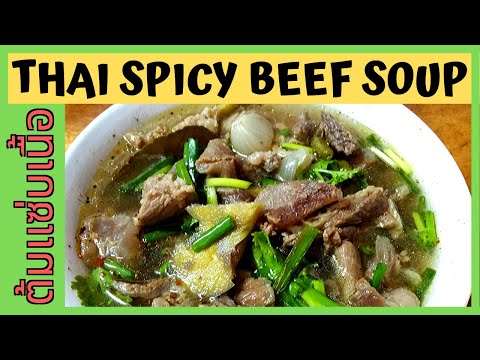
Tom Sap Nua relies on controlled extraction of collagen and aromatic oils from beef bones and connective tissue to achieve a balanced broth. The acid from lime juice and the salt from fish sauce regulate protein tightening, preventing cloudiness while enhancing umami depth. Toasted rice powder adds suspended body and a subtle nutty viscosity, stabilising the broth’s mouthfeel. Galangal and lemongrass release volatile compounds that cut through the beef’s richness, while kaffir lime leaves contribute aromatic lift. The sequencing of aromatics before protein ensures even flavour diffusion without overcooking the beef fibres.
Technique Control and Heat Management
The soup’s clarity and depth depend on maintaining a gentle simmer rather than a rolling boil. Excessive agitation emulsifies fat into the broth, dulling its brightness. Controlled heat allows gradual collagen breakdown, yielding a clean yet full-bodied stock. Aromatics must be bruised, not chopped, to release essential oils without disintegrating. The final seasoning adjustment occurs off heat to preserve the volatile acidity of lime juice and the freshness of herbs. Carryover heat is leveraged to finish cooking thin beef slices without toughening them.
Transformation Through Cooking
During simmering, connective tissue gelatinises, enriching the broth’s texture while maintaining clarity. The toasted rice powder thickens slightly through starch gelatinisation, giving a cohesive mouthfeel without opacity. As the broth reduces, flavour concentration intensifies, balancing salt, acid, and spice. The final addition of fresh herbs and lime juice introduces contrasting brightness, creating a layered sensory profile—deep savoury base, aromatic mid-notes, and sharp acidic finish. The transformation is complete when the broth coats the palate lightly without greasiness or sediment.
Workflow Efficiency and Sequencing Logic
Efficient mise en place is critical: aromatics should be prepped and grouped by cooking stage to avoid over-extraction. While the broth simmers, toasted rice powder and herb garnishes can be prepared in parallel. Straining the broth before final seasoning ensures a clean presentation and prevents herb debris from clouding the liquid. Timing the beef addition last allows precise doneness control, as thin slices cook in seconds. This workflow minimises idle time and maintains textural integrity across components.
Cultural and Regional Context
Tom Sap Nua originates from Thailand’s Isan region, where resource-efficient cooking and bold seasoning define the cuisine. The dish evolved from rural beef soups designed to utilise tougher cuts through long simmering. The inclusion of toasted rice powder and abundant herbs reflects Lao influence, common in northeastern Thai cooking. Modern adaptations maintain the rustic broth structure but refine clarity and balance for contemporary service. The dish remains a benchmark of Isan’s approach to layering spice, acid, and herbal freshness over robust protein bases.
Recipe Education
Learn the Skills Behind This Recipe
Build confidence with cooking skills, techniques, and tools used in this recipe.
How to Boil Properly
Learn boiling times, temperature control, and how to avoid overcooking.
Recommended for the boil method used in this recipe.
Simmer vs Boil
Learn when to simmer, when to boil, and how each affects recipe results.
Recommended for the simmer method used in this recipe.
Cookware Guide
Learn which pots and pans work best for frying, sautéing, simmering, and roasting.
Helpful when using saucepan during preparation.
Teaspoons to Grams
Use small-measure conversions more accurately in cooking and baking.
Helpful when using measuring spoons during preparation.
Baking Tools Guide
Understand essential tools for mixing, measuring, and preparing recipes.
Helpful when using mixing bowl during preparation.
Cooking Basics
Build safer knife preparation, heat control, timing, and everyday kitchen confidence.
Helpful when using chef knife during preparation.


Tom Sap Nua (Spicy Beef Soup Isan Style)
Description
Tom Sap Nua relies on controlled extraction of collagen and aromatic oils from beef bones and connective tissue to achieve a balanced broth. The acid from lime juice and the salt from fish sauce regulate protein tightening, preventing cloudiness while enhancing umami depth. Toasted rice powder adds suspended body and a subtle nutty viscosity, stabilising the broth’s mouthfeel. Galangal and lemongrass release volatile compounds that cut through the beef’s richness, while kaffir lime leaves contribute aromatic lift. The sequencing of aromatics before protein ensures even flavour diffusion without overcooking the beef fibres.
Ingredients
Ingredients
Instructions
Instructions
Step 1
Place beef shank and water in a Stock Pot. Bring to a gentle simmer over medium heat, skimming any foam that rises to maintain clarity.Avoid boiling; maintain a steady simmer around 90°C to prevent emulsifying fat into the broth.Step 2
Add lemongrass, galangal, kaffir lime leaves, and salt. Continue simmering uncovered for 60–70 minutes until beef is tender and broth is aromatic.Bruise lemongrass with the back of a Chef Knife to release essential oils without shredding the stalks.Step 3
Strain the broth through a Sieve into a clean Saucepan, discarding solids. Return the clear broth to low heat.Straining removes particulate matter, ensuring a clean mouthfeel and preventing over-extraction of aromatics.Step 4
Add fish sauce and chili flakes to the hot broth. Stir to dissolve and taste for balance before removing from heat.Season incrementally; fish sauce intensity increases slightly as the broth cools.Step 5
Off heat, stir in lime juice, toasted rice powder, and chopped shallots. Add cooked beef pieces back into the broth and mix gently.Add lime juice only after removing from heat to preserve its volatile acidity and prevent bitterness.Step 6
Ladle into bowls and garnish with coriander leaves and spring onions before serving.Add herbs at service to maintain their volatile aroma and prevent discoloration from residual heat.
Recommended Equipment

Nutrition Facts
Servings 4
Serving Size 1 portion
- Amount Per Serving
- Calories 126.69kcal
- % Daily Value *
- Total Fat 3.13g5%
- Saturated Fat 0.99g5%
- Cholesterol 29.25mg10%
- Sodium 1718.88mg72%
- Potassium 490.15mg15%
- Total Carbohydrate 6.57g3%
- Dietary Fiber 0.5g2%
- Sugars 1.14g
- Protein 17.8g36%
- Vitamin A 222.1 IU
- Vitamin C 8.4 mg
- Calcium 56.57 mg
- Iron 3.33 mg
- Vitamin E 0.23 mg
- Vitamin K 15.95 mcg
- Thiamin 0.1 mg
- Riboflavin 0.21 mg
- Niacin 4.92 mg
- Vitamin B6 0.45 mg
- Folate 27.34 mcg
- Vitamin B12 2.56 mcg
- Pantothenic Acid 0.31 mg
- Phosphorus 175.74 mg
- Magnesium 53.58 mg
- Zinc 5.62 mg
- Selenium 15.03 mcg
- Copper 0.18 mg
- Manganese 0.72 mg
* Nutrition information is provided as an estimate per serving and may vary depending on the ingredients, brands, substitutions, portion sizes and preparation methods used. Percent Daily Values (%DV) are based on U.S. FDA reference values for a 2,000-calorie diet and are intended as a general guide only. Individual nutritional needs vary. This information is not a substitute for advice from a registered dietitian or other qualified healthcare professional.
Note
Allow the dish to cool gradually before sealing. Rapid temperature shifts can create condensation, weakening texture and diluting surface flavour concentration. The resting phase supports structural stabilisation and moisture redistribution. Cutting or serving too early may compromise internal balance. Grains and starches continue absorbing moisture after cooking. Adjust liquid slightly when reheating to restore optimal consistency. Slow-cooked preparations often improve after several hours or overnight refrigeration as aromatic compounds integrate more fully. Acid balance may soften slightly over time; a final adjustment before serving restores clarity.


