
Recipe Snapshot
Recipe at a Glance
Key timing, yield and style details before you start cooking.
Fermentation and Fat Balance in the Base Matrix
Kimchi introduces lactic acidity and residual moisture that must be balanced against the oil phase to prevent sogginess. The rice acts as a starch matrix, absorbing both rendered fat and kimchi liquid. Using day-old rice ensures reduced surface moisture and improved grain separation. Tuna contributes protein and oil, which emulsify partially with the kimchi juices during high-heat agitation. The salt and acid from kimchi accelerate Maillard reactions when combined with oil-coated rice, producing deeper savoury notes. Proper sequencing—oil first, then kimchi, then rice—prevents premature steaming and maintains crisp grain edges.
Heat Management and Moisture Evaporation Control
High heat in a Wok or Non-stick Skillet is essential to drive off excess moisture from kimchi and rice. The initial sauté of kimchi at medium-high heat concentrates flavour through evaporation before rice introduction. Once rice is added, constant movement prevents localized scorching while allowing controlled browning. The tuna is folded in last to avoid overcooking and drying. Carryover heat finishes the protein gently. Maintaining a dry surface temperature above 180°C ensures proper caramelisation without steaming. Oil distribution must remain even to prevent clumping and uneven texture.
Transformation Through Stir-Frying and Layered Flavour Integration
During stir-frying, starch gelatinisation stabilises, and surface dehydration locks in texture. The kimchi sugars caramelise, producing umami depth, while the tuna’s natural oils integrate into the rice, enriching mouthfeel. The addition of gochujang or soy sauce at the end creates a thin glaze through reduction, binding the components. The final texture should be cohesive but not sticky, with visible separation of grains. Aromatic compounds from sesame oil and scallions are added off heat to preserve volatile notes. This layering of cooked and raw aromatics defines the dish’s structural complexity.
Workflow Efficiency and Timing Precision
Mise en place is critical: rice must be pre-loosened, kimchi chopped, and tuna drained before heat application. The sequence of cooking—aromatics, kimchi, rice, seasoning, tuna—minimises downtime and prevents overcooking. Parallel preparation, such as chopping scallions while kimchi reduces, optimises workflow. Heat transitions must be deliberate: medium-high for sautéing, high for stir-frying, and low for final seasoning integration. Overcrowding the pan lowers surface temperature, leading to steaming rather than frying. Efficient batch control ensures consistent texture across servings.
Regional and Cultural Context of Kimchi Fried Rice Variants
Kimchi fried rice (kimchi-bokkeum-bap) originates from Korean home cooking as a method to utilise aged kimchi and leftover rice. The addition of canned tuna reflects post-war adaptations when preserved proteins became accessible. Modern variations integrate global influences, but the core technique—high-heat stir-frying fermented vegetables with rice—remains unchanged. The dish exemplifies Korean efficiency in flavour concentration through fermentation and heat. Its evolution into a quick meal aligns with urban dining culture while retaining traditional fermentation-driven depth.
Recipe Education
Learn the Skills Behind This Recipe
Build confidence with cooking skills, techniques, and tools used in this recipe.
How to Sauté Properly
Master fast cooking, pan heat, and ingredient timing for better texture.
Recommended for the saute method used in this recipe.
Cooking Basics
Build safer knife preparation, heat control, timing, and everyday kitchen confidence.
Helpful when using chef knife during preparation.
Cookware Guide
Learn which pots and pans work best for frying, sautéing, simmering, and roasting.
Helpful when using wok during preparation.
Baking Tools Guide
Understand essential tools for mixing, measuring, and preparing recipes.
Helpful when using mixing bowl during preparation.


Tuna Kimchi Fried Rice
Description
Kimchi introduces lactic acidity and residual moisture that must be balanced against the oil phase to prevent sogginess. The rice acts as a starch matrix, absorbing both rendered fat and kimchi liquid. Using day-old rice ensures reduced surface moisture and improved grain separation. Tuna contributes protein and oil, which emulsify partially with the kimchi juices during high-heat agitation. The salt and acid from kimchi accelerate Maillard reactions when combined with oil-coated rice, producing deeper savoury notes. Proper sequencing—oil first, then kimchi, then rice—prevents premature steaming and maintains crisp grain edges.
Ingredients
Ingredients
Instructions
Instructions
Step 1
Prepare all ingredients: chop kimchi, slice scallions, drain tuna, and loosen cold rice using a Silicone Spatula in a Mixing Bowl.Breaking rice clumps before heating prevents uneven browning and moisture pockets during stir-frying.Step 2
Heat neutral oil in a Wok over medium-high heat. Add chopped kimchi and sauté for 2–3 minutes until moisture reduces and aroma intensifies.Allow kimchi to sizzle undisturbed briefly to promote caramelisation before stirring.Step 3
Increase heat to high. Add rice and toss continuously with a Turner Spatula for 3–4 minutes until grains separate and edges crisp slightly.Maintain constant motion to avoid localized scorching while ensuring even surface dehydration.Step 4
Add gochujang and soy sauce, stirring rapidly to coat rice evenly. Fold in drained tuna and cook for 1 minute to warm through.Introduce sauces at high heat but limit exposure time to prevent burning of sugar components in gochujang.Step 5
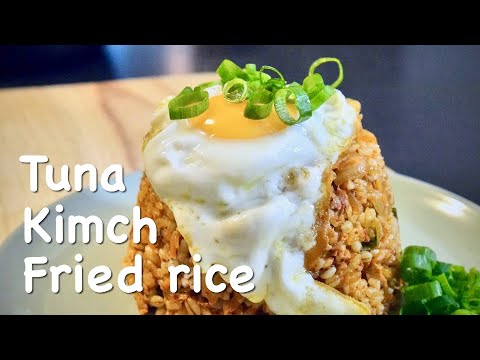
Remove from heat. Stir in sesame oil and half the scallions. Adjust salt and pepper. Plate and top with remaining scallions, sesame seeds, and optional fried egg.Adding sesame oil off heat preserves its volatile aroma compounds and prevents bitterness.
Recommended Equipment

Nutrition Facts
Servings 2
Serving Size 1 portion
- Amount Per Serving
- Calories 451.42kcal
- % Daily Value *
- Total Fat 20.18g32%
- Saturated Fat 2.4g12%
- Cholesterol 99.84mg34%
- Sodium 2185.05mg92%
- Potassium 379.33mg11%
- Total Carbohydrate 48.63g17%
- Dietary Fiber 2.47g10%
- Sugars 2.15g
- Protein 18.73g38%
- Vitamin A 356.43 IU
- Vitamin C 3.62 mg
- Calcium 85.89 mg
- Iron 4.05 mg
- Vitamin D 1.04 mcg
- Vitamin E 3.11 mg
- Vitamin K 68.91 mcg
- Thiamin 0.09 mg
- Riboflavin 0.35 mg
- Niacin 7.01 mg
- Vitamin B6 0.54 mg
- Folate 67.04 mcg
- Vitamin B12 1.48 mcg
- Pantothenic Acid 1.05 mg
- Phosphorus 222.2 mg
- Magnesium 54.06 mg
- Zinc 1.7 mg
- Selenium 52.89 mcg
- Copper 0.24 mg
- Manganese 0.88 mg
* Nutrition information is provided as an estimate per serving and may vary depending on the ingredients, brands, substitutions, portion sizes and preparation methods used. Percent Daily Values (%DV) are based on U.S. FDA reference values for a 2,000-calorie diet and are intended as a general guide only. Individual nutritional needs vary. This information is not a substitute for advice from a registered dietitian or other qualified healthcare professional.
Note
Store in an airtight container under refrigeration, ensuring minimal air exposure to preserve flavour integrity and textural balance. Grains and starches continue absorbing moisture after cooking. Adjust liquid slightly when reheating to restore optimal consistency. Texture refinement often occurs naturally during resting due to internal moisture redistribution.


