
Recipe Snapshot
Recipe at a Glance
Key timing, yield and style details before you start cooking.
Acid-Fat Equilibrium and Marinade Penetration
The structural balance of this dish relies on the controlled interaction between acid from lemon juice and fat from olive oil. The acid denatures surface proteins in the chicken, improving flavour absorption while olive oil moderates the rate of heat transfer during searing. Salt initiates osmotic exchange, drawing moisture outward before reabsorption, which enhances juiciness. Garlic and spices such as cumin and coriander contribute volatile oils that integrate into the fat phase, ensuring even distribution of aromatics. The marinade’s hydration ratio must remain stable to prevent over-acidification, which can toughen the outer muscle fibres before cooking.
Heat Management and Moisture Retention During Searing and Braising
Initial searing in a Saute Pan develops Maillard browning, forming a flavour base that anchors the subsequent braise. Controlled medium-high heat ensures surface caramelisation without burning the spice layer. Once liquid is introduced, the environment transitions to a moist-heat phase, stabilising internal temperature and preventing protein contraction. Maintaining a gentle simmer rather than a rolling boil preserves muscle integrity and prevents the sauce from separating. The lid position controls evaporation rate—partially covered for reduction, fully covered for moisture retention depending on desired sauce viscosity.
Transformation Through Braising and Reduction
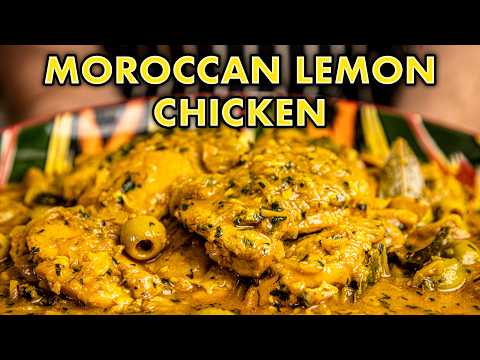
During the braise, connective tissue in the chicken legs and thighs converts to gelatin, enriching the sauce body. The lemon slices release essential oils and mild bitterness that balance the saltiness of the olives. As the liquid reduces, suspended fat droplets emulsify with the gelatin, forming a glossy, cohesive sauce. The final reduction stage concentrates both acidity and salinity, requiring precise timing to avoid over-thickening. The olives soften slightly, releasing brine that integrates into the sauce matrix, while the chicken achieves fork-tender texture without structural collapse.
Workflow Coordination and Timing Efficiency
Professional execution depends on sequencing efficiency. While the chicken marinates, mise en place for aromatics and garnishes should be completed. The searing and braising phases can be managed in a single vessel to minimise transfer loss and maintain temperature continuity. Monitoring reduction visually rather than by time ensures consistency across variable heat sources. Resting the chicken briefly before service allows redistribution of internal juices and stabilisation of the sauce film. Parallel preparation of accompaniments such as couscous can occur during the braise to streamline plating.
Regional Technique Lineage and Adaptation
This preparation reflects North African braising logic rooted in Tunisian culinary practice, where preserved lemon and olives provide controlled salinity and acidity. The method evolved from Berber and Mediterranean influences, integrating olive oil as the primary cooking medium. Modern adaptations often substitute fresh lemon for preserved forms to moderate intensity while maintaining aromatic brightness. The spice base—cumin, coriander, and paprika—illustrates Maghrebi trade heritage, linking coastal Tunisia to broader Mediterranean spice routes. The dish’s structure remains consistent: seared poultry, aromatic base, acid-salt balance, and slow moist-heat finish.
Recipe Education
Learn the Skills Behind This Recipe
Build confidence with cooking skills, techniques, and tools used in this recipe.
Simmer vs Boil
Learn when to simmer, when to boil, and how each affects recipe results.
Recommended for the simmer method used in this recipe.
Cooking Basics
Build safer knife preparation, heat control, timing, and everyday kitchen confidence.
Helpful when using chef knife during preparation.
Cookware Guide
Learn which pots and pans work best for frying, sautéing, simmering, and roasting.
Helpful when using frying pan during preparation.
Teaspoons to Grams
Use small-measure conversions more accurately in cooking and baking.
Helpful when using measuring spoons during preparation.
Baking Tools Guide
Understand essential tools for mixing, measuring, and preparing recipes.
Helpful when using mixing bowl during preparation.


Tunisian Chicken with Lemon and Olives
Description
The structural balance of this dish relies on the controlled interaction between acid from lemon juice and fat from olive oil. The acid denatures surface proteins in the chicken, improving flavour absorption while olive oil moderates the rate of heat transfer during searing. Salt initiates osmotic exchange, drawing moisture outward before reabsorption, which enhances juiciness. Garlic and spices such as cumin and coriander contribute volatile oils that integrate into the fat phase, ensuring even distribution of aromatics. The marinade’s hydration ratio must remain stable to prevent over-acidification, which can toughen the outer muscle fibres before cooking.
Ingredients
Ingredients
Instructions
Instructions
Step 1
Combine 1 tbsp olive oil, lemon juice, garlic, cumin, coriander, paprika, salt, and black pepper in a Mixing Bowl. Add chicken pieces and coat evenly. Marinate for 30 minutes at room temperature or up to 4 hours refrigerated.Ensure even spice adhesion by massaging the marinade under the skin for deeper flavour penetration.Step 2
Heat 2 tbsp olive oil in a Saute Pan over medium-high heat. Sear chicken pieces skin-side down until golden brown, about 4–5 minutes per side. Remove and set aside.Avoid overcrowding the pan; sear in batches to maintain surface temperature and consistent browning.Step 3
Reduce heat to medium. Add lemon slices to the same pan and cook for 1 minute to release oils. Deglaze with a small splash of chicken stock, scraping browned bits with a Wooden Spoon.Deglazing immediately after searing captures caramelised residues that enrich sauce depth.Step 4
Return chicken to the pan, add remaining chicken stock and olives. Cover and simmer gently for 30–35 minutes until chicken is tender and internal temperature reaches 75°C.Maintain a gentle simmer; excessive boiling will toughen the meat and cloud the sauce.Step 5
Uncover and increase heat slightly to reduce the sauce for 5–7 minutes until glossy and slightly thickened. Adjust seasoning if necessary. Garnish with chopped parsley before serving.Stop reduction just before the sauce fully thickens; carryover heat will complete the consistency off the stove.
Recommended Equipment

Nutrition Facts
Servings 4
Serving Size 1 portion
- Amount Per Serving
- Calories 628.3kcal
- % Daily Value *
- Total Fat 48.21g75%
- Saturated Fat 11.26g57%
- Cholesterol 154.9mg52%
- Sodium 1403.81mg59%
- Potassium 563.53mg17%
- Total Carbohydrate 8.42g3%
- Dietary Fiber 2.64g11%
- Sugars 2.09g
- Protein 40.75g82%
- Vitamin A 818.55 IU
- Vitamin C 21.29 mg
- Calcium 71.86 mg
- Iron 3.36 mg
- Vitamin D 0.41 mcg
- Vitamin E 3.83 mg
- Vitamin K 26.58 mcg
- Thiamin 0.18 mg
- Riboflavin 0.32 mg
- Niacin 15.14 mg
- Vitamin B6 0.83 mg
- Folate 22.19 mcg
- Vitamin B12 0.63 mcg
- Pantothenic Acid 1.96 mg
- Phosphorus 336.14 mg
- Magnesium 57.49 mg
- Zinc 2.93 mg
- Selenium 31.76 mcg
- Copper 0.22 mg
- Manganese 0.17 mg
* Nutrition information is provided as an estimate per serving and may vary depending on the ingredients, brands, substitutions, portion sizes and preparation methods used. Percent Daily Values (%DV) are based on U.S. FDA reference values for a 2,000-calorie diet and are intended as a general guide only. Individual nutritional needs vary. This information is not a substitute for advice from a registered dietitian or other qualified healthcare professional.
Note
Allow the dish to cool gradually before sealing. Rapid temperature shifts can create condensation, weakening texture and diluting surface flavour concentration. The resting phase supports structural stabilisation and moisture redistribution. Cutting or serving too early may compromise internal balance. Spice intensity can deepen over time as volatile compounds settle. Taste and adjust seasoning after resting. Slow-cooked preparations often improve after several hours or overnight refrigeration as aromatic compounds integrate more fully. When reheating crisp components, use dry heat rather than microwave methods to maintain exterior texture. Texture refinement often occurs naturally during resting due to internal moisture redistribution.


