
Recipe Snapshot
Recipe at a Glance
Key timing, yield and style details before you start cooking.
Root Vegetable Matrix and Hydration Control
The structural integrity of turnip cake depends on the starch-to-liquid ratio within the rice flour matrix. Grated daikon radish releases significant moisture during cooking, which must be balanced against the rice flour slurry to achieve a cohesive yet tender set. Excess liquid yields a gummy texture, while insufficient hydration causes cracking and poor slice definition. The inclusion of umami-rich elements such as dried shrimp and Chinese sausage introduces both fat and salt, influencing gelatinisation and seasoning distribution. Proper sequencing—cooking aromatics before combining with the batter—ensures even flavour diffusion and prevents raw flour taste.
Heat Management and Steam Phase Control
Steaming is the critical thermal process for this dish. The batter must be poured into a preheated container to initiate immediate starch activation. Steam temperature should remain consistent around 100°C; fluctuations cause uneven set and surface pitting. The daikon mixture should be cooked briefly before combining with the flour slurry to remove excess water and stabilise the batter viscosity. During steaming, lid condensation must be managed with a cloth wrap to prevent water droplets from softening the surface. Controlled cooling post-steam allows the cake to firm for clean slicing before pan-searing.
Textural Transformation and Browning Mechanics
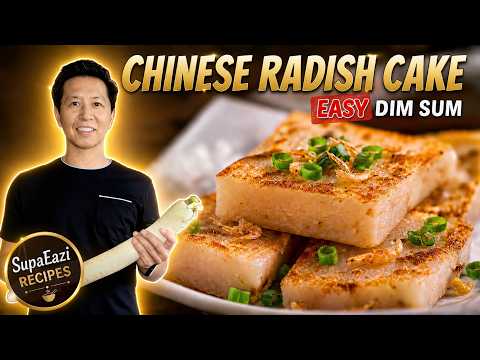
After steaming, the cake transitions from a viscous suspension to a cohesive gel through starch gelatinisation and protein denaturation from the sausage and shrimp. Resting solidifies the internal matrix, allowing for precise slicing. The secondary pan-frying phase develops a Maillard crust, introducing contrast between the crisp exterior and soft interior. This dual-phase cooking defines the dish’s sensory balance—moist interior retention relies on correct rest time before searing, while surface caramelisation depends on dry slices and moderate oil temperature to avoid sogginess.
Workflow Sequencing and Mise en Place Efficiency
Efficient execution requires parallel preparation of components. Dried shrimp and mushrooms should be soaked early to align with daikon cooking time. The rice flour slurry can be mixed while aromatics sauté, minimising idle periods. Steam setup must be ready before batter assembly to prevent thickening delays. Cooling and slicing can occur while the steamer is cleaned and the pan preheated for final searing. This sequencing maintains temperature control and prevents overhydration of the batter through prolonged standing.
Cultural and Regional Context
Turnip cake, or Lo Bak Go, originates from Cantonese dim sum traditions, where rice flour-based steamed cakes evolved as efficient carriers for preserved meats and root vegetables. The method reflects southern Chinese reliance on rice flour rather than wheat, and the use of dried seafood and sausage demonstrates preservation-driven flavour layering. Modern adaptations maintain the same gelatinised starch structure but may substitute ingredients based on availability. The dish remains a technical benchmark in dim sum production for its balance of texture, flavour integration, and precise steaming control.
Recipe Education
Learn the Skills Behind This Recipe
Build confidence with cooking skills, techniques, and tools used in this recipe.
Cookware Guide
Learn which pots and pans work best for frying, sautéing, simmering, and roasting.
Helpful when using frying pan during preparation.
How to Fry Properly
Understand pan heat, oil temperature, and how to get better frying results.
Recommended for the fry method used in this recipe.
How to Sauté Properly
Master fast cooking, pan heat, and ingredient timing for better texture.
Recommended for the saute method used in this recipe.
Baking Tools Guide
Understand essential tools for mixing, measuring, and preparing recipes.
Helpful when using mixing bowl during preparation.
Batch Cooking
Cook once and prepare multiple meals more efficiently.
Selected for this type of recipe.
Cooking Basics
Build safer knife preparation, heat control, timing, and everyday kitchen confidence.
Helpful when using chef knife during preparation.


Turnip Cake (Lo Bak Go)
Description
The structural integrity of turnip cake depends on the starch-to-liquid ratio within the rice flour matrix. Grated daikon radish releases significant moisture during cooking, which must be balanced against the rice flour slurry to achieve a cohesive yet tender set. Excess liquid yields a gummy texture, while insufficient hydration causes cracking and poor slice definition. The inclusion of umami-rich elements such as dried shrimp and Chinese sausage introduces both fat and salt, influencing gelatinisation and seasoning distribution. Proper sequencing—cooking aromatics before combining with the batter—ensures even flavour diffusion and prevents raw flour taste.
Ingredients
Ingredients
Instructions
Instructions
Step 1
Soak dried shrimp and shiitake mushrooms in warm water for 20 minutes until softened. Drain, finely chop, and set aside. Dice Chinese sausage into small pieces.Ensure shrimp and mushrooms are fully rehydrated; residual dryness can cause uneven texture in the final batter.Step 2
Heat neutral oil in a Saute Pan over medium heat. Add Chinese sausage, shrimp, mushrooms, and shallots. Sauté for 3–4 minutes until aromatic and lightly browned. Stir in soy sauce and oyster sauce, then remove from heat.Control heat to medium; excessive browning introduces bitterness that carries through the steamed phase.Step 3
In a Saucepan, combine grated daikon and 200 ml of water. Cook over medium heat for 8–10 minutes until softened and most liquid is released. Reserve both the daikon and its cooking liquid.Avoid over-reducing the daikon liquid; it contributes essential starch and flavour to the batter.Step 4
In a Mixing Bowl, whisk rice flour, cornstarch, salt, sugar, and white pepper with the remaining 200 ml water to form a smooth slurry. Fold in the cooked daikon mixture and sautéed ingredients until evenly distributed.Incorporate ingredients while the daikon is still warm to initiate partial starch hydration and prevent flour clumping.Step 5
Line a Casserole Dish with parchment paper. Pour in the batter and smooth the surface. Place in a Steamer Basket over boiling water and steam for 50–60 minutes until set and firm to touch.Wrap the steamer lid with a tea towel to prevent condensation from dripping onto the cake surface.Step 6
Remove the dish and allow the cake to cool completely at room temperature for at least 1 hour. Once firm, cut into 2 cm thick slices.Cooling stabilises the starch network; slicing while warm will cause tearing and uneven edges.Step 7
Heat neutral oil in a Non-stick Skillet over medium-high heat. Pan-fry slices for 2–3 minutes per side until golden brown and crisp.Dry slices with a paper towel before frying to promote even browning and prevent oil splatter.
Recommended Equipment

Nutrition Facts
Servings 6
Serving Size 1 portion
- Amount Per Serving
- Calories 297.77kcal
- % Daily Value *
- Total Fat 12.27g19%
- Saturated Fat 2.14g11%
- Cholesterol 88mg30%
- Sodium 1010.8mg43%
- Potassium 484.92mg14%
- Total Carbohydrate 37.11g13%
- Dietary Fiber 3.79g16%
- Sugars 4.51g
- Protein 11g22%
- Vitamin C 30.04 mg
- Calcium 73.59 mg
- Iron 1.6 mg
- Vitamin D 0.48 mcg
- Vitamin E 1.29 mg
- Vitamin K 5.48 mcg
- Thiamin 0.13 mg
- Riboflavin 0.15 mg
- Niacin 2.81 mg
- Vitamin B6 0.3 mg
- Folate 51.53 mcg
- Vitamin B12 0.15 mcg
- Pantothenic Acid 1.98 mg
- Phosphorus 105.18 mg
- Magnesium 44.42 mg
- Zinc 1.32 mg
- Selenium 8.14 mcg
- Copper 0.56 mg
- Manganese 0.48 mg
* Nutrition information is provided as an estimate per serving and may vary depending on the ingredients, brands, substitutions, portion sizes and preparation methods used. Percent Daily Values (%DV) are based on U.S. FDA reference values for a 2,000-calorie diet and are intended as a general guide only. Individual nutritional needs vary. This information is not a substitute for advice from a registered dietitian or other qualified healthcare professional.
Note
For best structural retention, cool uncovered briefly before storage to prevent trapped steam from softening exterior crust or caramelised surfaces. The resting phase supports structural stabilisation and moisture redistribution. Cutting or serving too early may compromise internal balance. Grains and starches continue absorbing moisture after cooking. Adjust liquid slightly when reheating to restore optimal consistency. In larger batches, maintain even heat distribution and avoid overcrowding during reheating to preserve structural integrity. Slow-cooked preparations often improve after several hours or overnight refrigeration as aromatic compounds integrate more fully. When reheating crisp components, use dry heat rather than microwave methods to maintain exterior texture. Monitor seasoning levels after storage, as salt perception can shift once chilled.


